Exercise technique guide
How to Do a Single-Leg Stance
The single-leg stance simply has you balance on one leg. It trains balance, ankle stability and hip control, which support walking, stairs and fall prevention. It needs no equipment, scales easily, and is one of the most practical balance exercises for all ages.
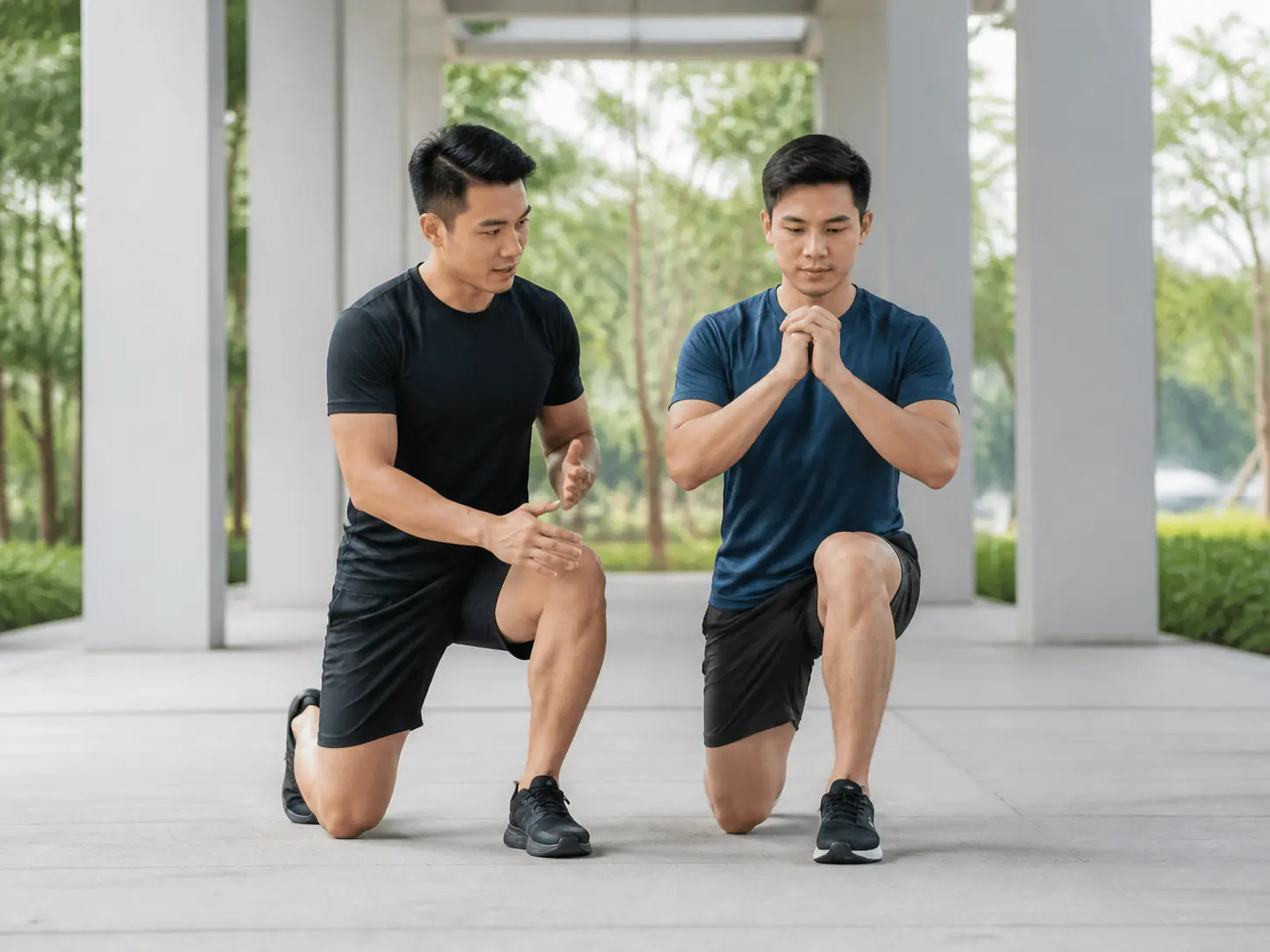
Every step you take is a moment of balancing on one leg, so training that skill directly pays off in steadier walking, stairs and sport. The single-leg stance is as simple as it sounds: balance on one foot and hold.
You need no equipment, just a wall nearby for safety, so it fits any home or our Putra Heights centre. It is a gentle, practical drill we use for older adults, runners, and anyone wanting steadier, more stable feet.
What it trains and who it suits
It trains balance, ankle stability and hip control on one leg. It suits older adults, runners, people recovering ankle stability cleared to train, and anyone wanting better everyday steadiness.
Because it is simple and needs no equipment, it is easy to practise often, and it scales from supported to eyes-closed challenges.
Step-by-step cues
- Stand near a wall or counter you can touch if needed
- Shift your weight onto one foot
- Lift the other foot slightly off the floor
- Stand tall, eyes ahead, and hold steady
- Lower and switch legs, using light support if needed
Common mistakes and quick fixes
- Looking down at the floor, fix your gaze ahead
- Holding your breath, breathe steadily as you balance
- Hip dropping to one side, keep your hips level
- Gripping the wall hard, use light fingertip touch only
Regressions, progressions and when to stop
Too hard? Keep light fingertip support, or hold for less time. Too easy? Let go, close your eyes, or add small arm or leg movements. At home a wall helps; at our centre we progress to unstable surfaces and dynamic challenges.
- Stop if you feel dizzy or genuinely unsteady rather than just challenged
- See a professional if you have frequent dizziness or falls