Practical fitness guide
Badminton Culture and Off-Court Conditioning
Badminton is in Malaysia's blood, but a weekly game with no off-court training leaves your knees, ankles and shoulders exposed. Strength and conditioning builds the speed, stability and durability the sport demands, so you play harder for longer and dodge the common injuries.
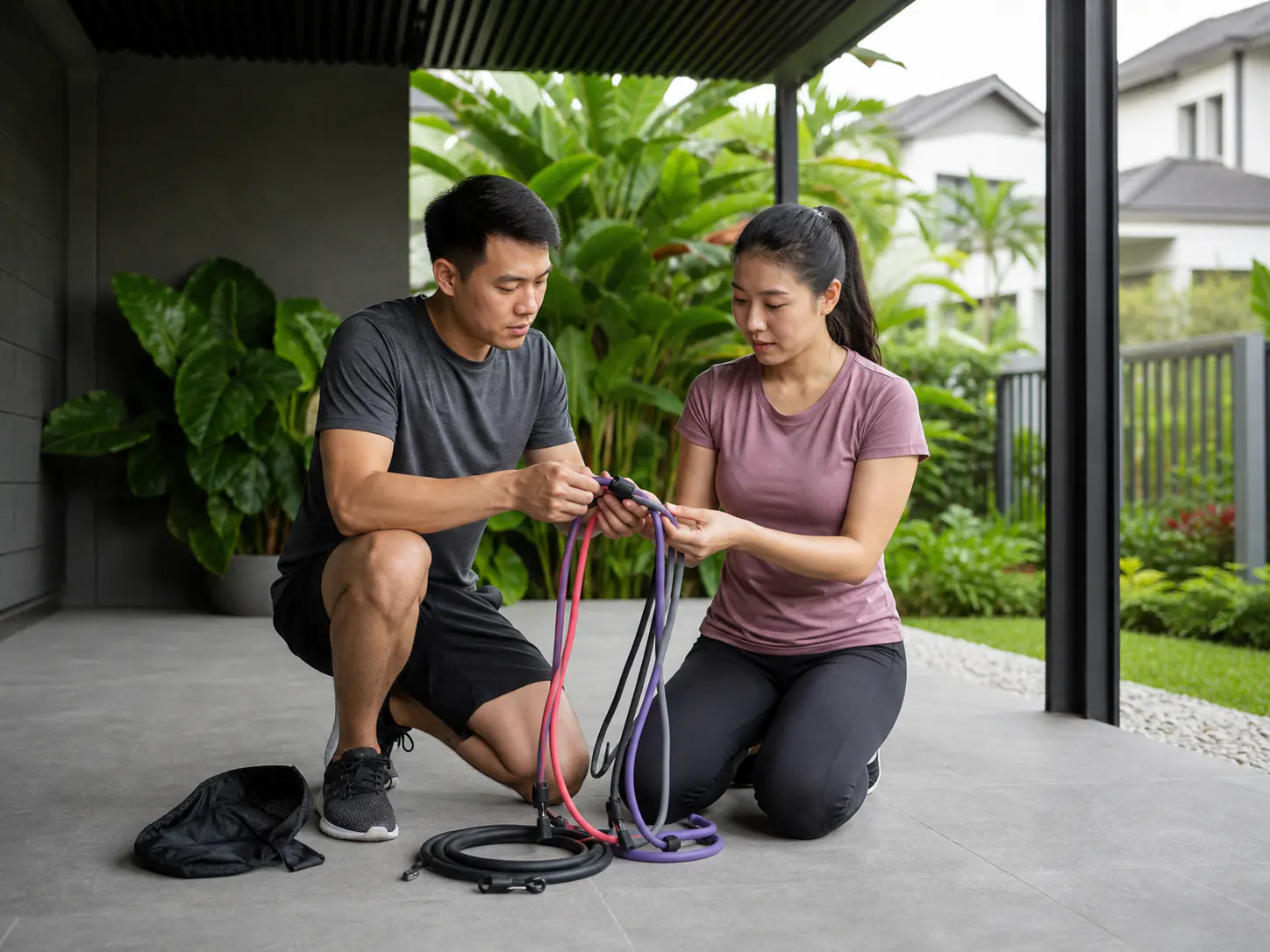
Few countries love badminton like Malaysia. Weekly games at the local hall are a fixture for people of all ages, and the standard can be seriously high. But here is the thing many social players miss: badminton is brutally demanding, explosive lunges, sudden stops, overhead smashes and constant direction changes, and playing it once a week without any off-court training is a recipe for the injuries that end up sidelining you.
The players who keep playing hard into their forties and beyond are almost always the ones who do a little strength and conditioning off the court. Building leg power, ankle and knee stability, and shoulder resilience means you move faster, react quicker, and shrug off the demands that leave undertrained players nursing strains. The gym does not replace court time, it protects and sharpens it.
Why badminton is harder on the body than it looks
The sport is all explosive movement: deep lunges to the net, hard pushes off one leg, twisting smashes and repeated fast direction changes. This loads the knees, ankles and shoulders heavily. Played regularly without off-court preparation, those repeated stresses are exactly where the common badminton injuries come from.
Conditioning that keeps you on court
- Leg strength and single-leg work for explosive lunges
- Ankle and knee stability to handle sudden stops
- Shoulder strength and mobility for safe, powerful smashes
- Core work for rotation, balance and quick recovery
Dodging the common injuries
Rolled ankles, sore knees and cranky shoulders are the classic badminton complaints, and most trace back to the body not being prepared for the sport's demands. Targeted strength and stability work makes the joints and muscles resilient to exactly the loads the game throws at them, cutting your injury risk sharply so you keep playing.
Training around your game nights
You do not need to train every day to see the benefit. A couple of focused off-court sessions a week, timed so they do not leave you sore for your game, are enough to build durability and speed. We structure the plan around your badminton schedule so the sport you love and your training reinforce each other.