Illustrative coaching scenario
Over 50 and Getting Genuinely Stronger
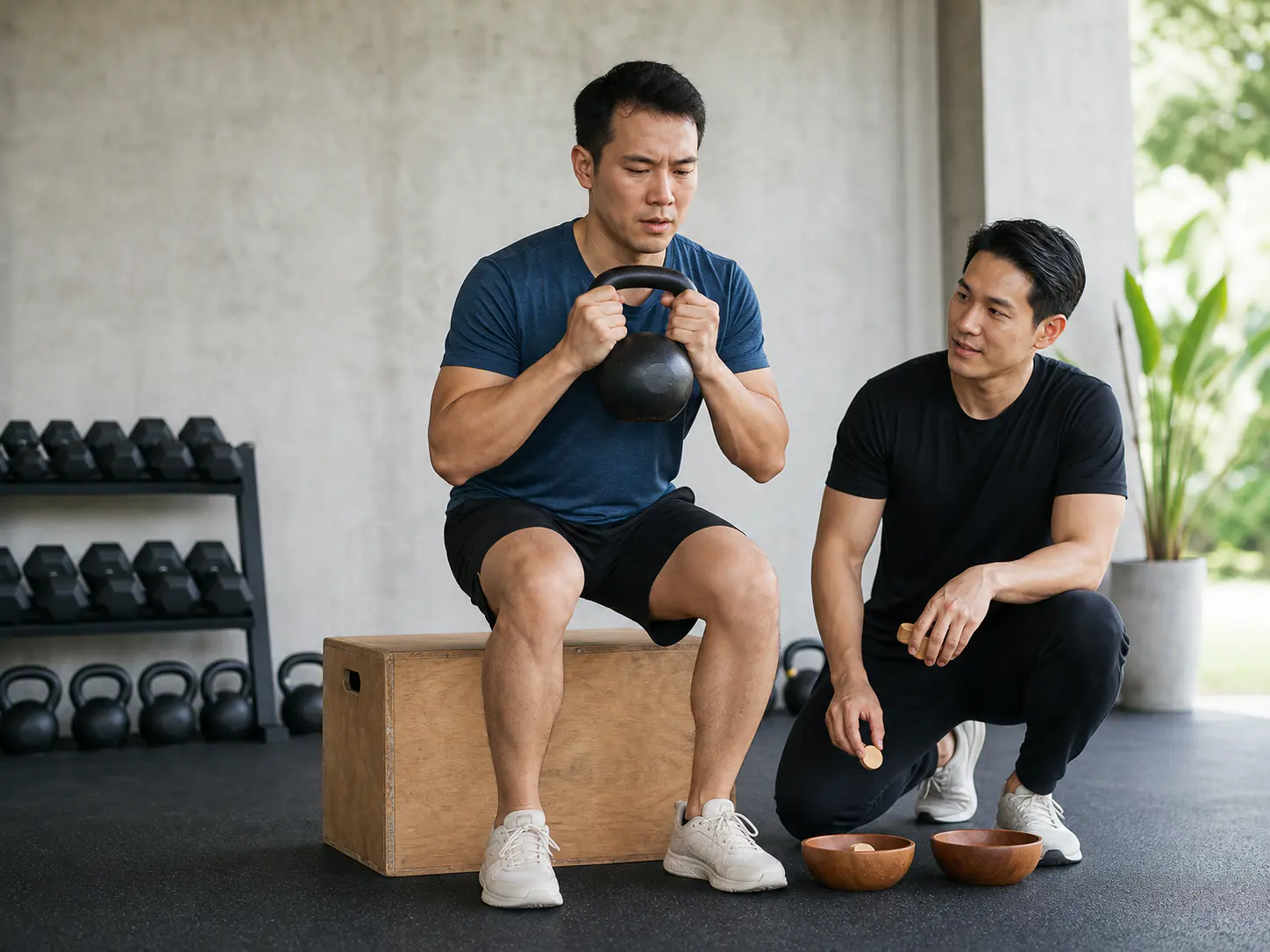
This is a representative, composite example based on typical over-50 journeys, not a specific individual, and results vary. After medical clearance, it follows someone over 50 building genuine strength and muscle, protecting bones, joints and independence for the decades ahead.
About this example
This page is an illustrative scenario based on common coaching patterns. It is not one client’s testimonial and it does not promise typical results. Actual progress depends on starting point, health, consistency and other factors.
A note first: this is an illustrative, composite story drawn from many over-50 clients, not one named person, and everyone progresses differently. We begin with medical clearance, and if anything needs a doctor or physio first, we say so and wait. This is fitness coaching to build strength, not treatment for any condition, but done well, strength training is one of the best investments at this age.
Picture someone around 55 who has noticed the slow creep, a bit weaker, a bit softer, jars harder to open, getting off the floor less graceful than it used to be. They have heard that muscle and strength fade with age and quietly accepted it. The good news we open with: that decline is far more trainable than Many people over 50 believe.
The starting point
With clearance in hand, we screen movement, balance and current strength, and note any joints that grumble. We ask about bone health, past injuries and what daily tasks have started feeling harder. Most over-50s have lost more strength than they realise, but the body still responds to training remarkably well, that is the encouraging part we lead with.
The honest baseline is usually someone who has gently declined for a decade without loading their muscles, so they are weaker than their age demands. That is very fixable. We measure it so progress is visible, not guessed at.
The plan
Two 1-to-1 strength sessions a week, starting appropriately and progressing patiently, because strength training over 50 is safe and effective when the loading is sensible. We prioritise the big functional patterns, protect the joints, and build genuine strength rather than just gentle movement, challenge is what actually drives adaptation.
- Real, progressive strength work, not just light waving of weights
- Big functional patterns, squat, hinge, push, pull, carry
- Loading that respects the joints but still challenges the muscles
- Patient progression, since recovery is slower but adaptation still happens
What we measured
- Strength on the main lifts, retested to prove real gains over time
- Sit-to-stand and grip strength, strong markers of healthy ageing
- Balance and steadiness, which strength supports
- How daily tasks feel, jars, stairs, getting off the floor
- Any joint niggle, tracked so it improves rather than worsens
What changed and the honest timeline
Many over-50 clients are surprised how much strength they regain, noticeable gains often show within the first couple of months, and everyday tasks that felt harder start feeling normal again. Because strength training also supports bone and muscle at this age, the benefits go well beyond how the weights feel. It is genuinely never too late to start.
The honest timeline: recovery is slower than it was at 30, so we progress patiently and expect some weeks to be better than others. We never push through joint pain, and if something flares or a new symptom appears, we pause and involve their doctor. We coach strength, not disease treatment. The realistic win is a stronger, steadier, more independent body built to last the coming decades.