Skip to content

Coaching for your starting point

Training for Bone Health Through Menopause

Bone health training uses weight-bearing and resistance exercise to help keep bones strong as oestrogen falls. We coach women one-to-one with safe, progressive loading. We do not diagnose or treat osteoporosis, for scans, diagnosis and medication, your doctor leads and we train alongside their advice.
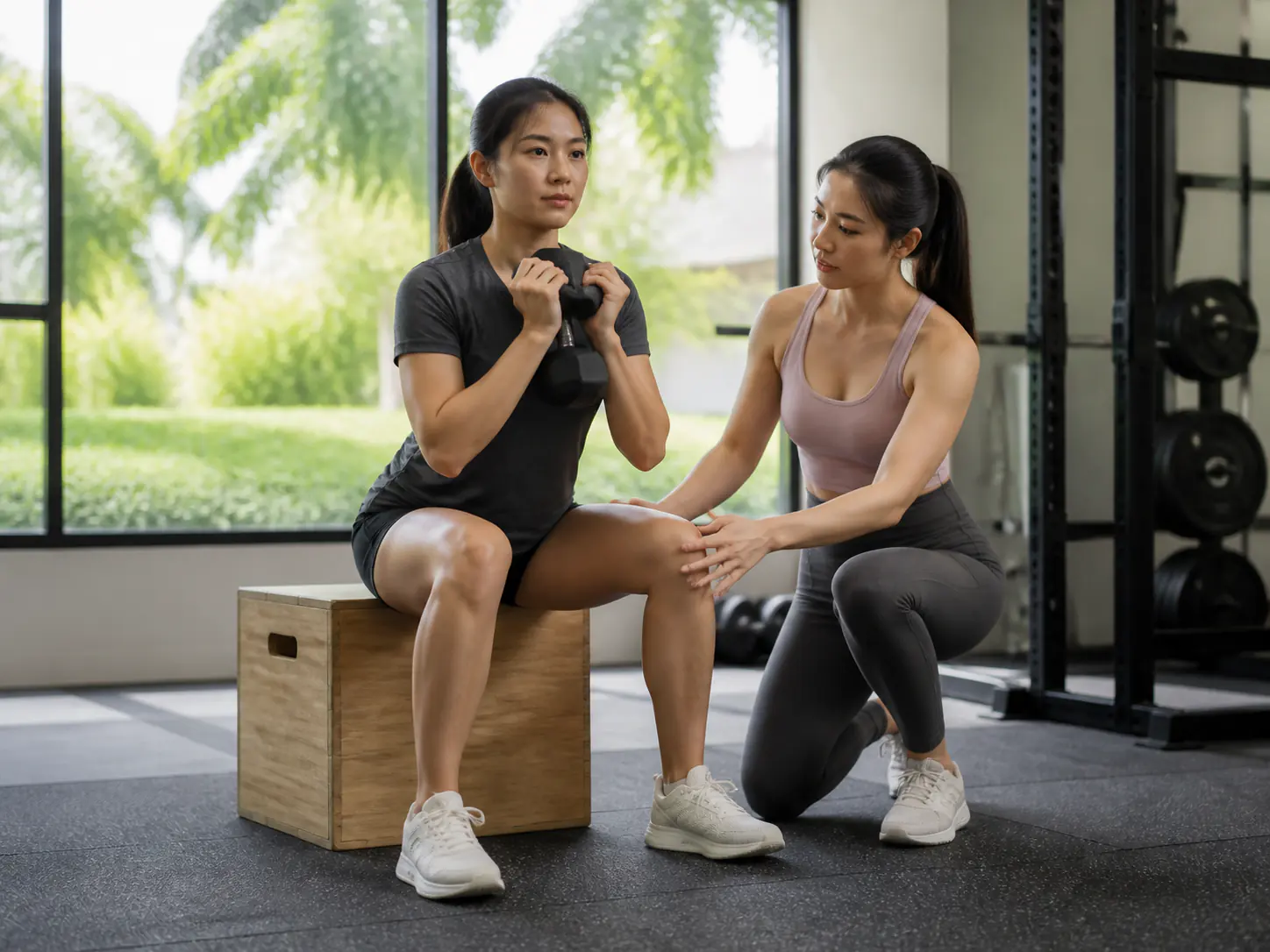
A woman completing a coached dumbbell box squat

Bone loss speeds up around menopause, and for many women that is invisible until something breaks. The encouraging part is that bone responds to load: the right kind of weight-bearing and strength work sends a signal that tells the body to keep bone strong. It is one of the few things within your control during this stage.

We coach this carefully and privately. This is a fitness service, not a clinic, we do not scan bones or prescribe medication. If you have been told you have low bone density or osteoporosis, we ask you to bring your doctor's guidance so we can train within safe limits and avoid movements that are not appropriate for you.

What actually helps bone

Bone gets stronger when muscles pull on it and when you move against gravity and resistance. Gentle, non-weight-bearing activity is good for the heart but does little for bone. That is why our plans centre on progressive strength work and purposeful weight-bearing movement.

  • Progressive resistance training for the big muscle groups
  • Weight-bearing movement suited to your ability
  • Balance and stability work to reduce fall risk
  • Posture work for the upper back and spine

Safety first for fragile bones

If your bones are already thin, some common exercises and heavy end-range movements are not appropriate. We avoid risky positions, control every rep, and progress conservatively. Nothing is loaded until your technique is solid and, where relevant, your doctor is comfortable.

Reducing the real risk: falls

Most fractures in older women come from falls, not from lifting. So alongside strength we train balance, foot and ankle control, and quick recovery of position. Stronger legs and steadier balance are your best insurance against a bad fall on wet tiles or uneven kerbs.

Where you train and how we coordinate

Sessions run at our Putra Heights centre or your home or condo gym across KL and Selangor. If you are under a doctor or physio for bone health, we are happy to work within their recommendations so everyone is pulling the same direction.

Frequently Asked Questions

Can exercise reverse osteoporosis?+

We do not make treatment claims. Research shows appropriate loading supports bone strength, but osteoporosis is a medical condition your doctor manages. We provide the training side within whatever limits your doctor sets.

I already have low bone density, is lifting safe?+

Often yes, with the right exercises and careful progression, but some movements must be avoided. Please share your diagnosis and any restrictions so we coach safely and refer back to your doctor when needed.

What if I have never exercised before?+

That is completely fine. We start with bodyweight and light resistance, build confidence and technique, then progress. Many of our bone-focused clients began with almost no exercise history.

How often should I train for bone health?+

Two well-structured sessions a week, kept up consistently over months and years, is a sensible target for most women. Consistency over time matters far more than occasional hard efforts.

Continue exploring

Why KinesioFitness

Our Scope & Referral Policy

Our scope is fitness coaching: assessing movement, building strength, and guiding fat loss and conditioning for healthy or medically cleared adults. We do not diagnose, treat injuries or manage disease. When something falls outside our lane, we refer you to a doctor or physiotherapist first.

Compare this option →
Programmes

Post-Rehabilitation Fitness

Post-rehabilitation fitness is for people who have completed their rehab and been cleared by a doctor or physio to exercise again. We are not physios and do not treat injuries, we take over once you are discharged, rebuilding strength and confidence so you return to full, active life.

See what it includes →
Assessments

Your Health History

Your health history is the record of past injuries, conditions, surgeries and medications you share before training. It is not judged or diagnosed, it is used to set safe loads, train around old problems, and know when to refer you to a doctor first. The fuller it is, the safer you train.

See how it works →
Why KinesioFitness

Working With Your Doctor or Physio

If you are under a doctor or physiotherapist, we train alongside them, not against them. With your permission we respect their restrictions, build a plan that supports their treatment, and stay in our lane as coaches. This teamwork is how people with conditions or past injuries train safely and well.

Compare this option →
Goals

Healthy Ageing

Healthy ageing through exercise means protecting the muscle, bone, balance and mobility that keep you independent as the years pass. We coach a safe, progressive plan 1-to-1 after any needed medical clearance, so you stay strong and active rather than slowly losing capacity.

See the coaching approach →
Assessments

Balance Assessment

A balance assessment measures how steady you are on your feet, standing, shifting weight, single-leg holds. It is a fitness screen, not a neurological diagnosis. It tells us how much stability to build before loading balance-heavy exercises, and it matters most for older adults and anyone who feels unsteady.

See how it works →

Want to know whether this training suits you?

Tell us your starting point, goal and what makes consistency difficult. We will explain the realistic options.

Ask whether this suits me Request an assessment time