Skip to content

Exercise technique guide

How to Do a Hollow Hold

The hollow hold has you lie on your back and lift your arms and legs, holding a curved, tense body position. It builds deep core strength and teaches full-body tension, a skill used in gymnastics and every strong lift. It scales easily by adjusting your arm and leg position.
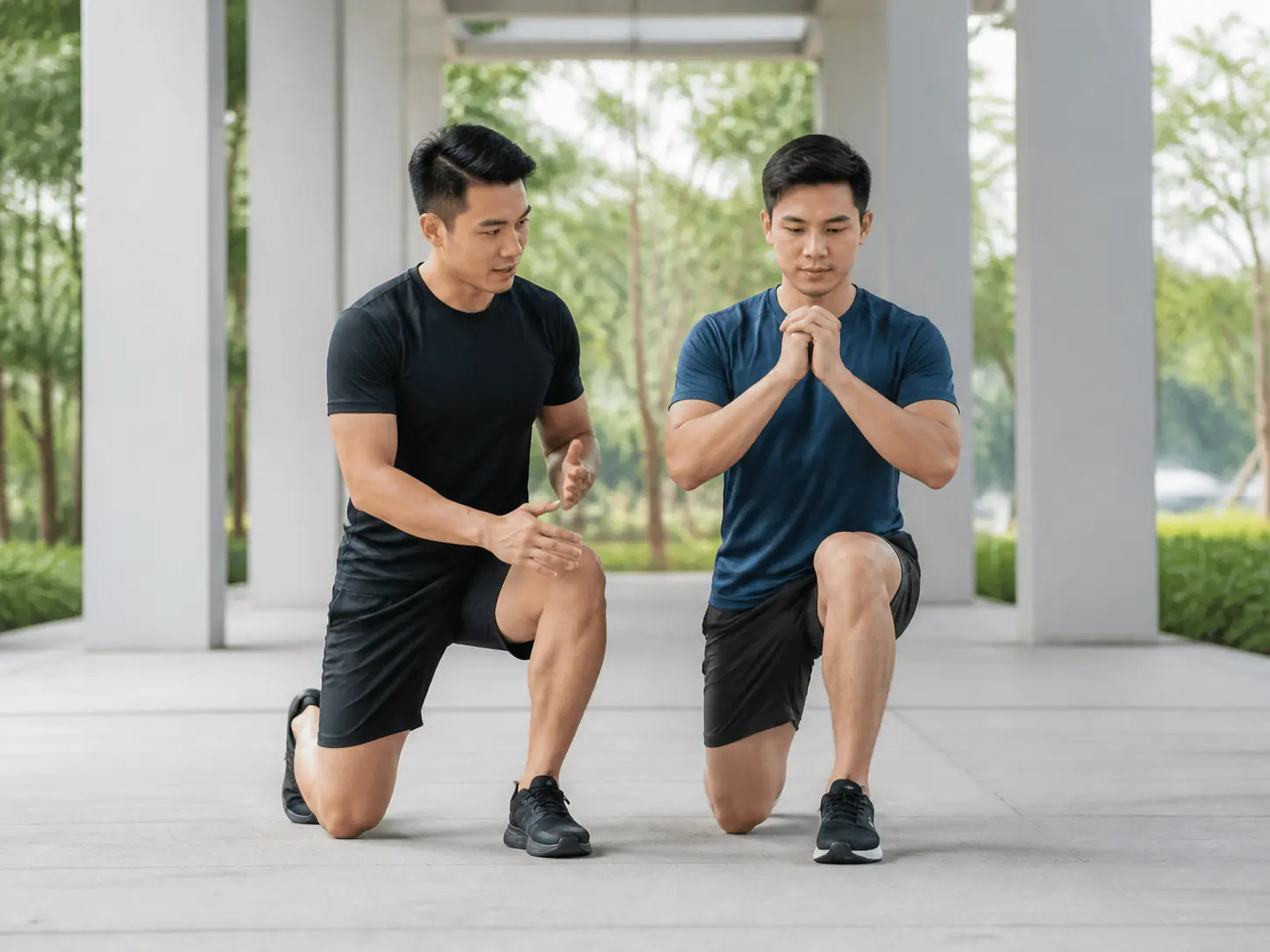
A trainer demonstrating controlled split-squat technique

The hollow hold looks like just lying down until you try it. Lifting your arms and legs while pressing your lower back into the floor forces the deep core to work hard, building the kind of tension that underpins strong lifts and gymnastics.

You need only floor space, so it fits any home or our Putra Heights centre. It scales beautifully: tuck your limbs in to make it easier, or extend them long to make it brutally hard, all from the same position.

What it trains and who it suits

It builds deep core strength and teaches whole-body tension while keeping the lower back flat. It suits anyone wanting a stronger core, and those training toward gymnastics-style movements.

Because you can adjust the difficulty by changing your arm and leg position, it works for beginners and advanced athletes alike.

Step-by-step cues

  1. Lie on your back and press your lower back into the floor
  2. Lift your shoulders and legs slightly off the ground
  3. Reach your arms overhead or by your sides
  4. Keep a curved, banana-like body shape with the core tight
  5. Hold, breathing shallowly, without the back arching up

Common mistakes and quick fixes

  • Lower back arching off the floor, press it down and tuck the limbs in
  • Holding the breath, take shallow breaths while staying tight
  • Legs too low straining the back, raise them a little
  • Losing tension, squeeze the whole body like one unit

Regressions, progressions and when to stop

Too hard? Tuck your knees and keep your arms by your sides. Too easy? Extend the arms and legs long, or add a gentle rock. At home the floor is enough; at our centre we progress the lever length and add dynamic variations.

  • Stop if you feel sharp low-back pain rather than deep core effort
  • See a professional if your back keeps arching no matter how much you tuck

Frequently Asked Questions

Why does my lower back lift off the floor?+

Your core cannot yet hold the position at that lever length. Tuck your knees and bring your arms in to shorten the lever, keeping your lower back pressed firmly down.

What is the hollow hold good for?+

It builds deep core strength and teaches full-body tension, which carries over to gymnastics, strong lifts and better control in almost every other exercise.

How long should I hold it?+

Start with holds of ten to twenty seconds in a position you can keep with a flat back. Build up gradually, and extend the limbs to progress rather than only chasing time.

Is it safe for my back?+

When your lower back stays pressed to the floor, it is a back-friendly core exercise. If your back arches up, shorten the lever. Sharp back pain means stop and reassess.

Continue exploring

Programmes

Core Training

Core training builds the deep trunk muscles that stabilise your spine, protect your back and transfer force between your upper and lower body. It is about a strong, functional midsection that supports everything you do, not just chasing visible abs with endless crunches.

See what it includes →
Programmes

Lower-Body Strength

Lower-body strength training builds your legs, hips and glutes, the biggest muscles you own and the engine behind walking, stairs, sport and standing up. Strong legs make daily life easier, protect your knees and back, and burn plenty of energy in the process.

See what it includes →
Goals

Core Strength and Flat Stomach

A strong core and a flat stomach are two separate jobs. Core strength comes from training the muscles that stabilise your spine; a flatter stomach comes from losing belly fat. We coach both together 1-to-1, so you get a back-protecting core and a tighter midsection.

See the coaching approach →
Goals

Do Your First Pull-Up

Getting your first pull-up is a specific strength goal with a clear path: build your back and arm pulling strength through progressions like assisted and negative reps until you can lift your full bodyweight once. We coach that ladder 1-to-1 so you actually get there.

See the coaching approach →
Weight Loss

Strength Plus Cardio for Fat Loss

The best fat-loss plans use both strength and cardio, not one or the other. Strength keeps muscle and shape; cardio and walking add extra calorie burn and heart health. We show you how to combine them without overtraining, so fat drops while your body stays strong.

See the coaching approach →
Weight Loss

Weight Loss After 50

Weight loss after 50 is really about protecting muscle and bone while losing fat. We use gentle, controlled strength training, enough protein and daily walking to reshape your body without crash diets, improving how you move, your balance and your health, not just the number on the scale.

See the coaching approach →

Want help applying this guide to your own training?

Private coaching adapts exercise choice, loading and progression to your level, equipment and goal.

Ask a question first Request an assessment time