Skip to content

Exercise suitability guide

Exercise With Osteopenia in KL & Selangor

If your doctor has cleared you and you have osteopenia, appropriate weight-bearing and strength exercise supports bone-healthy, active living. We coach with careful technique and steady progression. We do not treat osteopenia or interpret your bone scans, that stays with your doctor.
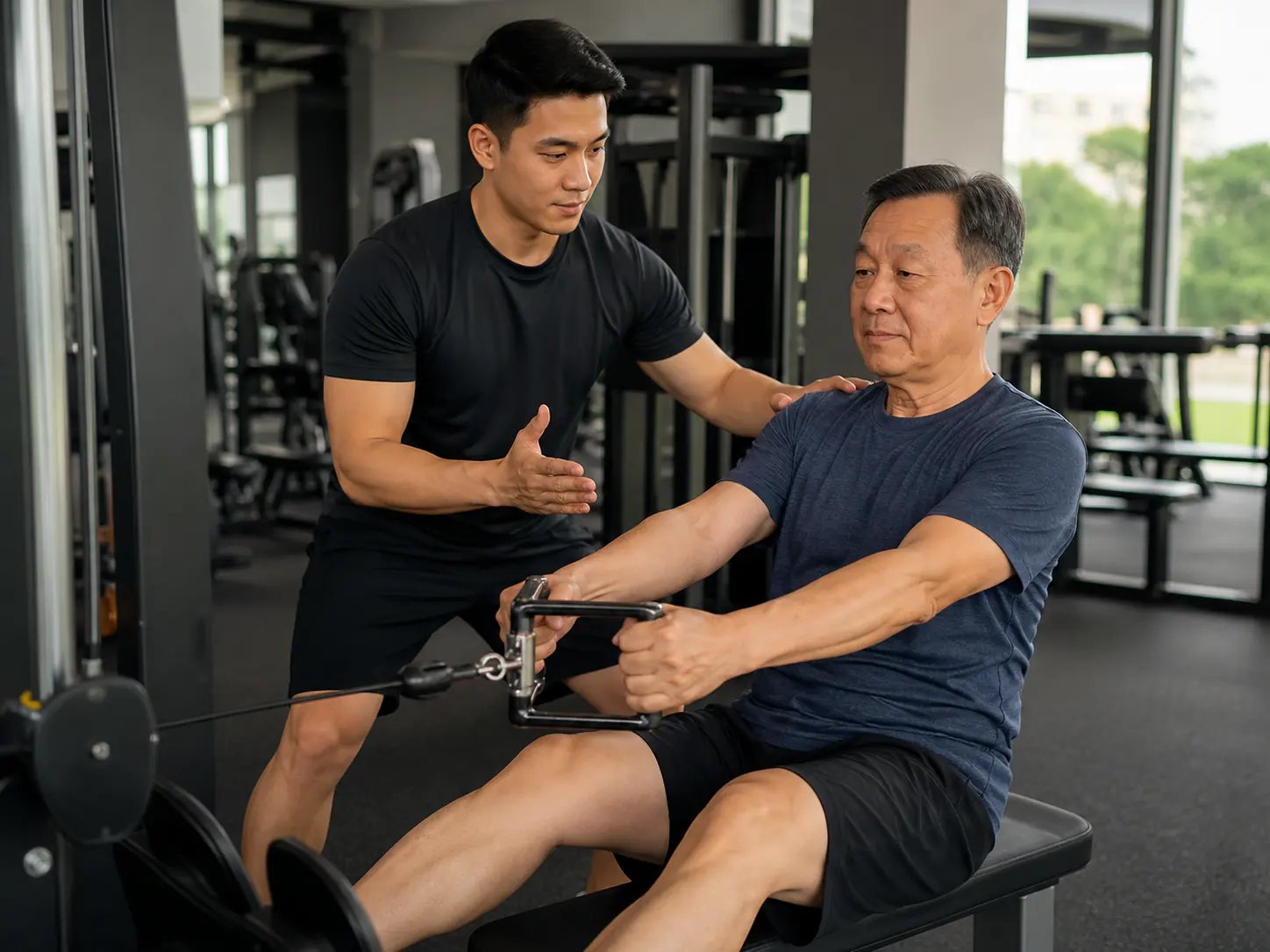
An older adult completing a supervised cable-row exercise

Osteopenia often gets discovered on a routine scan and leaves people unsure whether to move more or less. Once your doctor has cleared you, the general principle is encouraging: bones respond to sensible, progressive loading, so well-coached weight-bearing and strength work is usually a good thing rather than something to fear.

We coach the exercise carefully and stay out of the medical picture. We do not diagnose, treat, or interpret your bone-density results, and we make no promises about your scores, that is your doctor's domain. Our focus is safe technique, steady progression, and building strength and balance that support everyday confidence.

How we train with low bone density

We favour weight-bearing movements and progressive strength work, introduced gradually and always with clean technique. Good form matters more here than heavy loads, so we take time to get positions right before adding any real resistance.

We also work on balance and coordination, because staying steady on your feet is a big part of everyday confidence. We keep progression patient and never rush load onto a body that is still learning the movement.

What a sensible plan includes

  • Weight-bearing movements suited to your current ability
  • Progressive strength work with careful, coached technique
  • Balance and coordination practice for steadiness on your feet
  • Gradual increases, never sudden jumps in load
  • Any specific limits your doctor set treated as fixed rules

Red flags, stop and get review

  • New, sharp or persistent bone or back pain
  • Pain after a knock, fall or awkward movement, get it checked
  • Sudden back pain with loss of height or a stooped posture
  • Any movement your doctor specifically told you to avoid
  • Anything that does not feel right, pause and check with your doctor

Your doctor manages your bone health

Diagnosing osteopenia, ordering scans, and deciding on any medication or supplements is entirely your doctor's job. We never interpret your results or claim exercise will change your bone density. If your doctor gave you specific movements to avoid, those become hard rules we train around.

Frequently Asked Questions

Should I avoid exercise to protect my bones?+

Usually the opposite, once cleared, bones respond to sensible loading. We coach appropriate weight-bearing and strength work with careful technique. We always follow any specific restriction your doctor gave you.

Can lifting weights make my bones stronger?+

We make no medical claims about your bone density, that is for your doctor to assess. Appropriate strength and weight-bearing exercise supports an active, healthy lifestyle, and we coach it safely within your clearance.

What movements should I avoid?+

If your doctor named specific movements to avoid, tell us and we treat them as off-limits. Otherwise we favour well-coached, controlled movements and steer clear of anything jarring or high-risk until you are stronger.

Is balance training important?+

Yes. Staying steady on your feet supports confidence in daily life. We include balance and coordination work alongside strength, all at a pace that suits you.

Continue exploring

Assessments

When You Need Medical Clearance

Medical clearance means getting your doctor's okay before starting exercise. Certain answers on your screening, chest pain, uncontrolled blood pressure or diabetes, recent surgery, dizziness, mean we pause and ask you to see a doctor first. Once cleared, we train around whatever you have.

See how it works →
Assessments

Grip Strength Test

A grip strength test measures how hard you can squeeze, usually with a hand dynamometer. Grip is a surprisingly good marker of overall strength and healthy ageing. We track it as a simple, motivating fitness signal, not as a medical diagnosis, and we build it through your training over time.

See how it works →
Why KinesioFitness

Our Scope & Referral Policy

Our scope is fitness coaching: assessing movement, building strength, and guiding fat loss and conditioning for healthy or medically cleared adults. We do not diagnose, treat injuries or manage disease. When something falls outside our lane, we refer you to a doctor or physiotherapist first.

Compare this option →
Why KinesioFitness

Safety & Screening

Before you lift anything heavy, we screen you: a health-history questionnaire, a movement check, and a look at any conditions or medications that affect training. If we spot a red flag, we get you cleared by a doctor first. Good screening is why serious injuries in our sessions are so rare.

Compare this option →
Guides & Tools

Bone Density And Exercise

Bones respond to being loaded, so strength training and weight-bearing exercise help build and maintain bone density. This becomes especially valuable with age, as bones naturally weaken. Loading your bones sensibly through resistance and impact supports lifelong bone health. For medical concerns, see a doctor.

Read the guide →
Guides & Tools

Exercise And Blood Pressure Basics

In general, regular exercise supports heart health and healthy blood pressure over time as part of an active lifestyle. This is general education, not medical advice. If you have high blood pressure, a heart condition, or take medication, speak to your doctor before starting or changing an exercise routine.

Read the guide →

Not sure whether exercise is suitable for your situation?

Share your situation, any medical clearance and your training goal. We will explain the fitness scope and when referral is needed.

Ask about exercise suitability Request an assessment time