Skip to content

Exercise suitability guide

Exercise With High Cholesterol in KL & Selangor

If your doctor has cleared you and you are managing high cholesterol, an enjoyable, sustainable exercise routine supports an active lifestyle. We coach a mix of cardio and strength you can keep up long term. We do not treat cholesterol or interpret your blood results, that is your doctor's role.
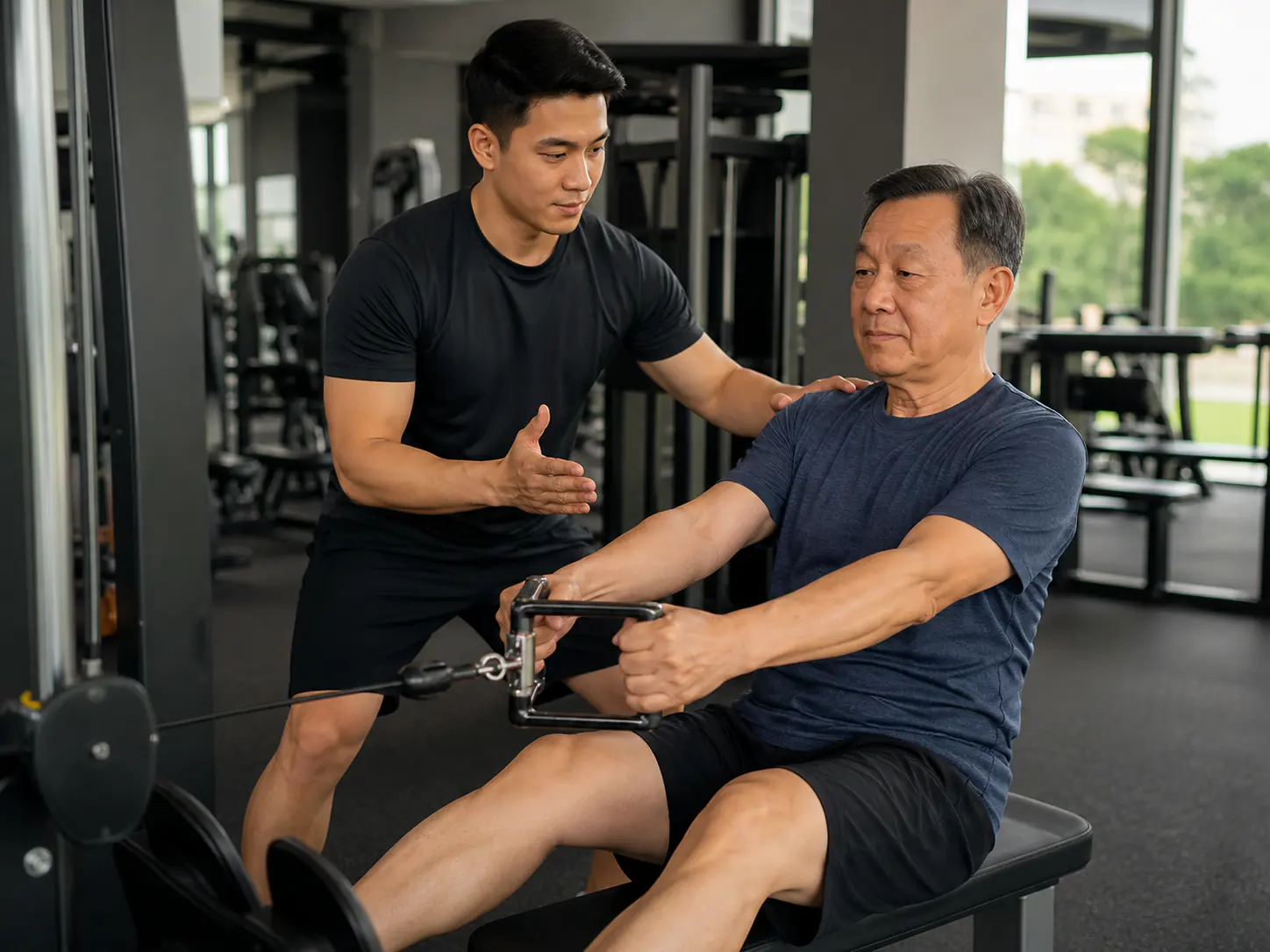
An older adult completing a supervised cable-row exercise

High cholesterol usually turns up quietly on a blood test rather than through any symptom, so the challenge is motivation to keep moving when you feel completely fine. That is where having a coach and a plan helps, it turns a vague intention to "be more active" into scheduled sessions you actually show up for.

We coach the exercise side and stay out of the medical side entirely. We will not promise to lower your cholesterol, tell you what to eat, or comment on your statins or blood results. Your doctor owns all of that. We build a routine that keeps you consistently active, which is simply a good thing in its own right.

A routine built to last

Because there are no symptoms to push you, the plan has to be genuinely enjoyable or it will not survive a busy month. We mix cardio you do not dread with strength work that makes everyday life feel easier, and we keep the schedule realistic around work and family.

We progress slowly and celebrate consistency over intensity. Showing up twice a week for a year beats a punishing month that ends in burnout.

What a balanced week can look like

  • Two strength sessions to build and keep muscle
  • Regular cardio you actually enjoy, brisk walks, cycling, swimming
  • Movement worked into daily life, not just gym time
  • Sessions scheduled like appointments so they happen
  • Gradual progress you can sustain past the first month

Red flags, get medical review

  • Chest pain, tightness or pressure, or pain spreading to arm or jaw
  • Unusual breathlessness or fatigue for the effort
  • Dizziness, fainting or an irregular heartbeat
  • Any symptom your doctor asked you to watch for
  • New muscle pain or weakness if you are on cholesterol medication, tell your doctor

Your doctor manages your cholesterol

Testing, diagnosing and treating high cholesterol, including any medication, is entirely your doctor's job. We never interpret your numbers or claim exercise will change them. If your doctor refers you to a dietitian, follow that advice; good nutrition and good training complement each other without overlapping.

Background guidance

This page is written to align with the general public-health guidance below. These sources do not endorse KinesioFitness, and this page is not medical advice.

How we create and check content →

Frequently Asked Questions

Will exercise lower my cholesterol?+

We make no such claim, that is a medical question for your doctor. What we offer is a consistent, active routine that supports overall health. Any effect on your blood results is for your doctor to assess and manage.

Do you give diet advice for cholesterol?+

No. We are trainers, not dietitians. If your doctor recommends dietary changes or a dietitian, we support that fully and build your training around it, but we never prescribe food.

I take statins, anything to know?+

Keep taking them exactly as prescribed. Some people notice muscle aches on cholesterol medication; if that happens, tell us and your doctor rather than pushing through. We adjust training while they advise.

What type of exercise is best?+

The best exercise is the one you will keep doing. We combine cardio you enjoy with strength work, in a schedule that fits your life, because consistency matters far more than any single "perfect" workout.

Continue exploring

Assessments

How Often to Reassess

Most fitness markers are best reassessed every four to six weeks. That is long enough for training to produce real change, but frequent enough to keep your plan accurate and your motivation high. We reassess sooner if something changes health-wise, and we always refer to a doctor when needed.

See how it works →
Assessments

Resting Heart Rate

Resting heart rate is your pulse when calm and at rest. As you get fitter, it often drifts lower, making it a simple recovery and conditioning marker we can track over time. It is a fitness signal, not a diagnosis, and unusual readings are a reason to see a doctor, not to train harder.

See how it works →
Guides & Tools

Exercise And Blood Pressure Basics

In general, regular exercise supports heart health and healthy blood pressure over time as part of an active lifestyle. This is general education, not medical advice. If you have high blood pressure, a heart condition, or take medication, speak to your doctor before starting or changing an exercise routine.

Read the guide →
Guides & Tools

Exercise And Blood Sugar Basics

In general, regular exercise helps the body use blood sugar and supports overall metabolic health. Both cardio and strength training play a role. This is general education, not medical advice. If you have diabetes, blood sugar concerns, or take any medication, speak to your doctor before changing your routine.

Read the guide →
Health & Exercise

Exercise With Osteoporosis After Clearance

With osteoporosis, exercise must be approached carefully and only after clear medical clearance. We coach controlled strength and balance work, avoid high-risk movements like heavy spinal bending or twisting, and follow your doctor's restrictions exactly. We never treat osteoporosis or interpret your scans.

Read the suitability guide →
Who We Help

Personal Training for Adults Over 50

Personal training after 50 can focus on strength, balance, bone-loading exercise, mobility and the everyday tasks you want to keep doing independently. Screening and progression are adapted to health history, medication, symptoms, current capacity and medical guidance where relevant.

See how coaching adapts →

Not sure whether exercise is suitable for your situation?

Share your situation, any medical clearance and your training goal. We will explain the fitness scope and when referral is needed.

Ask about exercise suitability Request an assessment time