Skip to content

Practical fitness guide

How To Improve Your Posture With Training

Posture improves most when you build strength in the muscles that hold you upright and move more throughout the day, not from forcing yourself to sit rigidly straight. There is no single perfect posture; the best posture is one that varies and that your body is strong enough to maintain.
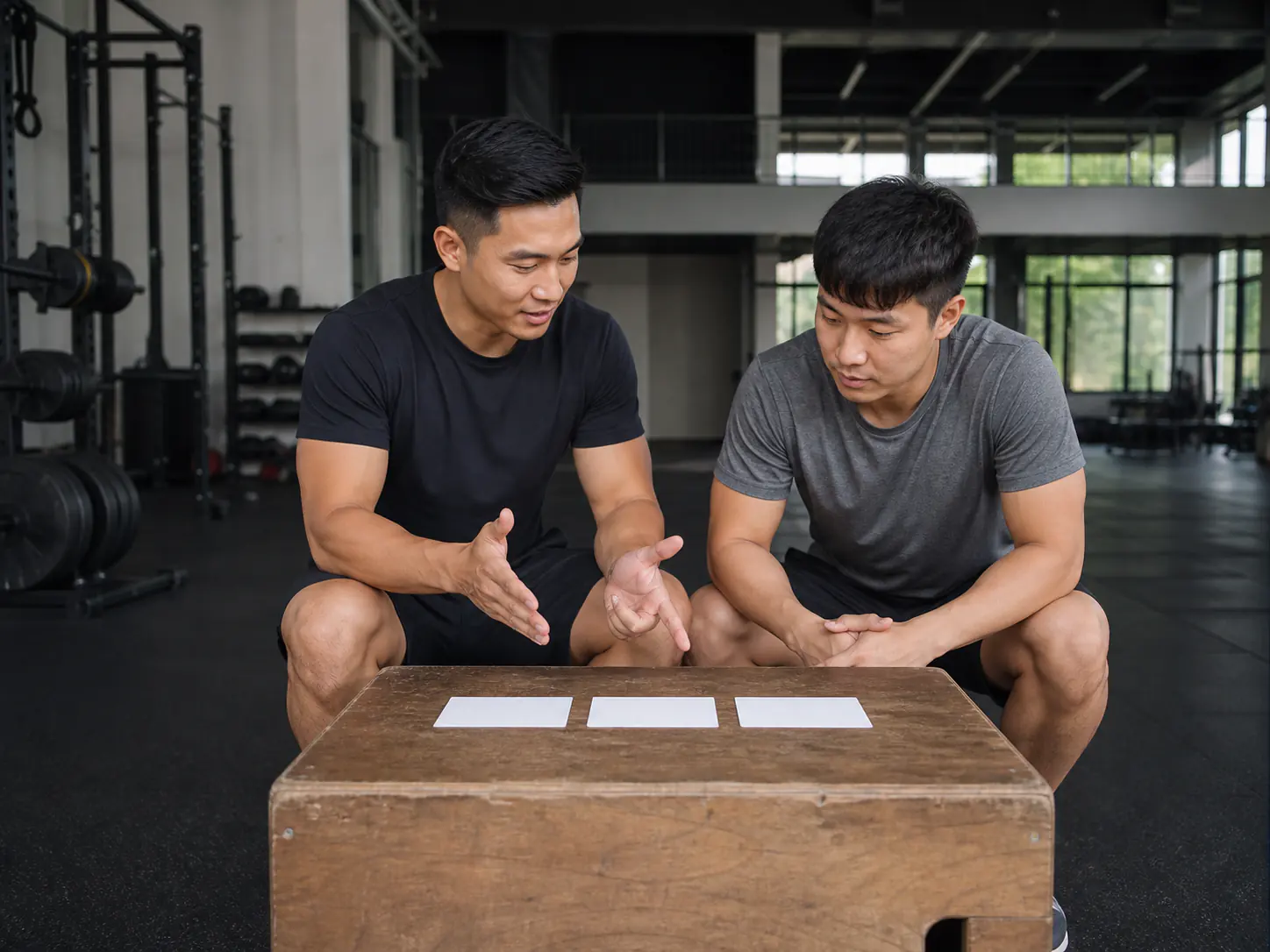
A trainer explaining a practical fitness guide

Long hours hunched over a laptop or phone leave many people feeling rounded and stiff. The usual advice is to sit up straight and stop slouching, but willpower alone rarely fixes posture. What actually helps is building strength in the muscles that support an upright position and moving more often, so no single position gets held too long.

It is worth clearing up a myth: there is no one perfect posture you must hold at all times. The best posture is a varied one that your body is strong enough to support. This guide covers the practical things that genuinely improve how you sit, stand and feel, especially if you have a desk job.

Why strength beats sitting up straight

Forcing yourself upright works for a few minutes, then you drift back because the supporting muscles tire. Training the muscles of your back, shoulders and core builds the endurance to hold better positions naturally. Posture is less about willpower and more about having a body strong enough to maintain it comfortably.

  • Willpower alone rarely fixes long-term posture
  • Strong back, shoulder and core muscles hold you up
  • Moving often prevents any position being held too long
  • There is no single perfect posture to force

Move more, sit less rigidly

The best posture is your next one, meaning variety matters. Sitting perfectly still, even upright, gets uncomfortable. Getting up regularly, changing position, and taking short movement breaks does more for how you feel than any single ideal posture. For desk workers in KL and Cyberjaya, this is often the biggest win.

Exercises that support posture

Pulling exercises like rows strengthen the upper back that desk work neglects. Core work helps you support your spine. Exercises that open the chest and strengthen the shoulders counter the rounded-forward position. You do not need a special posture routine, sensible strength training already builds a body that holds itself well.

Improving posture practically

  1. Strengthen your back with pulling exercises like rows
  2. Include core work to support your spine
  3. Take regular breaks to stand and move at your desk
  4. Vary your position rather than holding one pose
  5. Build overall strength so good posture feels natural

Frequently Asked Questions

Can I fix my posture just by sitting up straight?+

Only briefly. Willpower fades as the supporting muscles tire and you drift back. Lasting improvement comes from strengthening your back, shoulders and core, plus moving more often, so better positions become natural rather than forced.

Is there one perfect posture?+

No. The idea of a single ideal posture you must hold all day is a myth. Bodies are made to move, and variety is healthier than rigidity. The best posture is one that changes and that your body is strong enough to support.

Does bad posture cause pain?+

It can contribute to stiffness and discomfort, but the picture is more complex than posture alone. Staying in one position too long is often the bigger issue. If you have persistent pain, see a doctor or physiotherapist rather than assuming it is just posture.

What exercises help posture most?+

Pulling exercises like rows for the upper back, core work for your spine, and shoulder and chest-opening movements all help counter a desk-bound, rounded position. Sensible overall strength training builds a body that naturally holds itself well.

Continue exploring

Why KinesioFitness

Assessment-Led Coaching

Assessment-led coaching means we test before we prescribe. Before your first real workout we screen how you move, what you can lift, your history and your schedule, then build a plan on facts, not a template. It is the single biggest reason our clients progress safely.

Compare this option →
Programmes

Core Training

Core training builds the deep trunk muscles that stabilise your spine, protect your back and transfer force between your upper and lower body. It is about a strong, functional midsection that supports everything you do, not just chasing visible abs with endless crunches.

See what it includes →
Why KinesioFitness

How We Keep You Consistent

Consistency, not intensity, is what changes bodies, and it is the thing Many people struggle with alone. We keep you consistent with booked sessions someone expects you at, simple check-ins, a plan that fits your real week, and honest support when motivation dips. Showing up is the whole game.

Compare this option →
Personal Training

Your First Session

Your first session is an assessment plus a gentle introductory workout, not a fitness test you can fail. We take your history and goals, check how you move, and coach a light first workout so you leave knowing what to expect and how to prepare for the next one.

Compare this option →
Goals

Fix Your Posture

Fixing posture is less about standing straighter on command and more about building the strength and mobility to hold a good position without effort. We coach that 1-to-1, opening tight areas from desk life and strengthening the muscles that keep you upright all day.

See the coaching approach →
Weight Loss

Weight Loss After 50

Weight loss after 50 is really about protecting muscle and bone while losing fat. We use gentle, controlled strength training, enough protein and daily walking to reshape your body without crash diets, improving how you move, your balance and your health, not just the number on the scale.

See the coaching approach →

Want help applying this guide to your own training?

Private coaching adapts exercise choice, loading and progression to your level, equipment and goal.

Ask a question first Request an assessment time