Skip to content

Sport-specific coaching

Basketball Conditioning in KL & Selangor

Basketball conditioning builds the jumping power, court agility and repeat-effort fitness the game needs, plus the landing and ankle control that keeps you off the sidelines. We train explosive movement and safe deceleration so you finish the game as sharp as you started it.
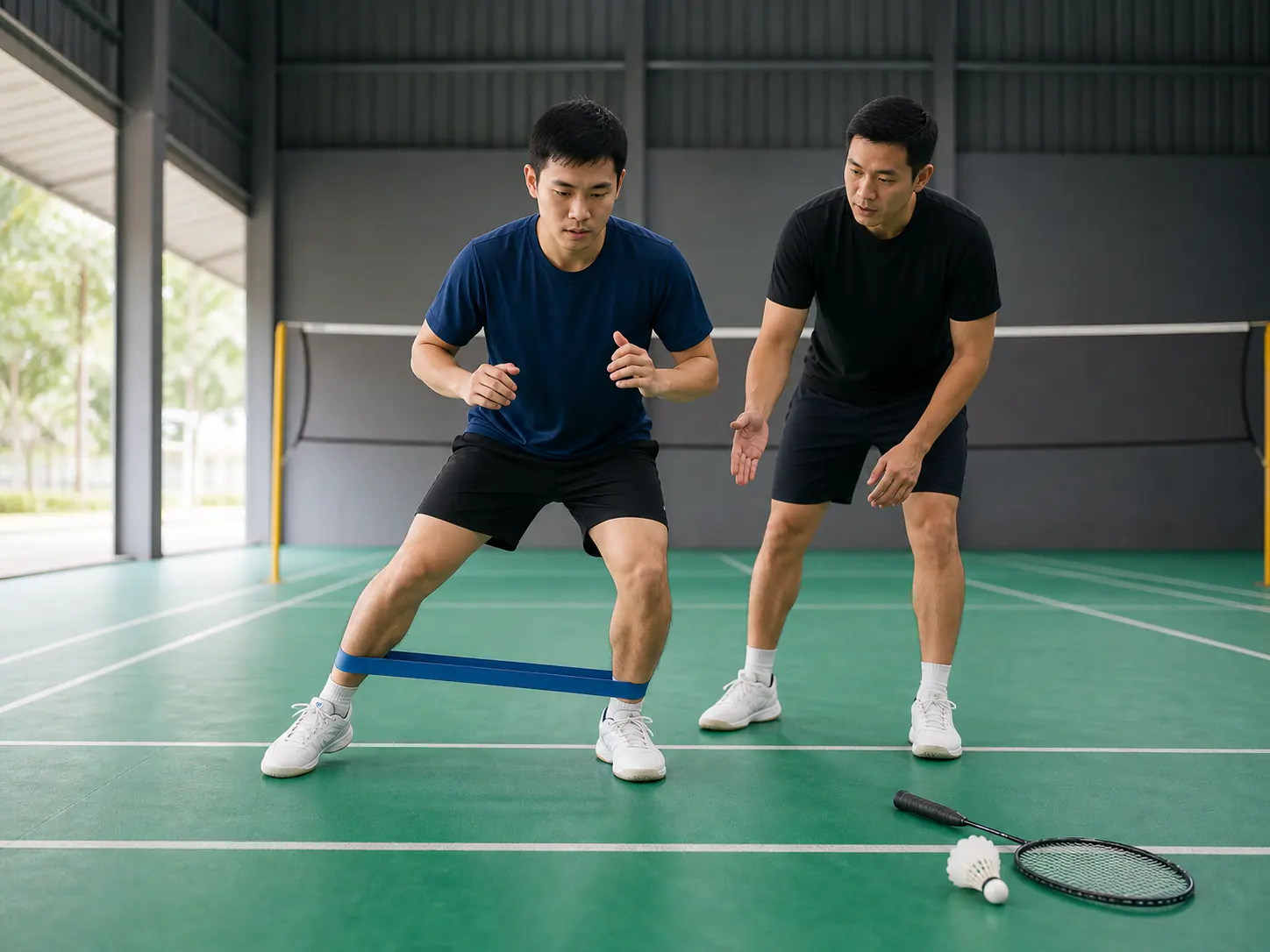
Badminton conditioning with a lateral resistance-band exercise

Basketball is jump, sprint, cut and collide, over and over. It rewards explosive power and punishes anyone who is not conditioned for the landings and constant direction changes. The classic injuries, rolled ankles and jarred knees, usually happen on poor landings or hard cuts when the legs are tired, not because the game is inherently dangerous.

We build the athletic base beneath your game: jumping power for rebounds and finishes, court agility for defence and drives, repeat-effort fitness to last four quarters, and crucially the landing and deceleration control that protects your ankles and knees. Whether you run full-court or play half-court pick-up, prepared legs keep you playing instead of icing an ankle.

The physical demands of basketball

A game is a series of explosive efforts, jumps, sprints, cuts and defensive slides, repeated with short recoveries across four quarters. You need power to jump and finish, agility to defend and create, and the fitness to keep both sharp late in the game.

The biggest injury risks come from landings and cuts. Ankles roll and knees twist when landing mechanics are poor or the legs are fatigued, so training landing control and single-leg strength is as important as training the jump itself.

What we assess and build

  • Jumping power for rebounds and finishing
  • Landing and deceleration control to protect joints
  • Court agility for defence and driving
  • Repeat-effort fitness to last the full game

A sample conditioning progression

  1. Weeks 1-2: build single-leg strength and landing control
  2. Weeks 3-4: add jump training and agility drills
  3. Weeks 5-6: reactive cutting and repeat-sprint conditioning
  4. Weeks 7-8: game-tempo work integrating jumps, cuts and fatigue

Common mistakes and home alternatives

Players train the jump but never the landing, then roll an ankle coming down in traffic. Others rely only on pick-up games for fitness. At home, single-leg strength, box or step landings practised slowly, and lateral bounds build both the power and the joint control the game demands.

Frequently Asked Questions

Can you help me jump higher?+

Yes. We build the single-leg and posterior chain strength and the reactive power that jumping needs, then train the movement itself. Most players add height once they get stronger and land better, which also protects the knees.

I keep rolling my ankles, why?+

Usually poor landing control and weak ankle stability, worse when fatigued. We train landing mechanics and ankle strength to reduce it. A badly swollen or unstable ankle needs a professional before you play again.

I gas out by the fourth quarter, what helps?+

Repeat-effort conditioning that mirrors the game: jumps, sprints and slides with short recoveries. We build the fitness to keep your power and defence sharp when others fade.

When should an injury be checked first?+

A knee that swells, gives way or locks, or an ankle you cannot weight-bear on, needs a physio or doctor before returning. We coach conditioning around cleared, stable issues, not acute injuries.

Continue exploring

Programmes

Power Training

Power training develops your ability to produce force quickly, jumping, throwing, sprinting, reacting. It builds on a base of strength to make you explosive and athletic, and it is one of the first qualities to fade with age, which makes keeping it worth the effort.

See what it includes →
Programmes

Sports Performance Programme

A sports performance programme develops the speed, strength, power and resilience your sport demands, whether that is football, badminton, running or cycling. We build a targeted plan around your sport and position, so you perform better on the pitch, court or road and break down less often.

See what it includes →
Assessments

Fitness vs Clinical Assessment

A fitness assessment sets a safe starting point for training, mapping strength, stamina and movement. A clinical assessment diagnoses injuries and medical conditions, and only qualified healthcare professionals do that. We do the first, never the second, and refer you on the moment something needs a doctor or physio.

See how it works →
Goals

Recreational Sport Performance

Recreational sport performance training builds the strength, conditioning and resilience that make you better and more durable at the sport you love, futsal, badminton, tennis, running, hiking. We coach it 1-to-1 to complement your game, so you play harder and break down less.

See the coaching approach →
Exercise Library

Medicine Ball Rotation

The rotational medicine ball throw has you twist and throw a ball into a wall using your hips and core. It builds explosive rotational power that transfers to golf, racquet sports and everyday twisting. It trains the core to create force, not just resist it.

Learn the technique →
Goals

Improve Balance

Improving balance means training the strength, ankle control and quick reactions that keep you steady on your feet. We coach it progressively 1-to-1 so stairs, uneven pavements, wet floors and one-legged moments stop feeling risky, a foundation for confidence at any age.

See the coaching approach →

Ready for a more structured way to train?

Start with an assessment so we understand your level, goal, schedule and preferred training location.

The request opens WhatsApp; a time is confirmed only after we reply and agree it with you.

Request an assessment time Ask a question first