Skip to content

Exercise technique guide

How to Do a Medicine Ball Rotational Throw

The rotational medicine ball throw has you twist and throw a ball into a wall using your hips and core. It builds explosive rotational power that transfers to golf, racquet sports and everyday twisting. It trains the core to create force, not just resist it.
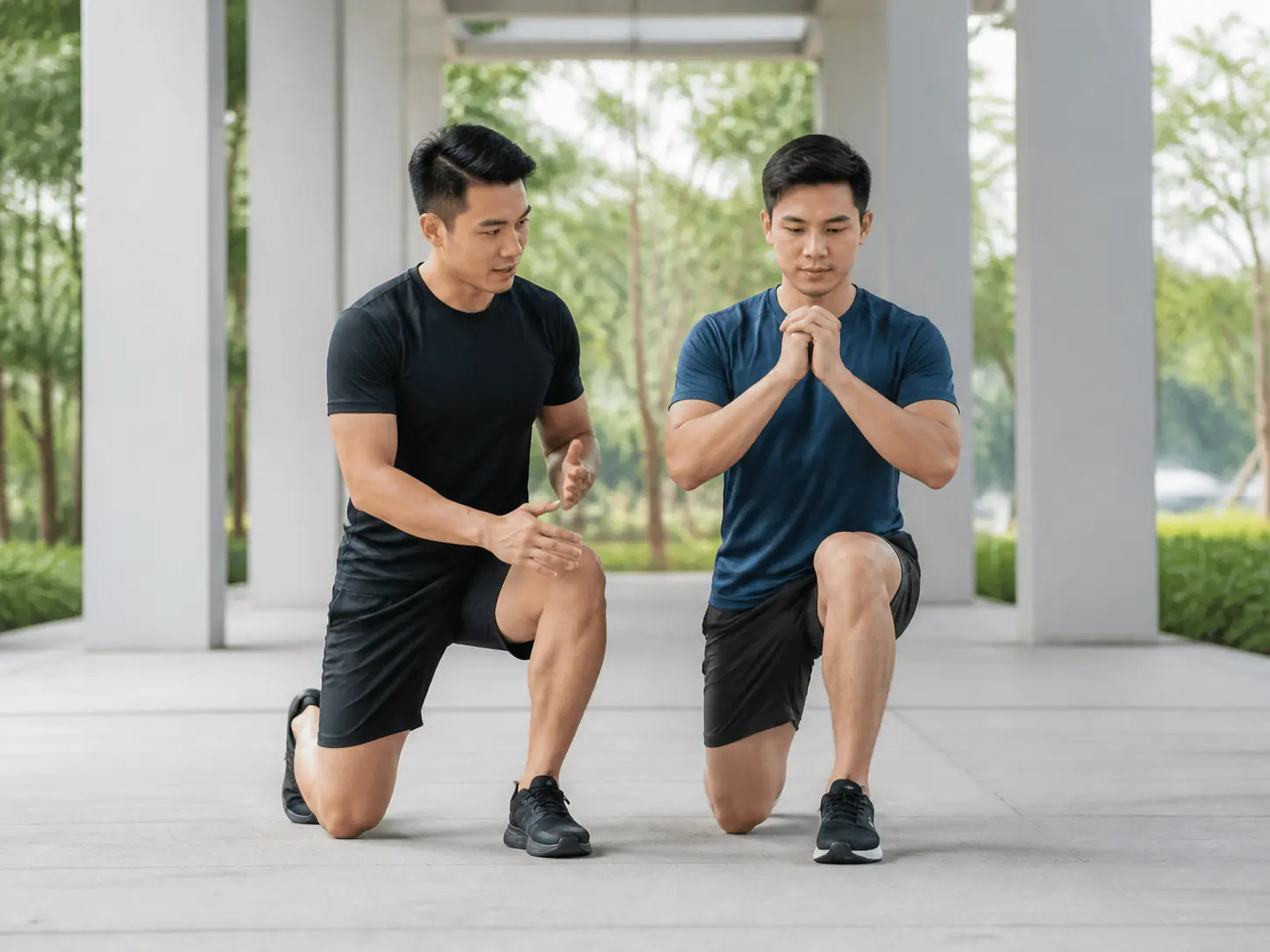
A trainer demonstrating controlled split-squat technique

Many sports and daily movements are rotational: swinging a golf club, a badminton racquet, or turning to pass a bag to the back seat. The rotational medicine ball throw builds explosive power for exactly those twisting actions.

You need a medicine ball and a solid wall, so it lives at our Putra Heights centre. It teaches your core and hips to work together to create rotational force, a quality that pure core holds like planks do not build.

What it trains and who it suits

It builds explosive rotational power in the core and hips. It suits athletes in rotational sports like golf, tennis and badminton, and anyone wanting more athletic, powerful movement.

Because it trains the core to produce force, it complements anti-rotation work like the Pallof press for well-rounded core power.

Step-by-step cues

  1. Stand side-on to a solid wall, holding the ball at your waist
  2. Load by rotating away from the wall, shifting into the back hip
  3. Snap your hips and torso around toward the wall
  4. Throw the ball hard into the wall and catch the rebound
  5. Reset and repeat, then switch sides

Common mistakes and quick fixes

  • Throwing with the arms only, drive the rotation from the hips
  • Keeping the feet flat, let the back foot pivot as you turn
  • Rounding the back, stay tall and rotate around a stable spine
  • No load-up, wind back first to generate real power

Regressions, progressions and when to stop

Too hard? Use a lighter ball or slow the movement. Too easy? Use a heavier ball, throw harder, or add reps. This needs a wall and space at our centre; at home, a safe version is hard to replicate without the right setup.

  • Stop if you feel sharp low-back pain rather than working core and hips
  • See a professional before rotational throws if you have back issues

Frequently Asked Questions

What sports does this help with?+

Any rotational sport: golf, tennis, badminton, squash, even throwing. It builds the explosive twisting power these sports rely on, which carries directly onto the course or court.

Should the power come from my arms?+

No. The power comes from your hips and core rotating, with the arms just releasing the ball. Think of your body coiling and then unwinding fast.

How is this different from a Russian twist?+

The Russian twist is a slow, controlled core exercise. The rotational throw is explosive, training your core to produce fast rotational force rather than just endurance.

How many throws should I do?+

Keep them powerful and crisp: six to ten hard throws per side for a few rounds. Stop when your speed drops, since power quality matters more than volume here.

Continue exploring

Programmes

Core Training

Core training builds the deep trunk muscles that stabilise your spine, protect your back and transfer force between your upper and lower body. It is about a strong, functional midsection that supports everything you do, not just chasing visible abs with endless crunches.

See what it includes →
Programmes

Power Training

Power training develops your ability to produce force quickly, jumping, throwing, sprinting, reacting. It builds on a base of strength to make you explosive and athletic, and it is one of the first qualities to fade with age, which makes keeping it worth the effort.

See what it includes →
Weight Loss

Why Strength Matters for Fat Loss

Chasing strength, not just a lower number, gives you the best fat-loss results. Getting stronger protects muscle, keeps your metabolism up, builds the shape you want, and gives you a positive goal that keeps you consistent. It turns fat loss from a punishment into progress you can feel.

See the coaching approach →
Health & Exercise

Low-Impact Options for Sensitive Joints

If your joints are sensitive and your doctor has cleared you, low-impact training builds strength and fitness without the jarring that aggravates sore knees, hips or backs. We coach controlled, joint-friendly options and adjust to how you feel. This is general fitness coaching, not treatment for a joint problem.

Read the suitability guide →
Weight Loss

Weight Loss After 50

Weight loss after 50 is really about protecting muscle and bone while losing fat. We use gentle, controlled strength training, enough protein and daily walking to reshape your body without crash diets, improving how you move, your balance and your health, not just the number on the scale.

See the coaching approach →
Why KinesioFitness

How We Keep You Consistent

Consistency, not intensity, is what changes bodies, and it is the thing Many people struggle with alone. We keep you consistent with booked sessions someone expects you at, simple check-ins, a plan that fits your real week, and honest support when motivation dips. Showing up is the whole game.

Compare this option →

Want help applying this guide to your own training?

Private coaching adapts exercise choice, loading and progression to your level, equipment and goal.

Ask a question first Request an assessment time