Skip to content

Exercise technique guide

How to Do a Band Pull-Apart

The band pull-apart has you stretch a resistance band across your chest by squeezing your shoulder blades. It strengthens the upper back and rear shoulders, muscles that improve posture and shoulder health. It is simple, low-risk, and perfect between other exercises.
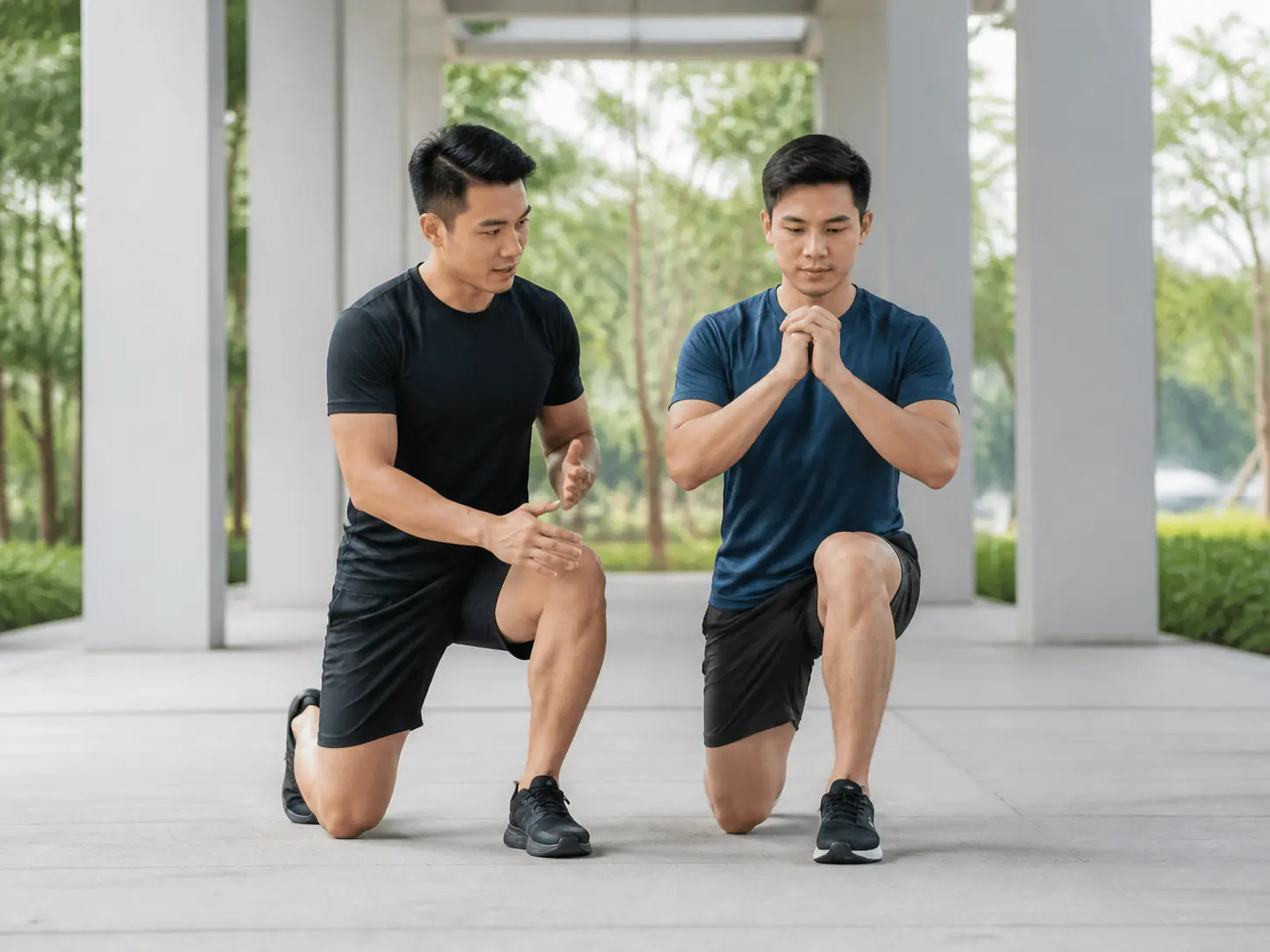
A trainer demonstrating controlled split-squat technique

The band pull-apart is a tiny exercise that punches above its weight. Stretching a band across your chest strengthens the upper back and rear shoulders, the muscles that pull your shoulders back and counter the hunch of phone and laptop use.

All you need is a light resistance band, so it fits home, the office, or our Putra Heights centre. It is gentle enough to do often, and we frequently slot it between bigger lifts to keep shoulders healthy.

What it trains and who it suits

It strengthens the upper back and rear shoulders, which support good posture and healthy shoulders. It suits desk workers, anyone with rounded posture, and lifters wanting balanced shoulder health.

Because it is light and low-risk, it is easy to do daily and works as a warm-up or a between-sets filler.

Step-by-step cues

  1. Hold a band in front of you at chest height, arms straight
  2. Set your shoulders down and brace lightly
  3. Pull the band apart by squeezing your shoulder blades
  4. Bring your hands out to your sides, band to your chest
  5. Return slowly under control and repeat

Common mistakes and quick fixes

  • Shrugging the shoulders up, keep them down away from the ears
  • Bending the elbows, keep the arms fairly straight
  • Arching the lower back, brace the core and stay tall
  • Letting the band snap back, control the return

Regressions, progressions and when to stop

Too hard? Use a lighter band or hold your hands wider apart. Too easy? Use a stronger band, add a pause at the squeeze, or increase reps. At home a band is all you need; at our centre we use it as a shoulder warm-up.

  • Stop if you feel sharp shoulder pain rather than upper-back effort
  • See a professional if a shoulder pinches every time you pull

Frequently Asked Questions

Will band pull-aparts improve my posture?+

They strengthen the upper back and rear shoulders that pull your shoulders back, which supports better posture, especially when combined with less sitting and regular movement.

How often can I do them?+

Very often. They are light and low-risk, so daily sets or slotting them between other exercises works well. Many people do them as a quick posture reset.

Where should I feel it?+

Across your upper back and the backs of your shoulders as you squeeze your shoulder blades together. You should not feel it straining your neck or lower back.

What band should I use?+

A light band that lets you complete clean reps with a good shoulder-blade squeeze. If your shoulders shrug or your form breaks, the band is too strong.

Continue exploring

Programmes

Core Training

Core training builds the deep trunk muscles that stabilise your spine, protect your back and transfer force between your upper and lower body. It is about a strong, functional midsection that supports everything you do, not just chasing visible abs with endless crunches.

See what it includes →
Programmes

Upper-Body Strength

Upper-body strength training develops your chest, back, shoulders and arms through balanced pushing and pulling. Done right, it improves your posture, makes daily lifting and carrying easier, and builds the shape Many people associate with looking fit and capable.

See what it includes →
Health & Exercise

Exercise With Metabolic Syndrome

Metabolic syndrome means several risk factors show up together. If your doctor has cleared you, one simple, sustainable exercise routine is far more useful than chasing each factor separately. We coach that routine and keep it do-able. We treat none of the underlying conditions, that stays with your doctor.

Read the suitability guide →
Health & Exercise

Low-Impact Options for Sensitive Joints

If your joints are sensitive and your doctor has cleared you, low-impact training builds strength and fitness without the jarring that aggravates sore knees, hips or backs. We coach controlled, joint-friendly options and adjust to how you feel. This is general fitness coaching, not treatment for a joint problem.

Read the suitability guide →
Goals

Core Strength and Flat Stomach

A strong core and a flat stomach are two separate jobs. Core strength comes from training the muscles that stabilise your spine; a flatter stomach comes from losing belly fat. We coach both together 1-to-1, so you get a back-protecting core and a tighter midsection.

See the coaching approach →
Goals

Fix Your Posture

Fixing posture is less about standing straighter on command and more about building the strength and mobility to hold a good position without effort. We coach that 1-to-1, opening tight areas from desk life and strengthening the muscles that keep you upright all day.

See the coaching approach →

Want help applying this guide to your own training?

Private coaching adapts exercise choice, loading and progression to your level, equipment and goal.

Ask a question first Request an assessment time