Skip to content

Exercise technique guide

How to Do a Bench Press

The bench press has you lie on a bench and press a barbell from your chest. It is the benchmark for upper-body pushing strength, loading the chest, shoulders and triceps heavily. With good setup and a spotter, it is a safe and highly effective strength lift.
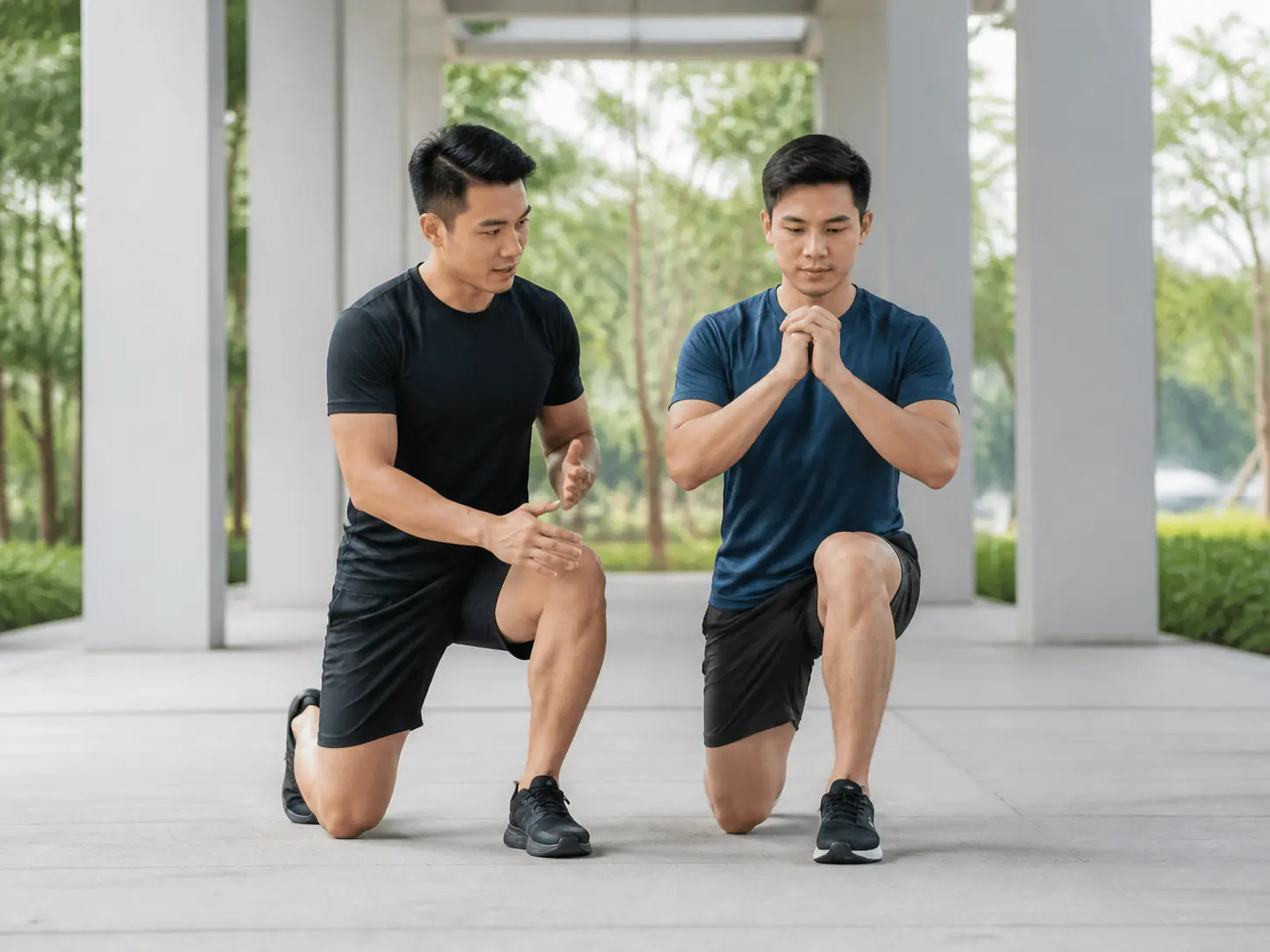
A trainer demonstrating controlled split-squat technique

The bench press is the most famous upper-body lift for a reason: it lets you load your chest and arms heavily and track clear strength gains over time. Done with a solid setup, it is a cornerstone of any pushing program.

It needs a bench, barbell and ideally a spotter, so we usually coach it at our Putra Heights centre. Once your technique and shoulder position are secure, we build your numbers safely, week by week.

What it trains and who it suits

It works the chest, front shoulders and triceps under heavy load, with the upper back and legs providing a stable base. It suits people who can already press bodyweight and want to build real strength.

Because it allows heavy loading and easy progression, it is ideal for anyone serious about upper-body strength, provided they respect the setup and safety.

Step-by-step cues

  1. Lie back with eyes under the bar, feet flat on the floor
  2. Squeeze your shoulder blades together and down into the bench
  3. Grip slightly wider than shoulders and unrack the bar
  4. Lower the bar to your lower chest with control
  5. Press it back up over your shoulders to lockout

Common mistakes and quick fixes

  • Elbows flaring to ninety degrees, tuck them slightly for the shoulders
  • Bouncing the bar off the chest, lower under control and pause
  • Lifting the hips off the bench, keep your backside planted
  • No spotter on heavy sets, always use one or safety pins

Regressions, progressions and when to stop

Too hard or no spotter? Use dumbbells instead for safety. Too easy? Add weight, slow the lowering, or pause on the chest. At home dumbbell presses are safer solo; at our centre we coach the barbell with a spotter.

  • Stop if you feel sharp shoulder pain rather than working muscles
  • See a professional if a shoulder clicks painfully under load

Frequently Asked Questions

Do I need a spotter to bench press?+

For anything heavy, yes. A spotter or safety pins prevent you getting pinned under the bar. Training solo without either is the main risk, so use dumbbells instead when alone.

How wide should my grip be?+

Slightly wider than shoulder-width for Many people. A grip that is too wide stresses the shoulders; too narrow shifts work to the triceps. We set it to your build.

Why does my shoulder hurt when benching?+

Often the elbows are flaring too wide or the shoulder blades are not set. Tuck the elbows a little and pin your shoulders down and back. Persistent pain needs assessment.

Bench press or dumbbell press first?+

If you train alone, dumbbells are safer and a great start. The barbell allows heavier loading but needs a spotter, so we introduce it with supervision.

Continue exploring

Programmes

Upper-Body Strength

Upper-body strength training develops your chest, back, shoulders and arms through balanced pushing and pulling. Done right, it improves your posture, makes daily lifting and carrying easier, and builds the shape Many people associate with looking fit and capable.

See what it includes →
Programmes

Functional Fitness

Functional fitness trains your body for the things you actually do, carrying shopping up to the condo, picking a child off the floor, twisting to reach the back seat. We build strength, stability and mobility in real movement patterns, not isolated machine work, so daily life gets easier.

See what it includes →
Goals

Do Your First Push-Up

Doing your first proper push-up means building enough chest, shoulder, arm and core strength to lower and press your whole body from the floor with good form. We coach the progression 1-to-1, from incline and knee versions up to your first full rep.

See the coaching approach →
Weight Loss

Strength Plus Cardio for Fat Loss

The best fat-loss plans use both strength and cardio, not one or the other. Strength keeps muscle and shape; cardio and walking add extra calorie burn and heart health. We show you how to combine them without overtraining, so fat drops while your body stays strong.

See the coaching approach →
Weight Loss

Weight Loss After 50

Weight loss after 50 is really about protecting muscle and bone while losing fat. We use gentle, controlled strength training, enough protein and daily walking to reshape your body without crash diets, improving how you move, your balance and your health, not just the number on the scale.

See the coaching approach →
Assessments

Push-Up Test

A push-up test counts how many good-form push-ups you can do in a row to gauge upper-body strength and endurance. We scale it, wall, incline, knees or full, to your level. It is a fitness marker we improve over time, done with quality reps, not a max-out competition or a medical test.

See how it works →

Want help applying this guide to your own training?

Private coaching adapts exercise choice, loading and progression to your level, equipment and goal.

Ask a question first Request an assessment time