Skip to content

Coaching for your starting point

Returning to Exercise After Pregnancy

Returning to exercise after pregnancy works best as a phased rebuild, started only after your doctor clears you and progressed gently over weeks. We coach the foundation before load. If you have pain, leaking or tummy-muscle separation, we refer you to a women's-health physio before adding intensity.
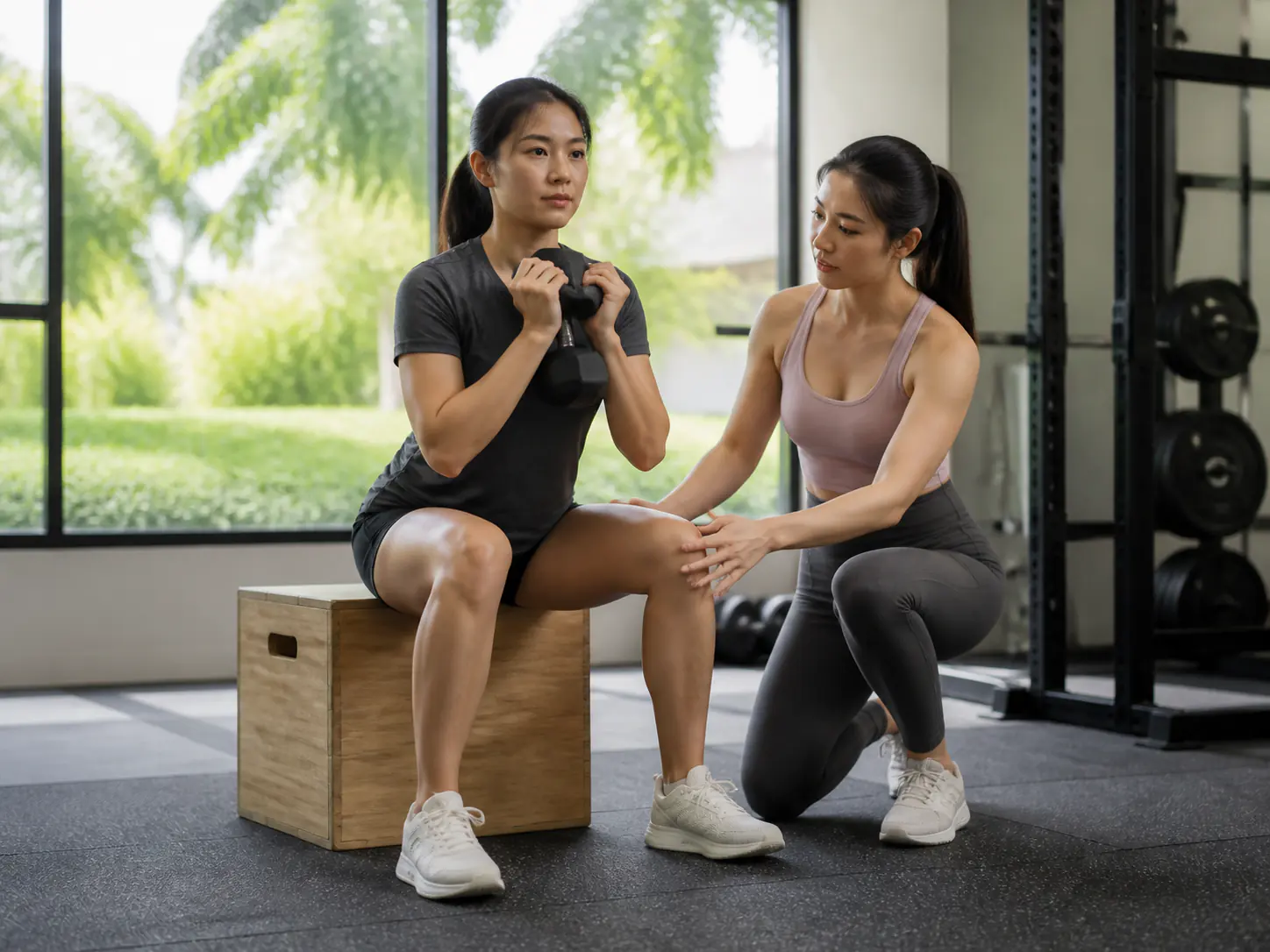
A woman completing a coached dumbbell box squat

Coming back after pregnancy is not about picking up where you left off. Your body has changed, your core and pelvic floor have been through a lot, and jumping straight into old workouts is how many women pick up injuries or setbacks. A phased return, foundation first, load later, gets you back to real strength faster and far more safely.

We keep it patient and private, one-to-one. The first rule is timing: we start only after your doctor has cleared you at your postnatal check. The second is honesty about symptoms. If something is not right, we would rather send you to a women's-health physiotherapist first than push through and make it worse.

The phases we move through

  1. Wait for your doctor's clearance before any structured exercise
  2. Reconnect breathing, deep core and pelvic floor gently
  3. Rebuild everyday movement and basic full-body strength
  4. Add load progressively as your body responds well
  5. Return to running, jumping or heavier lifting last, only when ready

Why rushing backfires

The pressure to bounce back fast is real, but the core and pelvic floor need time. Loading too soon can lead to leaking, heaviness or a stalled recovery. Going in the right order actually gets most women to their goals sooner, because they avoid the setbacks that force them to start over.

Symptoms that mean we pause

Some signs tell us to hold off on intensity and refer you on. We check for these throughout and never train through them.

  • Leaking urine with coughing, jumping or lifting
  • A feeling of heaviness or dragging in the pelvis
  • A visible or felt gap in the tummy muscles
  • Any pain during or after exercise

Private, close to home

We coach at our Putra Heights centre or your home or condo gym across KL and Selangor, around your schedule as a mum. Patience now pays off, most women who rebuild properly end up stronger than before pregnancy, and stay that way.

Frequently Asked Questions

How soon can I exercise after giving birth?+

Only once your doctor clears you at your postnatal check, and even then we start gently. Timing varies by birth type and recovery, so we follow your doctor's guidance, not a fixed date.

Can I go straight back to running or HIIT?+

Not at first. High-impact work comes last, after your foundation is rebuilt and you have no symptoms. Jumping in too early is a common cause of leaking and setbacks, so we phase it in carefully.

What is a tummy-muscle gap and does it matter?+

It is a separation of the abdominal muscles that is common after pregnancy. It often improves with the right progression, but if it is significant we refer you to a women's-health physio before loading the core.

I had a straightforward pregnancy, do I still need to go slow?+

Some phasing is still wise, but we can often progress faster if your doctor is happy and you have no symptoms. We match the pace to your body, not a one-size rule.

Continue exploring

Programmes

Post-Rehabilitation Fitness

Post-rehabilitation fitness is for people who have completed their rehab and been cleared by a doctor or physio to exercise again. We are not physios and do not treat injuries, we take over once you are discharged, rebuilding strength and confidence so you return to full, active life.

See what it includes →
Assessments

Fitness vs Clinical Assessment

A fitness assessment sets a safe starting point for training, mapping strength, stamina and movement. A clinical assessment diagnoses injuries and medical conditions, and only qualified healthcare professionals do that. We do the first, never the second, and refer you on the moment something needs a doctor or physio.

See how it works →
Assessments

Your Health History

Your health history is the record of past injuries, conditions, surgeries and medications you share before training. It is not judged or diagnosed, it is used to set safe loads, train around old problems, and know when to refer you to a doctor first. The fuller it is, the safer you train.

See how it works →
Programmes

Beginner Training

Beginner training is for people starting from zero, no gym background, no idea where to begin. We keep the first weeks simple, teach you the basic movements, and build the habit before adding intensity. No crowds, no jargon, no being left to figure it out alone.

See what it includes →
Goals

Build Muscle

Building muscle means adding lean tissue through progressive strength training and eating slightly more, especially protein. We coach the lifts, load them up over time, and track your numbers 1-to-1 so you gain size and strength without wasted months guessing in the gym.

See the coaching approach →
Goals

Return to Exercise Safely

Returning to exercise safely means restarting in a careful, graded way after illness, injury, pregnancy or a long layoff, always after medical clearance where needed. We coach that cautious rebuild 1-to-1, working alongside your doctor or physio rather than replacing them.

See the coaching approach →

Want to know whether this training suits you?

Tell us your starting point, goal and what makes consistency difficult. We will explain the realistic options.

Ask whether this suits me Request an assessment time