Skip to content

Your first step

Resting Heart Rate: What It Tells Us

Resting heart rate is your pulse when calm and at rest. As you get fitter, it often drifts lower, making it a simple recovery and conditioning marker we can track over time. It is a fitness signal, not a diagnosis, and unusual readings are a reason to see a doctor, not to train harder.
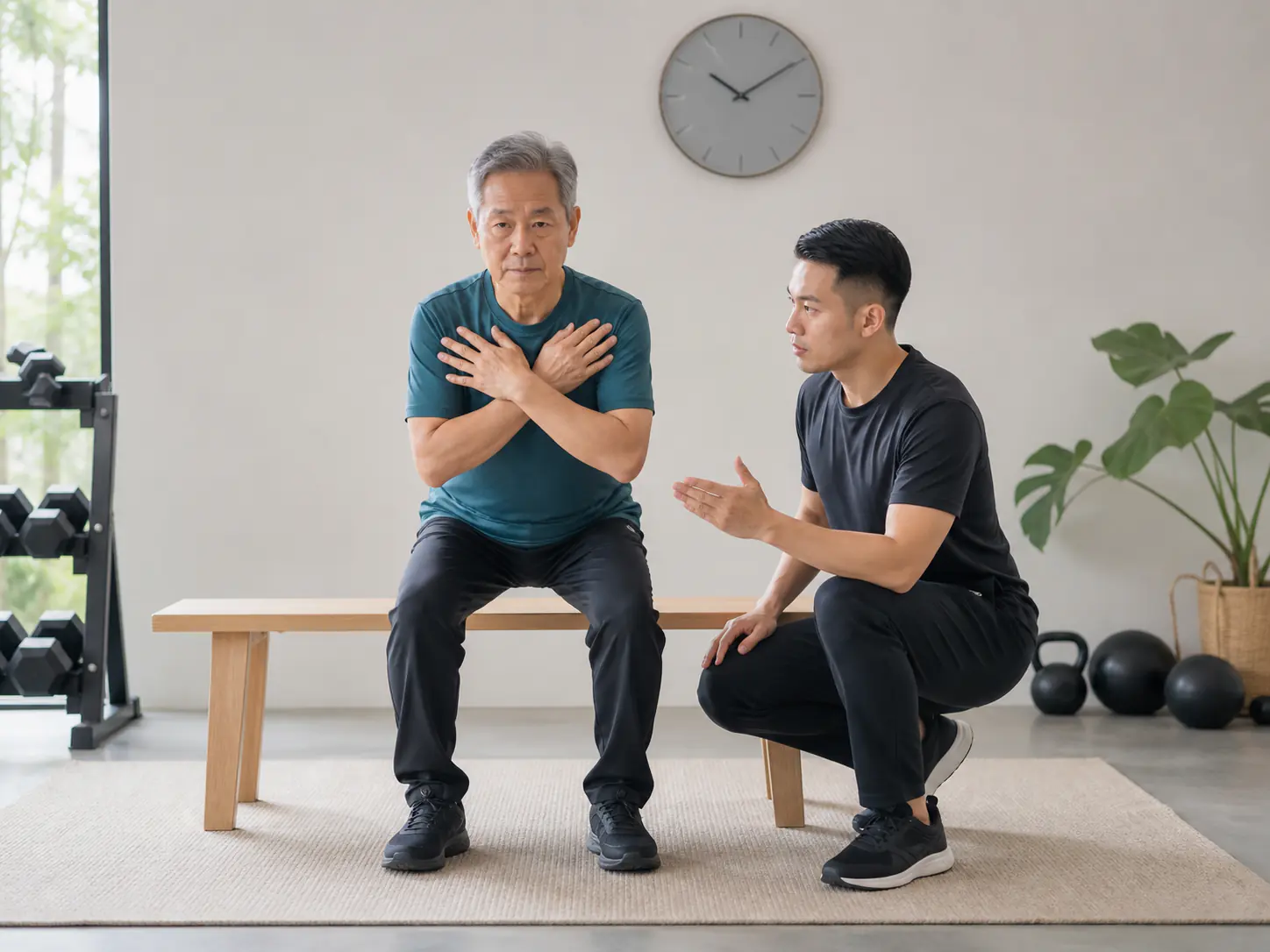
A trainer observing a sit-to-stand fitness assessment

Resting heart rate is one of the easiest useful numbers to collect, just your pulse first thing in the morning before you get up. Over weeks and months of consistent conditioning, many people see it settle lower, which is a nice sign the heart is getting more efficient. It costs nothing and gives us a gentle window into your fitness and recovery.

We use it as one input among several, never as a verdict. A single reading tells us little; the trend tells us more. And crucially, it is a fitness marker, not a heart check-up. If your resting rate is unusually high, unusually low, or all over the place, that is a doctor conversation, not a cue to push through.

What resting heart rate reflects

A lower resting heart rate often reflects a heart that pumps more efficiently, which tends to improve with regular conditioning. That is why we like tracking it, it can quietly show your cardio work paying off even before you feel much difference in daily life.

It also hints at recovery. A resting rate that is higher than your normal for a few days can mean poor sleep, stress, illness brewing, or under-recovery, useful context when we decide how hard to train that week.

How to measure it well

  • Take it first thing in the morning, before getting up
  • Count for a full minute, or use a reliable wearable
  • Same conditions each time, calm, not after caffeine
  • Record it for a few days to find your normal range
  • Watch the trend, not a single reading

How we use it in your plan

  1. We establish your normal resting range over several mornings
  2. We track it alongside your conditioning progress
  3. We notice when it drifts lower as fitness improves
  4. We treat a raised reading as a possible under-recovery flag
  5. We adjust session intensity when recovery signs suggest it

When your reading needs a doctor

A resting heart rate that is unusually fast, unusually slow, irregular, or comes with palpitations, dizziness or breathlessness is not something to train away, it is a reason to see a doctor. We are coaches reading a fitness signal, and we will always point you to medical advice for anything that looks off.

Frequently Asked Questions

What is a normal resting heart rate?+

It varies a lot between people, and fitter people often sit lower. Rather than chase a target number, we find your personal normal and watch how it trends as your conditioning improves.

Does a lower resting rate mean I am fitter?+

Often, yes, regular conditioning tends to lower it over time. But it is only one signal among several, and we read it alongside your strength, stamina and how you actually feel.

My resting rate seems high, should I worry?+

One high reading is usually nothing, often stress, poor sleep or caffeine. But a consistently high, low or irregular resting rate is a reason to see a doctor, not to simply train harder.

Do I need a fancy watch to track it?+

No. A reliable wearable is convenient, but counting your pulse for a full minute each morning works fine. Consistency of method matters far more than the gadget you use.

Continue exploring

Programmes

Cardio Conditioning

Cardio conditioning builds your heart and lung fitness so stairs, walks and busy days stop leaving you breathless. We use varied, efficient conditioning matched to your level, not hours of dull treadmill, so you get fitter in less time and can keep it up in KL heat.

See what it includes →
Why KinesioFitness

Our Training Philosophy

Our philosophy is simple: assess before we prescribe, build strength as the base, and change one thing at a time so it lasts. We coach fitness, not medicine, and when something needs a doctor or physiotherapist, we say so and refer you.

Compare this option →
Why KinesioFitness

Safety & Screening

Before you lift anything heavy, we screen you: a health-history questionnaire, a movement check, and a look at any conditions or medications that affect training. If we spot a red flag, we get you cleared by a doctor first. Good screening is why serious injuries in our sessions are so rare.

Compare this option →
Personal Training

No-Gym Personal Training

You do not need a gym membership to get strong. No-gym training coaches you at home, in a park or in your condo gym using minimal equipment, so people who dislike gyms, the crowds, the contracts, the intimidation, can still train properly and progress.

Compare this option →
Programmes

Strength Training Programme

A private strength programme teaches the main squat, hinge, push, pull and carry patterns, then progresses them according to your technique, recovery and available equipment. The focus is useful strength you can measure and continue building over time.

See what it includes →
Pricing

Referral & Loyalty Savings

You can lower your cost honestly by referring friends, training consistently over time, or sharing sessions with a partner. These are real savings off a fair price, not discounts off an inflated list. We would rather reward loyalty and word of mouth than run fake promotions with countdown timers.

Understand the cost →

Ready for a more structured way to train?

Start with an assessment so we understand your level, goal, schedule and preferred training location.

The request opens WhatsApp; a time is confirmed only after we reply and agree it with you.

Request an assessment time Ask a question first