Skip to content

Exercise technique guide

How to Do a Bicep Curl

The bicep curl bends the elbow against resistance to build the muscles on the front of the upper arm. It strengthens your arms for pulling and lifting, and looks good too. Done strictly with light-to-moderate weight, it is a simple, safe exercise for any level.
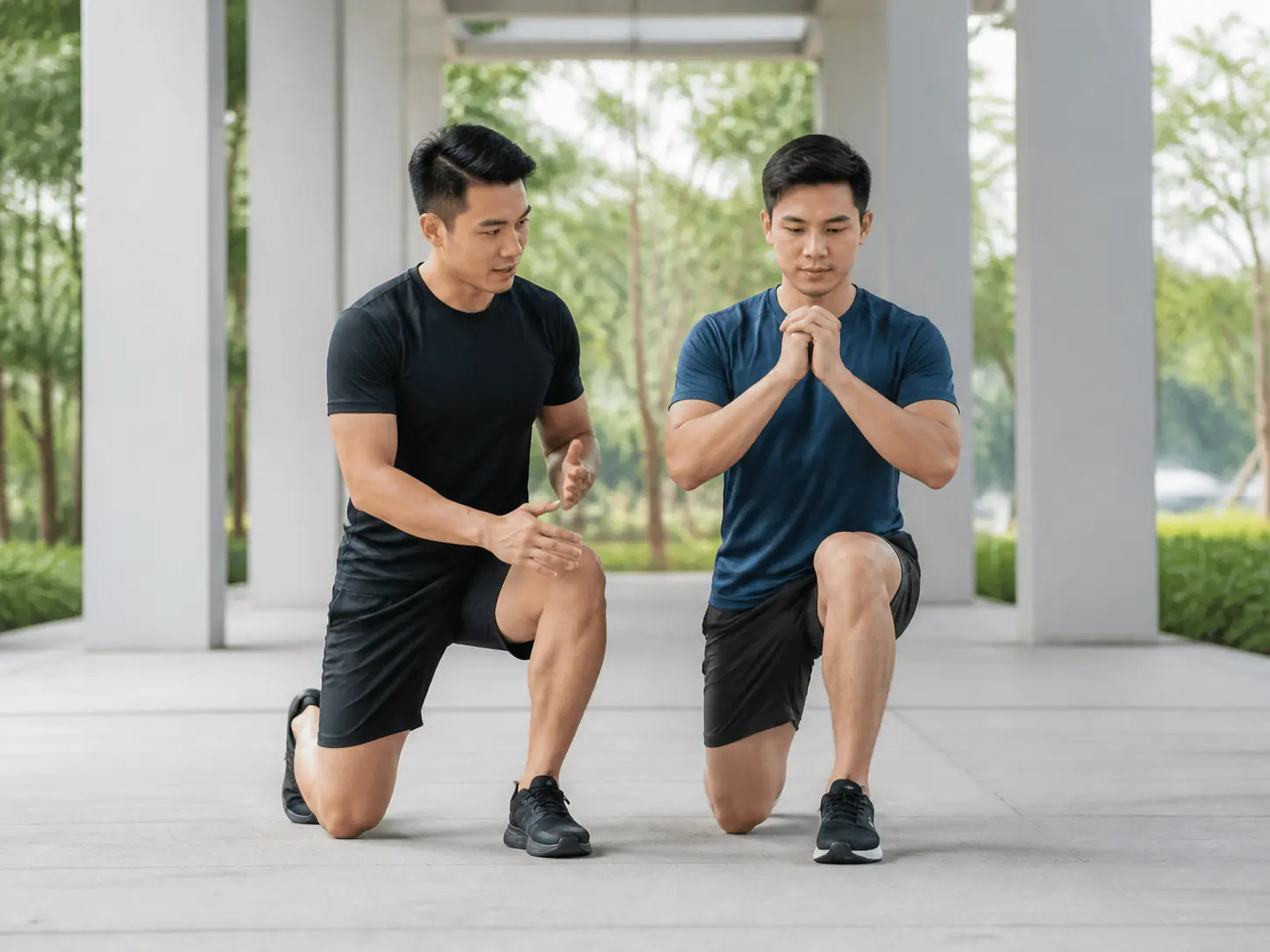
A trainer demonstrating controlled split-squat technique

The bicep curl is the most recognisable exercise in any gym, and for good reason: it directly builds the muscles on the front of your arm, which help with every pull, carry and lift. It is also just satisfying to train.

A pair of dumbbells or a band is all you need, so it fits home or our Putra Heights centre. The trick is strictness: swing it and you cheat the biceps, so light-to-moderate weight with clean form works best.

What it trains and who it suits

It targets the biceps on the front of the upper arm, which flex the elbow and assist pulling. It suits anyone wanting stronger arms or a bit more arm size, from beginners to experienced lifters.

Because it is a simple, low-risk isolation move, it is easy to fit in and easy to progress with small weight jumps.

Step-by-step cues

  1. Stand tall with a dumbbell in each hand, arms down
  2. Keep your elbows tucked close to your sides
  3. Curl the weights up by bending the elbows
  4. Squeeze the biceps at the top without swinging
  5. Lower slowly under control and repeat

Common mistakes and quick fixes

  • Swinging the body to lift, stand still and use lighter weight
  • Elbows drifting forward, keep them pinned to your sides
  • Half reps, lower all the way down each rep
  • Rushing, control the lowering for more benefit

Regressions, progressions and when to stop

Too hard? Use lighter weights or curl one arm at a time. Too easy? Add load, slow the lowering, or add a pause at the top. At home dumbbells or a band work well; at our centre we vary curls and manage your loading.

  • Stop if you feel sharp elbow or wrist pain rather than a bicep contraction
  • See a professional if an elbow aches sharply during or after curls

Frequently Asked Questions

Why should I keep my elbows still?+

Letting the elbows drift forward or swinging the body brings other muscles in and takes work off the biceps. Pinning the elbows to your sides keeps the tension where you want it.

How heavy should I curl?+

Light-to-moderate. If you have to swing to lift it, it is too heavy. Choose a weight you can curl strictly for about ten to fifteen controlled reps.

Do curls help with anything besides looks?+

Yes. Stronger biceps assist every pull, carry and lift, from rows and pull-ups to carrying shopping. They are functional as well as good-looking.

Dumbbells or a barbell for curls?+

Both work. Dumbbells let each arm work independently and even out strength; a barbell lets you load a little heavier. Beginners often start with dumbbells.

Continue exploring

Programmes

Upper-Body Strength

Upper-body strength training develops your chest, back, shoulders and arms through balanced pushing and pulling. Done right, it improves your posture, makes daily lifting and carrying easier, and builds the shape Many people associate with looking fit and capable.

See what it includes →
Programmes

Balance Training

Balance training strengthens the muscles, reflexes and coordination that keep you steady, on stairs, wet bathroom tiles, uneven pavements. Whether you feel a bit unsteady or just want to move with confidence, we build your stability step by step in a safe, supported setting.

See what it includes →
Weight Loss

Muscle Building for Women

Muscle building for women creates the toned, shapely look most want, not bulk. Women lack the hormones to gain size easily, so lifting simply firms and shapes the body, strengthens bones and raises metabolism. It is the missing piece behind the "toned" look people chase with cardio.

See the coaching approach →
Weight Loss

Beginner Weight-Loss Training

Beginner weight-loss training starts from the assumption that you have done nothing for years. We teach a handful of basic movements well, keep the intensity honest, and pair it with one or two food habits, so you lose fat steadily without pain, injury or confusion.

See the coaching approach →
Goals

Healthy Ageing

Healthy ageing through exercise means protecting the muscle, bone, balance and mobility that keep you independent as the years pass. We coach a safe, progressive plan 1-to-1 after any needed medical clearance, so you stay strong and active rather than slowly losing capacity.

See the coaching approach →
Personal Training

Partner 2-to-1 Training

Partner 2-to-1 training pairs you with someone you know, a spouse, sibling or friend, under one trainer for the session. You split the cost, keep each other accountable, and still get real coaching, with the trainer adjusting each person's weights and exercises to their level.

Compare this option →

Want help applying this guide to your own training?

Private coaching adapts exercise choice, loading and progression to your level, equipment and goal.

Ask a question first Request an assessment time