Skip to content

Exercise technique guide

How to Do a Bulgarian Split Squat

The Bulgarian split squat is a split squat with your back foot raised on a bench. Elevating the rear foot loads the front leg heavily, building single-leg strength, balance and mobility. It is demanding and humbling, but one of the best exercises for strong, resilient legs.
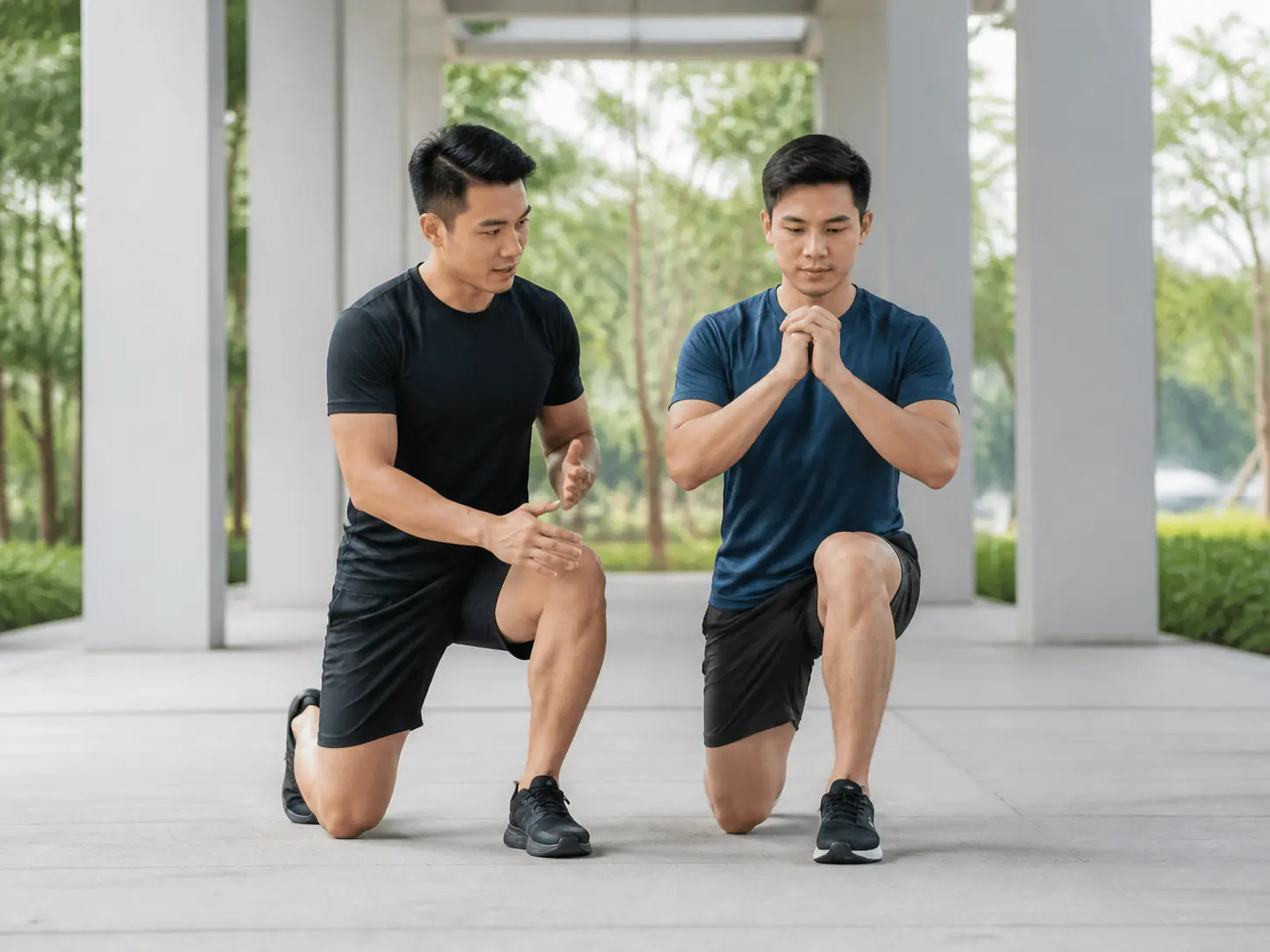
A trainer demonstrating controlled split-squat technique

The Bulgarian split squat has a reputation for being brutal, and it earns it. Raising your back foot on a bench shifts almost all the load onto the front leg, so it builds serious single-leg strength without needing huge weights.

You just need a bench or step, so it fits home or our Putra Heights centre. It challenges strength, balance and hip mobility together, which is why we rate it so highly for building strong, capable legs.

What it trains and who it suits

It heavily loads the front-leg quad and glute while challenging balance and hip mobility. It suits people who already do split squats well and want a bigger single-leg challenge.

Because most of the load falls on one leg, it builds strong legs with lighter weights, which is friendlier on the spine than heavy two-leg squats.

Step-by-step cues

  1. Rest the top of your back foot on a bench behind you
  2. Hop the front foot forward into a comfortable stance
  3. Keep your torso tall and weight on the front foot
  4. Lower straight down until the front thigh nears parallel
  5. Drive through the front foot to stand, then switch legs

Common mistakes and quick fixes

  • Front foot too close, step it forward so the knee stays over the foot
  • Leaning too far forward, stay tall and brace the core
  • Pushing off the back foot, drive up through the front leg
  • Wobbling, hold a wall or rack with one hand for balance

Regressions, progressions and when to stop

Too hard? Do regular split squats with the back foot down. Too easy? Add dumbbells, slow the descent, or elevate the front foot. At home a sofa or step works; at our centre we load it and dial in your stance and depth.

  • Stop if you feel sharp knee, hip or back pain rather than muscle effort
  • See a professional if the front knee consistently hurts under load

Frequently Asked Questions

Why is the Bulgarian split squat so hard?+

Raising the back foot puts almost all the load on the front leg while demanding balance and hip mobility. That combination makes it intense even with light weights.

How far forward should my front foot be?+

Far enough that at the bottom your front knee stays roughly over your foot and your shin is fairly upright. If the knee shoots way past the toes, step further forward.

Do I need weights?+

No. Bodyweight is challenging enough at first, especially for balance. Add dumbbells once you can do clean, controlled reps with good depth on each leg.

Is it bad for the knees?+

Done with a controlled range and good position, it is usually knee-friendly and builds strength that protects the knee. Sharp pain means stop and check your setup or get it assessed.

Continue exploring

Programmes

Functional Fitness

Functional fitness trains your body for the things you actually do, carrying shopping up to the condo, picking a child off the floor, twisting to reach the back seat. We build strength, stability and mobility in real movement patterns, not isolated machine work, so daily life gets easier.

See what it includes →
Programmes

Lower-Body Strength

Lower-body strength training builds your legs, hips and glutes, the biggest muscles you own and the engine behind walking, stairs, sport and standing up. Strong legs make daily life easier, protect your knees and back, and burn plenty of energy in the process.

See what it includes →
Weight Loss

Strength Plus Cardio for Fat Loss

The best fat-loss plans use both strength and cardio, not one or the other. Strength keeps muscle and shape; cardio and walking add extra calorie burn and heart health. We show you how to combine them without overtraining, so fat drops while your body stays strong.

See the coaching approach →
Goals

Improve Balance

Improving balance means training the strength, ankle control and quick reactions that keep you steady on your feet. We coach it progressively 1-to-1 so stairs, uneven pavements, wet floors and one-legged moments stop feeling risky, a foundation for confidence at any age.

See the coaching approach →
Personal Training

Partner 2-to-1 Training

Partner 2-to-1 training pairs you with someone you know, a spouse, sibling or friend, under one trainer for the session. You split the cost, keep each other accountable, and still get real coaching, with the trainer adjusting each person's weights and exercises to their level.

Compare this option →
Guides & Tools

Mobility For Desk Workers

Long hours at a desk leave many people feeling stiff and tight, especially in the hips, back and shoulders. Regular movement breaks, some targeted mobility, and strength training all help counter this. The single most powerful fix is simply moving more often, rather than any one perfect stretch.

Read the guide →

Want help applying this guide to your own training?

Private coaching adapts exercise choice, loading and progression to your level, equipment and goal.

Ask a question first Request an assessment time