Skip to content

Exercise technique guide

How to Do a Chair Sit-to-Stand

The chair sit-to-stand has you stand up from a chair and sit back down under control, ideally without using your hands. It builds the leg strength behind everyday independence, is very safe, and is one of the best starting exercises for older adults and beginners.
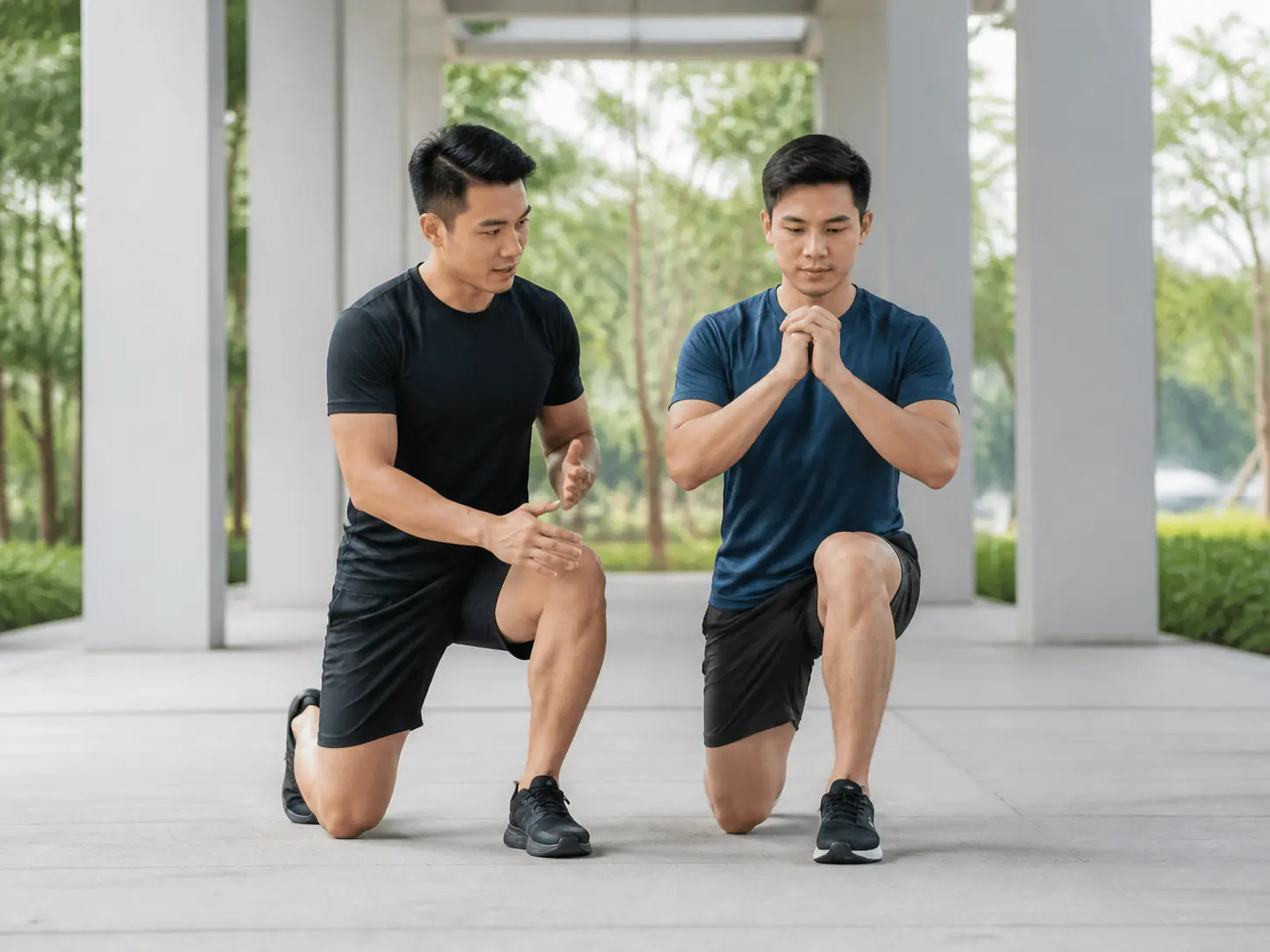
A trainer demonstrating controlled split-squat technique

Standing up from a chair is something you do dozens of times a day, and it is one of the first things to get harder with age or inactivity. The chair sit-to-stand trains exactly that, building the leg strength that keeps you independent.

You need only a sturdy chair, so it fits any home or our Putra Heights centre. It is safe, simple and endlessly scalable, which is why we use it constantly with older adults and anyone easing back into training.

What it trains and who it suits

It builds strength in the quads and glutes and trains the practical skill of standing up. It suits older adults, complete beginners, and anyone rebuilding basic leg strength after a break.

Because a chair supports and guides the movement, it is very safe and easy to scale, making it a perfect first leg exercise.

Step-by-step cues

  1. Sit toward the front of a sturdy chair, feet flat
  2. Lean your chest forward over your feet
  3. Push through your heels to stand up tall
  4. Try to stand without pushing off your hands
  5. Lower back down slowly under control and repeat

Common mistakes and quick fixes

  • Flopping back into the chair, lower slowly with control
  • Pushing off the knees with the hands, cross your arms instead
  • Feet too far forward, bring them under your knees
  • Rushing, control both standing and sitting for strength

Regressions, progressions and when to stop

Too hard? Use a higher chair or push off your hands. Too easy? Use a lower chair, slow the tempo, or hold a light weight. At home any sturdy chair works; at our centre we scale height and add load as you get stronger.

  • Stop if you feel sharp knee or hip pain rather than muscle effort
  • See a professional if standing up is always painful or unstable

Frequently Asked Questions

Why practise standing up from a chair?+

It is a movement you do constantly, and it is a strong predictor of independence with age. Training it directly builds the leg strength to keep doing it easily and safely.

How do I make it easier or harder?+

A higher chair or a small push from your hands makes it easier. A lower chair, a slow tempo, or holding a light weight makes it harder as you progress.

Should I avoid using my hands?+

If you can, yes, since standing without hands builds more leg strength. But use them for safety when needed, and reduce the help gradually as you get stronger.

How many should I do?+

Two or three sets of eight to twelve controlled reps is a good start. Standing and sitting slowly builds more strength than fast, bouncy repetitions.

Continue exploring

Programmes

Low-Impact Training

Low-impact training builds strength and fitness without the jumping, pounding and jarring that bother sensitive joints. It suits heavier clients, older adults and anyone with cranky knees, hips or ankles, proving you can get genuinely fit while being kind to your body.

See what it includes →
Programmes

Senior Strength Programme

A senior strength programme rebuilds the muscle we naturally lose with age, using safe, progressive resistance work. Stronger legs and grip mean standing up easily, climbing stairs and carrying shopping without help, the strength that keeps you independent for years longer.

See what it includes →
Weight Loss

Build Muscle While Losing Fat

Building muscle while losing fat is possible if you get three things right: eat enough protein, train strength progressively, and keep the calorie deficit modest. It works best for beginners and returners, is slower than one goal alone, and needs measuring beyond the scale.

See the coaching approach →
Weight Loss

Strength Plus Cardio for Fat Loss

The best fat-loss plans use both strength and cardio, not one or the other. Strength keeps muscle and shape; cardio and walking add extra calorie burn and heart health. We show you how to combine them without overtraining, so fat drops while your body stays strong.

See the coaching approach →
Goals

Get Back in Shape

Getting back in shape means rebuilding the fitness you once had after months or years away, sensibly, without the injury that comes from training like your old self on day one. We coach the comeback 1-to-1 so it is steady, safe, and this time actually sticks.

See the coaching approach →
Goals

Improve Balance

Improving balance means training the strength, ankle control and quick reactions that keep you steady on your feet. We coach it progressively 1-to-1 so stairs, uneven pavements, wet floors and one-legged moments stop feeling risky, a foundation for confidence at any age.

See the coaching approach →

Want help applying this guide to your own training?

Private coaching adapts exercise choice, loading and progression to your level, equipment and goal.

Ask a question first Request an assessment time