Skip to content

Exercise technique guide

How to Do a Hip Mobility Drill

Hip mobility drills, such as the 90-90 or hip openers, move your hips through their full range to counter the tightness of sitting. Looser, more mobile hips improve squats, lunges and comfort, and reduce strain that would otherwise land on your back. Ideal for desk workers.
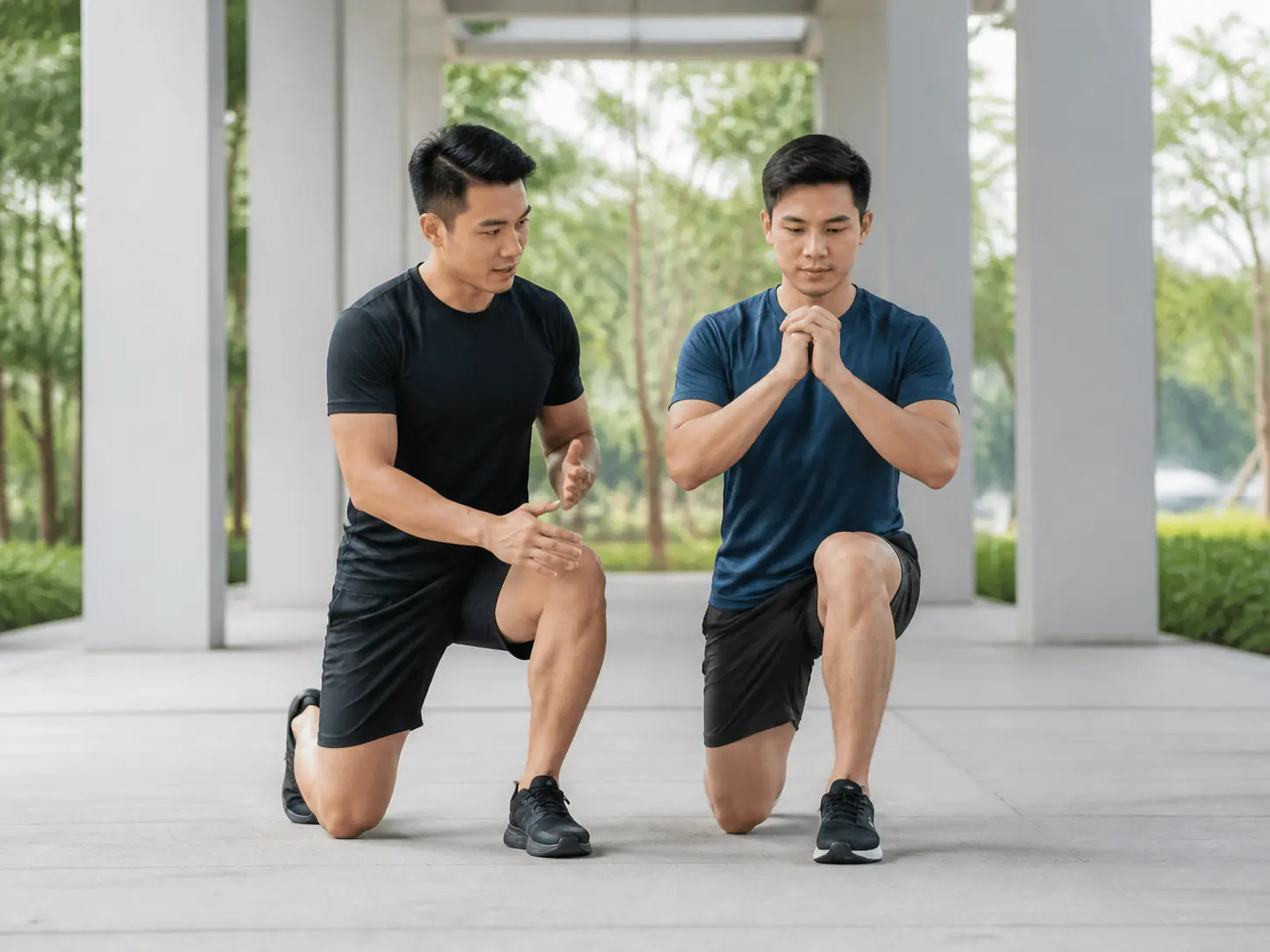
A trainer demonstrating controlled split-squat technique

Hours of sitting leave most Malaysians with tight, stiff hips, and that stiffness shows up as shallow squats, awkward lunges, and extra strain on the back. Hip mobility drills move the hips through their full range to undo some of that.

You need only floor space, so these fit any home or our Putra Heights centre. A few minutes of hip openers before training or during the workday keeps your hips moving well and your lower body feeling far more comfortable.

What it trains and who it suits

These drills improve hip range in multiple directions, easing the tightness that sitting creates. They suit desk workers, anyone with stiff hips, and lifters wanting deeper, more comfortable squats and lunges.

Because they are gentle and equipment-free, they are easy to do daily and benefit almost everyone who sits a lot.

Step-by-step cues

  1. Sit on the floor in a 90-90 position, both knees bent at right angles
  2. Sit tall and keep your chest up
  3. Rotate slowly through to switch your legs to the other side
  4. Move smoothly and only as far as feels comfortable
  5. Repeat back and forth, breathing steadily

Common mistakes and quick fixes

  • Slumping the back, sit tall throughout the movement
  • Forcing the range, move only as far as is comfortable
  • Rushing, go slowly and control each rotation
  • Holding the breath, breathe steadily as you move

Regressions, progressions and when to stop

Too tight? Sit on a cushion or hold a support and use a smaller range. Progressing? Sit lower, lean into the stretch, or add a gentle reach. At home the floor is enough; at our centre we combine drills with squat and lunge work.

  • Stop if you feel sharp hip or groin pain rather than a gentle stretch
  • See a professional if a hip pinches sharply or catches when rotating

Frequently Asked Questions

Why do my hips feel so tight?+

Long hours of sitting keep the hips in one position, which shortens and stiffens the surrounding muscles. Regular mobility work moves them through fuller ranges and eases that tightness.

Will hip mobility help my squat?+

Often, yes. Tight hips limit squat depth and can push you forward. Improving hip range usually lets you squat deeper and more comfortably with better position.

How often should I do these?+

Daily or before training works well. A few minutes regularly does more for your hips than occasional long sessions, especially if you sit most of the day.

Should hip mobility be painful?+

No. You should feel a gentle stretch and freer movement, not sharp pain or pinching. If it pinches, reduce the range and see a professional if it persists.

Continue exploring

Programmes

Mobility Training

Mobility training restores the range of motion desk life and age quietly take away, stiff hips, tight shoulders, a locked-up back. We coach controlled movement through full ranges so you squat deeper, reach higher and move without that stiff, creaky feeling.

See what it includes →
Goals

Flexibility for Desk Workers

Flexibility for desk workers targets the specific tightness that eight hours in a chair creates, locked-up hips, short hamstrings, a stiff neck and tight chest. We coach a practical routine 1-to-1, plus desk-break habits, so you feel loose and comfortable instead of permanently seized up.

See the coaching approach →
Goals

Improve Mobility

Improving mobility means owning a fuller, more controlled range of motion in your joints, not just being loosely flexible, but strong through that range. We coach it 1-to-1 with drills and loaded movement so squatting, reaching and turning stop feeling tight or restricted.

See the coaching approach →
Programmes

Functional Fitness

Functional fitness trains your body for the things you actually do, carrying shopping up to the condo, picking a child off the floor, twisting to reach the back seat. We build strength, stability and mobility in real movement patterns, not isolated machine work, so daily life gets easier.

See what it includes →
Guides & Tools

Mobility For Desk Workers

Long hours at a desk leave many people feeling stiff and tight, especially in the hips, back and shoulders. Regular movement breaks, some targeted mobility, and strength training all help counter this. The single most powerful fix is simply moving more often, rather than any one perfect stretch.

Read the guide →
Weight Loss

Weight Loss for Desk Workers

Desk jobs quietly cause weight gain through long sitting, low movement and convenient eating. The fix is not heroic: raise your daily steps, protect two strength sessions, and tidy up the office-food habits. We build a realistic plan around Klang Valley office life and long commutes.

See the coaching approach →

Want help applying this guide to your own training?

Private coaching adapts exercise choice, loading and progression to your level, equipment and goal.

Ask a question first Request an assessment time