Skip to content

Exercise technique guide

How to Do a Kettlebell Swing

The kettlebell swing has you snap your hips to swing a kettlebell up to chest height. It builds explosive hip power, strong glutes and cardio conditioning in one efficient move. It is a hinge, not a squat or a lift with the arms, and technique matters a lot.
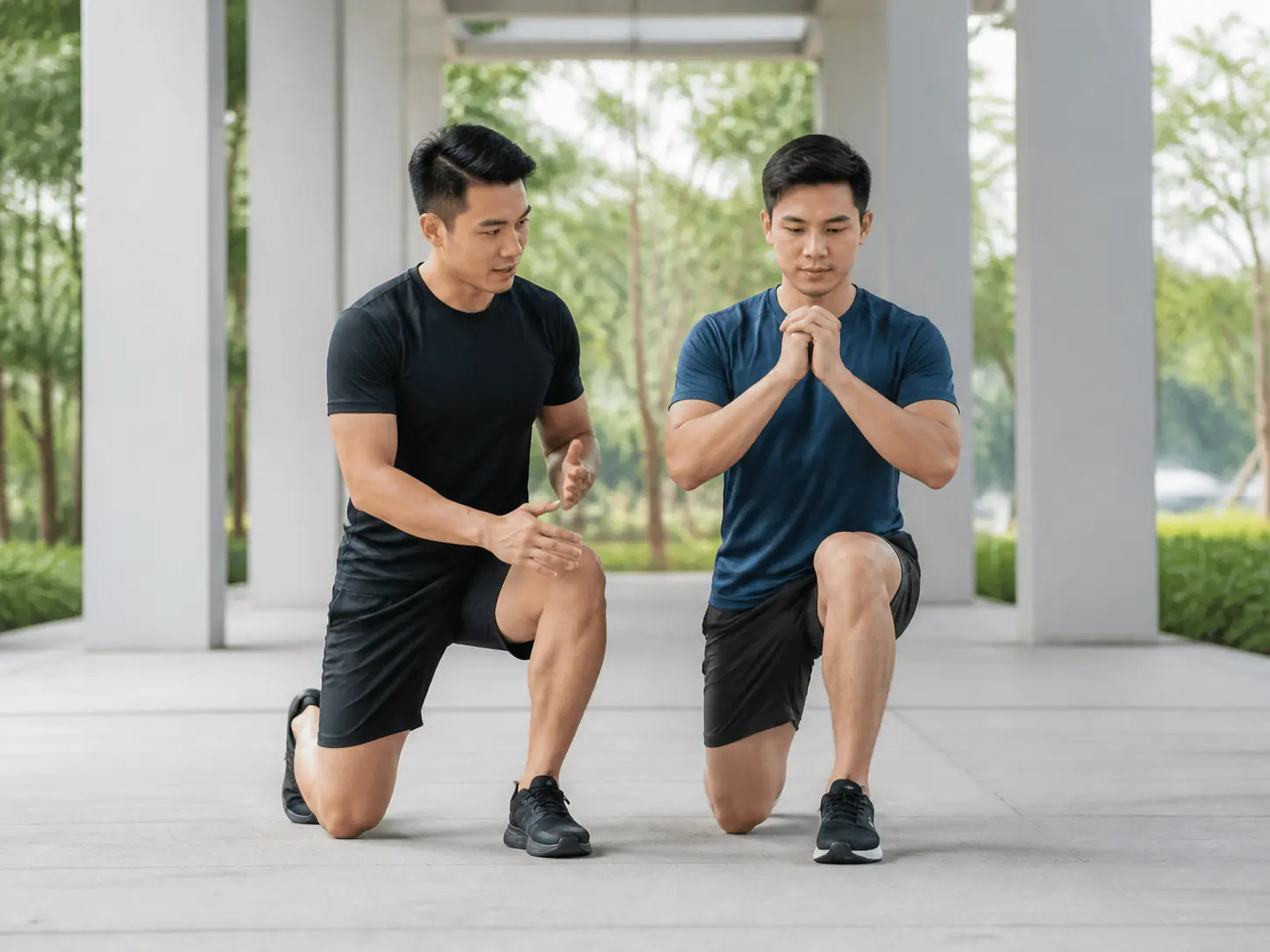
A trainer demonstrating controlled split-squat technique

The kettlebell swing is where strength meets conditioning. Done right, your hips snap the bell forward and your arms just guide it, so you build powerful glutes and a strong heart-and-lung system at the same time.

You need one kettlebell and a bit of space, so it fits home or our Putra Heights centre. It is a fantastic exercise, but only once your hip hinge is solid, because a good swing is a fast, sharp hinge, not a squat or an arm lift.

What it trains and who it suits

It builds explosive power in the glutes and hamstrings, plus grip, core and cardio conditioning. It suits people who already hinge well and want power and fitness from one move.

Because it is dynamic and fast, it demands solid hinge technique first, so we teach it after the deadlift and hip hinge are secure.

Step-by-step cues

  1. Stand with the kettlebell a foot in front of you
  2. Hinge and hike the bell back between your legs
  3. Snap your hips forward hard to drive it up
  4. Let it float to chest height with straight arms
  5. Let it swing back down as you hinge again, and repeat

Common mistakes and quick fixes

  • Squatting instead of hinging, push the hips back, not down
  • Lifting with the arms, let the hip snap do the work
  • Rounding the back, keep a flat, braced spine throughout
  • Overarching at the top, finish with a hard glute squeeze, ribs down

Regressions, progressions and when to stop

Too hard or new? Practise hip hinges and kettlebell deadlifts first. Too easy? Use a heavier bell or add reps. This works well at home with one kettlebell; at our centre we coach the timing and progress load safely.

  • Stop if you feel sharp low-back pain rather than working glutes
  • See a professional before swinging if your hinge is not yet solid

Frequently Asked Questions

Is the swing a squat or a hinge?+

A hinge. Your hips push back and snap forward, with only a slight knee bend. Squatting the swing kills the power and shifts strain to your back, so master the hinge first.

Should the kettlebell go overhead?+

In the standard swing, no. Let it float to about chest height, powered by your hips. Overhead versions are a separate, more advanced skill we teach later.

Why do my arms get tired, not my glutes?+

You are lifting with the arms instead of snapping the hips. The arms should just guide the bell. Focus on a sharp hip drive and let the weight float up on its own.

How heavy should the kettlebell be?+

Heavy enough that your hips have to work, since a too-light bell makes you muscle it with the arms. Get the technique first, then progress the weight steadily.

Continue exploring

Programmes

Kettlebell Training

Kettlebell training blends strength and conditioning in one efficient tool. Swings, squats, presses and carries build muscle, power and a strong heart at once, making it ideal for busy people who want a lot of fitness from one piece of kit and minimal time.

See what it includes →
Programmes

Cardio Conditioning

Cardio conditioning builds your heart and lung fitness so stairs, walks and busy days stop leaving you breathless. We use varied, efficient conditioning matched to your level, not hours of dull treadmill, so you get fitter in less time and can keep it up in KL heat.

See what it includes →
Weight Loss

Strength Plus Cardio for Fat Loss

The best fat-loss plans use both strength and cardio, not one or the other. Strength keeps muscle and shape; cardio and walking add extra calorie burn and heart health. We show you how to combine them without overtraining, so fat drops while your body stays strong.

See the coaching approach →
Why KinesioFitness

Assessment-Led Coaching

Assessment-led coaching means we test before we prescribe. Before your first real workout we screen how you move, what you can lift, your history and your schedule, then build a plan on facts, not a template. It is the single biggest reason our clients progress safely.

Compare this option →
Personal Training

Your First Session

Your first session is an assessment plus a gentle introductory workout, not a fitness test you can fail. We take your history and goals, check how you move, and coach a light first workout so you leave knowing what to expect and how to prepare for the next one.

Compare this option →
Health & Exercise

Low-Impact Options for Sensitive Joints

If your joints are sensitive and your doctor has cleared you, low-impact training builds strength and fitness without the jarring that aggravates sore knees, hips or backs. We coach controlled, joint-friendly options and adjust to how you feel. This is general fitness coaching, not treatment for a joint problem.

Read the suitability guide →

Want help applying this guide to your own training?

Private coaching adapts exercise choice, loading and progression to your level, equipment and goal.

Ask a question first Request an assessment time