Skip to content

Sport-specific coaching

Muay Thai Conditioning in KL & Selangor

Muay Thai conditioning builds the hip power, core strength and rounds stamina that hard striking and clinching demand. We develop the athletic base beneath your technique so your kicks and knees stay powerful, your guard holds, and you finish the last round as strong as the first.
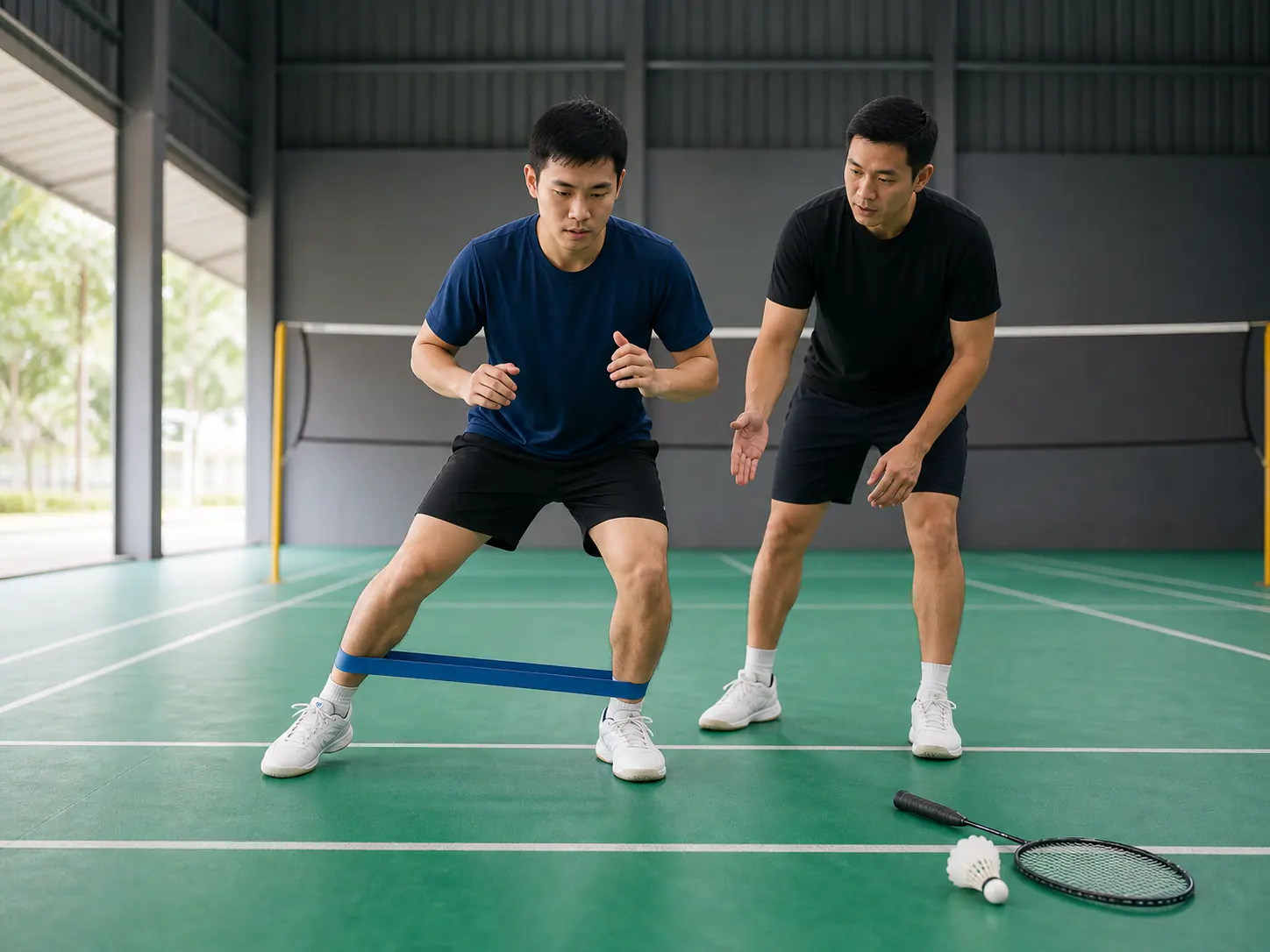
Badminton conditioning with a lateral resistance-band exercise

Muay Thai punishes anyone who is not conditioned for it. The power in a kick or knee comes from the hips and core, not the leg alone; the clinch is a brutal test of strength and grip; and holding technique through hard rounds demands serious stamina. Practitioners who only train pad work and sparring often plateau on power and gas out in later rounds, while niggles creep in from repetitive loading.

We build the strength and conditioning base that supports your art, working alongside your trainer rather than teaching technique. That means rotational hip power for harder strikes, a strong core to transfer force and protect the trunk, and rounds-specific conditioning so your output holds up. Stronger and better conditioned means better Muay Thai, whether you train for fitness or to compete.

Where striking power and endurance come from

A powerful kick is a whole-body rotation, hips drive, the core transfers, and the leg is the last link, not the source. Weak hips and core mean power leaks and strikes lack snap. Endurance matters just as much: hard rounds demand repeat explosive efforts with little rest, and technique falls apart when the tank empties.

Building hip power, core strength and rounds conditioning both hardens your strikes and keeps them sharp deep into training or a fight.

What we assess and build

  • Rotational hip and core power for harder strikes
  • Core and trunk strength to transfer and absorb force
  • Rounds-specific conditioning for repeat explosive output
  • Grip and posterior strength for the clinch

A sample conditioning progression

  1. Weeks 1-2: build core, hip and posterior chain strength
  2. Weeks 3-4: add rotational power and explosive work
  3. Weeks 5-6: rounds-style conditioning for repeat efforts
  4. Weeks 7-8: integrate strength around your pad and sparring sessions

Common mistakes and home alternatives

Practitioners train pads and bags for hours but never build hip and core strength, then plateau on power. Others do endless conditioning with no strength base. At home, hip hinge work, rotational core drills, explosive step-ups and interval conditioning build the power and engine striking needs.

Frequently Asked Questions

Will conditioning make my kicks harder?+

Yes. Kick power comes largely from hip and core rotation, which most practitioners under-train. Building rotational power and core strength lets you transfer more force into strikes with better snap.

I gas out in later rounds, what helps?+

Rounds-specific conditioning: repeat explosive efforts with short recoveries, matched to how a round actually feels. We build the engine so your technique and output hold up when others fade.

Does this replace my Muay Thai training?+

No, it supports it. We build strength and conditioning and leave technique to your trainer. We schedule the work around your sessions so it makes you stronger without leaving you too fatigued to train.

When should an injury be seen first?+

A joint injury that striking or clinching aggravates, or any sharp or persistent pain, needs a physio or doctor before you train on. We build conditioning around cleared, stable issues and refer when needed.

Continue exploring

Programmes

Power Training

Power training develops your ability to produce force quickly, jumping, throwing, sprinting, reacting. It builds on a base of strength to make you explosive and athletic, and it is one of the first qualities to fade with age, which makes keeping it worth the effort.

See what it includes →
Programmes

Core Training

Core training builds the deep trunk muscles that stabilise your spine, protect your back and transfer force between your upper and lower body. It is about a strong, functional midsection that supports everything you do, not just chasing visible abs with endless crunches.

See what it includes →
Assessments

Fitness vs Clinical Assessment

A fitness assessment sets a safe starting point for training, mapping strength, stamina and movement. A clinical assessment diagnoses injuries and medical conditions, and only qualified healthcare professionals do that. We do the first, never the second, and refer you on the moment something needs a doctor or physio.

See how it works →
Goals

Core Strength and Flat Stomach

A strong core and a flat stomach are two separate jobs. Core strength comes from training the muscles that stabilise your spine; a flatter stomach comes from losing belly fat. We coach both together 1-to-1, so you get a back-protecting core and a tighter midsection.

See the coaching approach →
Goals

Recreational Sport Performance

Recreational sport performance training builds the strength, conditioning and resilience that make you better and more durable at the sport you love, futsal, badminton, tennis, running, hiking. We coach it 1-to-1 to complement your game, so you play harder and break down less.

See the coaching approach →
Exercise Library

Bear Crawl

The bear crawl has you move on your hands and feet with your knees just off the floor. It builds full-body strength, core stability and coordination in one move, needs no equipment, and doubles as a challenging warm-up or conditioning drill for any level.

Learn the technique →

Ready for a more structured way to train?

Start with an assessment so we understand your level, goal, schedule and preferred training location.

The request opens WhatsApp; a time is confirmed only after we reply and agree it with you.

Request an assessment time Ask a question first