Exercise technique guide
How to Do a Reverse Lunge
The reverse lunge has you step backward into a lunge instead of forward. Stepping back is easier to control and gentler on the knees, so it is our go-to lunge for beginners, older adults, and anyone with cranky knees who still wants strong legs.
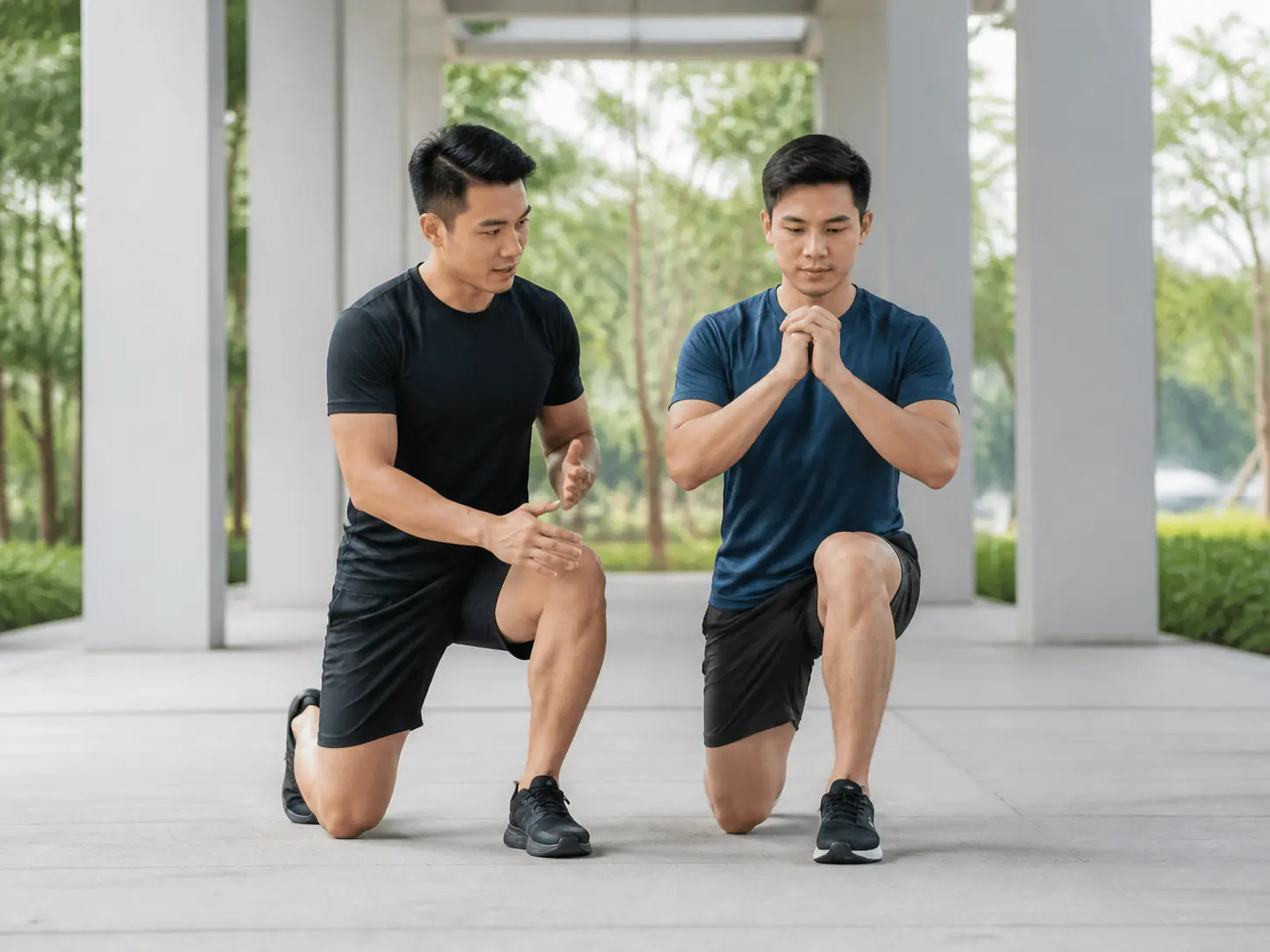
If forward lunges bother your knees, the reverse lunge is the fix we reach for first. Stepping backward lets you find the floor gently and keeps the front shin more upright, which usually feels far kinder on the knee.
It needs no equipment and only a little space, so it fits any condo or our Putra Heights centre. It builds the same single-leg strength as other lunges while being one of the easiest versions to control.
What it trains and who it suits
It loads the front-leg glute and quad, with a strong balance and core demand. It suits beginners, over-50s, and anyone whose knees complain during forward lunges.
Because you step back to a target you can feel, it is easier to stay in control than the walking lunge, making it a smart first lunge to learn.
Step-by-step cues
- Stand tall with feet hip-width apart
- Step one foot straight back and lower the back knee
- Keep most of your weight on the front foot
- Lower until the back knee lightly nears the floor
- Push through the front foot to return to standing
Common mistakes and quick fixes
- Front knee collapsing inward, track it over your middle toes
- Torso pitching forward, keep the chest tall and ribs down
- Short step back, reach further so the front shin stays vertical
- Losing balance, tap a wall or fix your eyes on one point
Regressions, progressions and when to stop
Too hard? Hold a support or reduce depth. Too easy? Add dumbbells, pause at the bottom, or elevate the front foot. At home a wall helps balance; at our centre we load them and pair with pushing exercises for full sessions.
- Stop if you feel sharp knee or hip pain instead of muscle effort
- See a professional if a knee locks, swells or gives way