Skip to content

Exercise technique guide

How to Do a Standing Band Row

The standing band row has you pull a resistance band toward your torso to work the back. It is a portable, joint-friendly way to build pulling strength and better posture with no weights or machines, making it ideal for home workouts and travel.
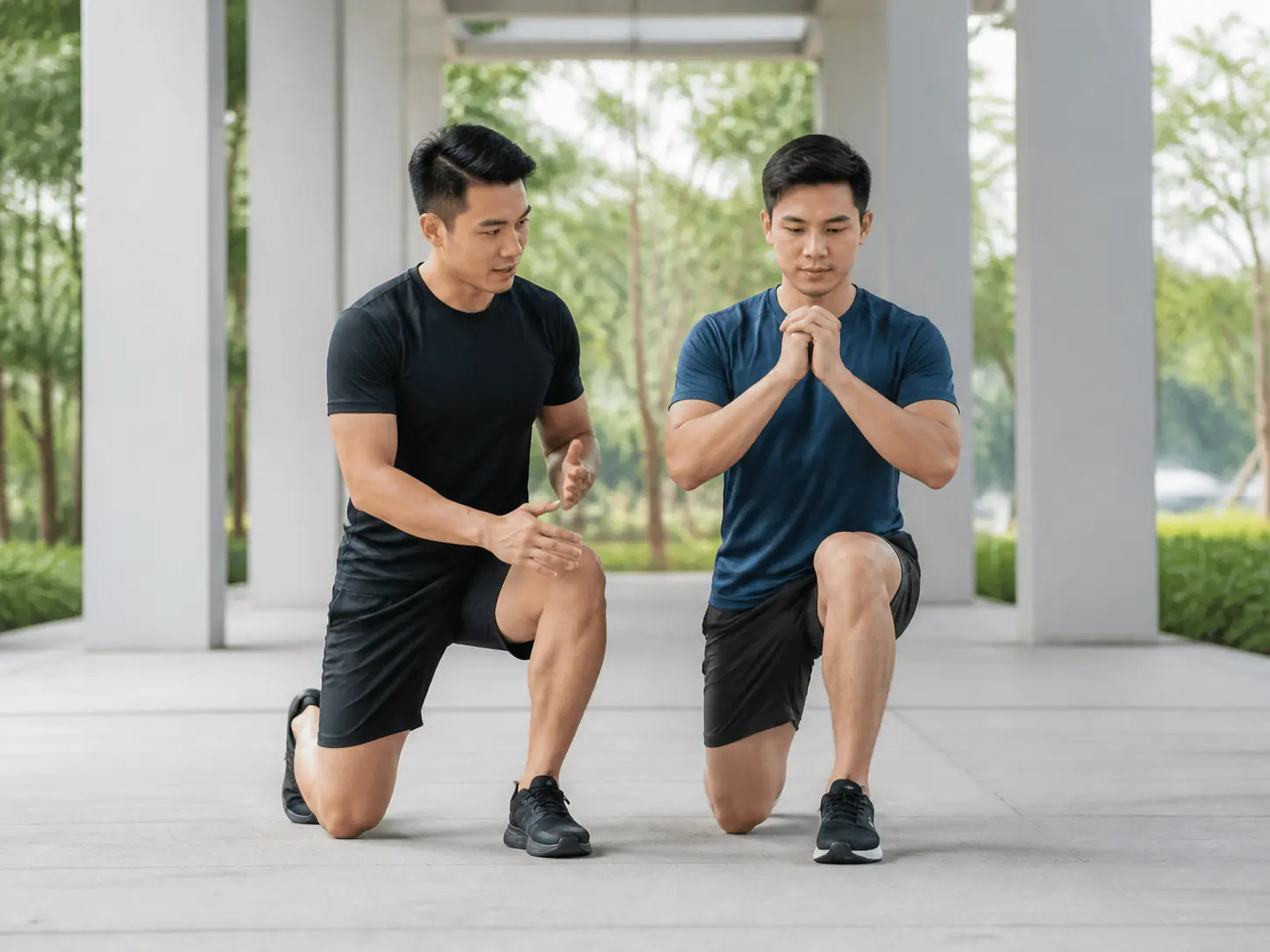
A trainer demonstrating controlled split-squat technique

The standing band row proves you do not need a gym full of iron to build a strong back. A single resistance band anchored at chest height lets you train the same pulling muscles as a cable row, anywhere from your living room to a hotel.

You just need a band and something to anchor it to, so it fits any home or our Putra Heights centre. It is gentle on the joints and great for posture, strengthening the muscles that pull your shoulders back.

What it trains and who it suits

It works the mid-back, lats and rear shoulders, supporting better posture. It suits home trainers, travellers, beginners, and anyone wanting a simple, portable back exercise.

Because the band provides smooth, adjustable resistance with no impact, it is joint-friendly and easy to scale by changing your distance from the anchor.

Step-by-step cues

  1. Anchor a band at chest height and hold an end in each hand
  2. Step back until there is tension, arms straight
  3. Stand tall, brace your core, shoulders set down
  4. Pull the band toward your torso, elbows going back
  5. Squeeze your back, then return slowly under control

Common mistakes and quick fixes

  • Leaning back to pull, keep your torso tall and still
  • Shrugging the shoulders, keep them down and squeeze the back
  • Pulling with just the arms, lead with the elbows
  • Letting the band snap back, control the return

Regressions, progressions and when to stop

Too hard? Step closer to the anchor or use a lighter band. Too easy? Step back further, use a stronger band, or add a pause. At home a band on a door anchor works; at our centre we combine it with cable and dumbbell rows.

  • Stop if you feel sharp shoulder or back pain rather than working muscles
  • See a professional if a shoulder pinches each time you pull

Frequently Asked Questions

Is a band row as good as weights?+

For building back strength and posture, a band row is very effective, especially at home or travelling. Heavy machines can load more, but a band trains the same muscles well.

How do I make it harder or easier?+

Step back from the anchor or use a stronger band to make it harder. Step closer or use a lighter band to make it easier. This makes it simple to scale to your level.

Where should I anchor the band?+

At about chest height, on something solid and secure like a closed door anchor or a sturdy post. Make sure it cannot slip before you pull against it.

Will this help my posture?+

Yes. It strengthens the muscles that pull your shoulders back, which supports better posture, especially useful if you sit and hunch over screens a lot.

Continue exploring

Programmes

Resistance-Band Training

Resistance-band training uses elastic bands to build strength and muscle with almost no equipment or space. Bands are portable, joint-friendly and surprisingly effective, making them ideal for home and condo training, travel, and anyone who wants results without a rack of weights.

See what it includes →
Programmes

Senior Strength Programme

A senior strength programme rebuilds the muscle we naturally lose with age, using safe, progressive resistance work. Stronger legs and grip mean standing up easily, climbing stairs and carrying shopping without help, the strength that keeps you independent for years longer.

See what it includes →
Goals

Sustainable Weight Loss

Sustainable weight loss means losing weight at a pace you can hold and keeping it off for years, not weeks. We skip crash diets and build habits, steady eating, regular strength work and daily movement, coached 1-to-1 so the plan survives real life, festivals and travel.

See the coaching approach →
Health & Exercise

Low-Impact Options for Sensitive Joints

If your joints are sensitive and your doctor has cleared you, low-impact training builds strength and fitness without the jarring that aggravates sore knees, hips or backs. We coach controlled, joint-friendly options and adjust to how you feel. This is general fitness coaching, not treatment for a joint problem.

Read the suitability guide →
Goals

Do Your First Pull-Up

Getting your first pull-up is a specific strength goal with a clear path: build your back and arm pulling strength through progressions like assisted and negative reps until you can lift your full bodyweight once. We coach that ladder 1-to-1 so you actually get there.

See the coaching approach →
Personal Training

Partner 2-to-1 Training

Partner 2-to-1 training pairs you with someone you know, a spouse, sibling or friend, under one trainer for the session. You split the cost, keep each other accountable, and still get real coaching, with the trainer adjusting each person's weights and exercises to their level.

Compare this option →

Want help applying this guide to your own training?

Private coaching adapts exercise choice, loading and progression to your level, equipment and goal.

Ask a question first Request an assessment time