Skip to content

Exercise technique guide

How to Do Step-Ups for Cardio

Cardio step-ups have you step up and down on a raised platform at a steady rhythm. They build cardio fitness and leg endurance with minimal equipment, and can be done at home on any sturdy step. Easy to scale by pace and step height, they suit most fitness levels.
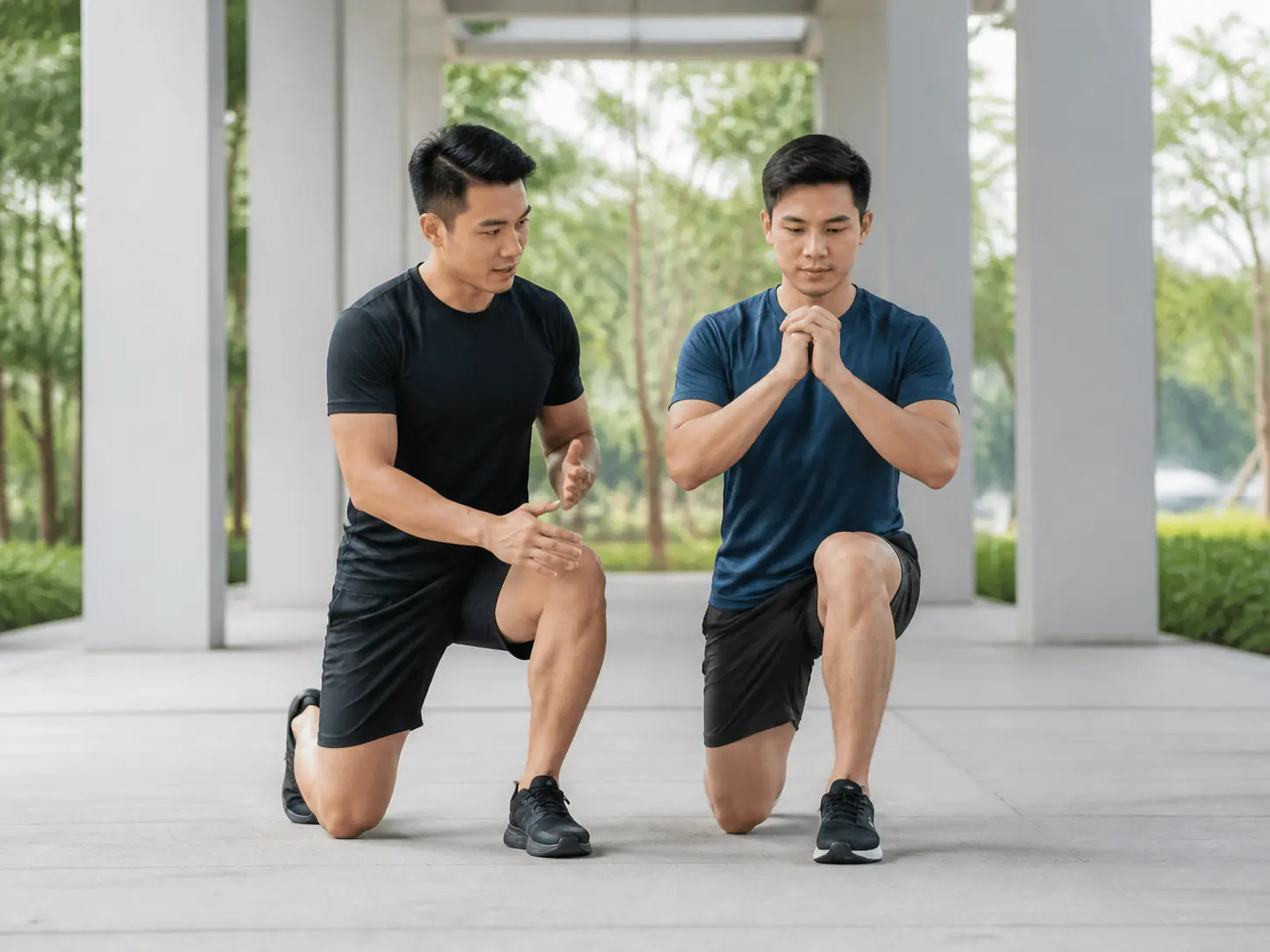
A trainer demonstrating controlled split-squat technique

Step-ups are not just for strength; done at a steady, brisk rhythm they make excellent cardio. Repeatedly stepping up and down raises your heart rate and builds leg endurance, and all you need is a sturdy step and a bit of space.

A home staircase step, a low bench or a platform works, so it fits any home or our Putra Heights centre. It is a simple, accessible way to get a cardio workout without a treadmill or bike, and it scales by pace and step height.

What it trains and who it suits

It builds cardio fitness and endurance in the legs and glutes, with low equipment needs. It suits home exercisers, beginners, and anyone wanting cardio in a small space without machines.

Because pace and step height set the difficulty, it works for a gentle warm-up or a hard conditioning effort, suiting a wide range of people.

How to do it well

  • Use a sturdy step that will not move or tip
  • Place your whole foot flat on the step each time
  • Stand fully tall at the top of each step
  • Step down softly and control your landing
  • Keep a steady rhythm and swap your leading leg regularly

Common mistakes and quick fixes

  • Step too high, use a lower step you can manage at pace
  • Always leading with the same leg, alternate to balance the work
  • Landing hard coming down, step down softly and controlled
  • Half-standing at the top, extend fully each rep

Adjusting, progressing and when to stop

Easier? Use a lower step and a slower pace. Harder? Use a higher step, speed up, add hand weights, or go longer. At home a solid staircase step works well; at our centre we build them into cardio and conditioning circuits.

  • Stop if you feel sharp knee, hip or chest pain rather than breathlessness
  • See a professional if you get chest pain or dizziness during the effort

Frequently Asked Questions

Can step-ups really be good cardio?+

Yes. Done at a steady, brisk pace for a sustained period, they raise your heart rate and build leg endurance, giving you a solid cardio workout with almost no equipment.

What can I use as a step at home?+

A sturdy staircase step, a low bench, or a stable platform all work. Make sure it is solid and will not move or tip before you start stepping at pace.

How do I make step-ups harder?+

Use a higher step, move faster, hold light weights, or step for a longer time. Alternating your leading leg keeps the work balanced between both legs.

Are step-ups safe for the knees?+

For Many people, when the step is a manageable height and you land softly, they are knee-friendly. If a knee hurts sharply, lower the step and get it checked if it persists.

Continue exploring

Programmes

Home Strength Programme

A home strength programme lets you build genuine strength without a gym, we bring the coaching to your home or condo, work with the space and kit you have, and design a plan you can keep up. Perfect for parents, busy professionals and anyone who hates the commute.

See what it includes →
Goals

Sustainable Weight Loss

Sustainable weight loss means losing weight at a pace you can hold and keeping it off for years, not weeks. We skip crash diets and build habits, steady eating, regular strength work and daily movement, coached 1-to-1 so the plan survives real life, festivals and travel.

See the coaching approach →
Assessments

Balance Assessment

A balance assessment measures how steady you are on your feet, standing, shifting weight, single-leg holds. It is a fitness screen, not a neurological diagnosis. It tells us how much stability to build before loading balance-heavy exercises, and it matters most for older adults and anyone who feels unsteady.

See how it works →
Guides & Tools

Bodyweight Training Basics

Bodyweight training uses your own body as resistance, push-ups, squats, lunges, planks and more. It builds real strength, needs no equipment, and can be done anywhere. You progress by making exercises harder rather than adding weight, which makes it perfect for beginners and home training.

Read the guide →
Assessments

Push-Up Test

A push-up test counts how many good-form push-ups you can do in a row to gauge upper-body strength and endurance. We scale it, wall, incline, knees or full, to your level. It is a fitness marker we improve over time, done with quality reps, not a max-out competition or a medical test.

See how it works →
Guides & Tools

Zone 2 Cardio Explained

Zone 2 cardio is steady exercise at an easy pace where you can still hold a conversation. It builds your aerobic base, improves how well your heart and muscles use oxygen, and is gentle enough to do often. Many people go too hard and miss its main benefit: sustainability.

Read the guide →

Want help applying this guide to your own training?

Private coaching adapts exercise choice, loading and progression to your level, equipment and goal.

Ask a question first Request an assessment time