Skip to content
Assessments

Balance Assessment for Safer Training

In short

A balance assessment measures how steady you are on your feet, standing, shifting weight, single-leg holds. It is a fitness screen, not a neurological diagnosis. It tells us how much stability to build before loading balance-heavy exercises, and it matters most for older adults and anyone who feels unsteady.
Written & reviewed by M. Thurairaj & team, Registered Physiotherapist & Certified Trainers

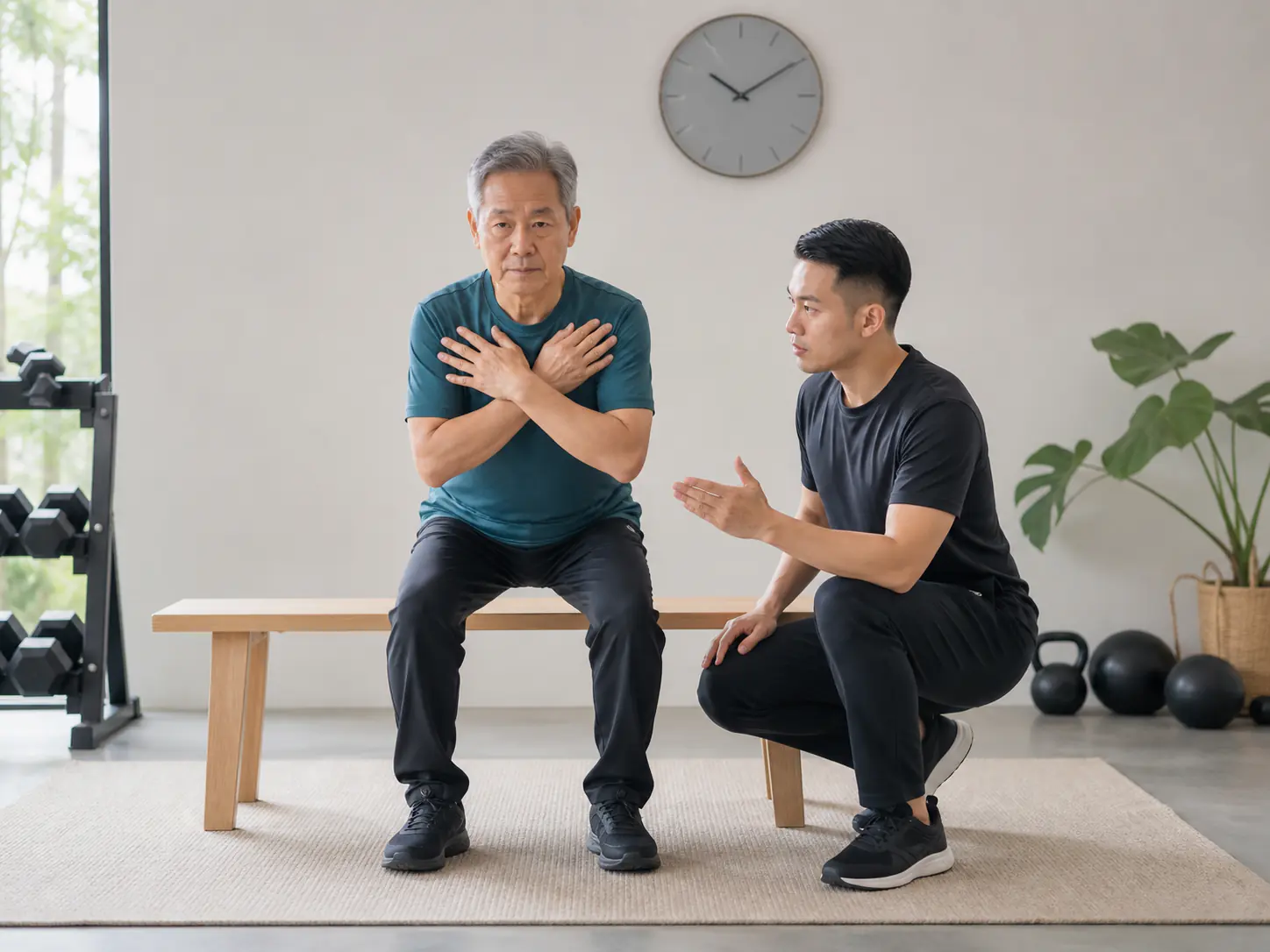
Balance is quietly one of the most useful things training can improve, especially past 50. A quick balance assessment shows how steady you are today so we know whether single-leg work, step-ups and free-standing exercises are safe to include now or need building towards. It also gives us a clear marker to improve over the months.

This is fitness screening, not a medical test. We are looking at your steadiness to train you safely and lower your everyday fall risk. If your balance is off in a way that seems sudden, one-sided, or comes with dizziness, that is a doctor conversation first, we will say so rather than train around a possible medical issue.

What we actually assess

  • Standing steady with feet together, eyes open then closed
  • Holding a single-leg stand, each side, timed
  • Shifting weight and stepping without wobbling badly
  • Steadiness when reaching or turning
  • How confident you feel, not just what we see

Why balance is worth training

Good balance is what keeps a stumble from becoming a fall, and a fall from becoming a fracture. For older clients especially, it is one of the highest-value things we train. The assessment tells us your starting point so we can build steadiness safely rather than throwing you onto one leg on day one.

For younger clients, balance still matters, it underpins single-leg strength, sport, and injury resilience. The plan just starts at a harder level than it would for someone who feels wobbly.

How the balance check runs

  1. We start with a stable, supported position near something to hold
  2. You hold basic stances while we time and watch steadiness
  3. We progress to single-leg holds only if the earlier ones are solid
  4. We note which side is weaker and how confident you feel
  5. We set safe balance drills to build from there

When unsteadiness needs a doctor

Training improves the kind of unsteadiness that comes from weak, under-used muscles. But balance problems that appear suddenly, affect one side, or come with dizziness, numbness or vision changes can have medical causes. Those we refer on first, safe training comes after the right person has looked.

Frequently Asked Questions

I feel unsteady, is that just age?+

Often it is under-used muscles and reduced practice, which training improves well. But sudden, one-sided, or dizziness-linked unsteadiness can be medical, so we would suggest a doctor looks before we train it hard.

Is the balance test risky for me?+

No. We always start supported, near something to hold, and only progress to harder holds if the basics are solid. Safety leads the whole way through the assessment.

Can training really improve my balance?+

Yes, often noticeably. Steadiness responds well to regular, progressive practice, especially single-leg and stability work. Many older clients feel more confident on their feet within weeks.

Why does balance matter for fall prevention?+

Better balance helps you catch a stumble before it becomes a fall, and stronger legs help you recover. Together they are among the most valuable things older adults can train for daily safety.

Related pages

Assessments

Beginner Fitness Assessment

A beginner fitness assessment is a gentle first session where we map where you are starting from, movement, strength, stamina and goals. No fitness is needed to take it. It sets a safe, realistic starting point, not a diagnosis, and turns "I don't know where to begin" into a clear first plan.

Assessments

Body Composition Measurement

Body composition measurement estimates how much of your weight is fat versus muscle, rather than just a scale number. We use simple, consistent methods to track change over time. It is a fitness tool for motivation and planning, not a medical diagnosis of health from a single reading.

Assessments

Cardio Fitness Baseline

A cardio fitness baseline shows how your heart and lungs cope with light-to-moderate effort at the start. We measure it gently, never all-out, so we can set safe conditioning intensities and track improvement. It is a fitness marker, not a heart diagnosis; anything concerning gets referred first.

Assessments

Fitness vs Clinical Assessment

A fitness assessment sets a safe starting point for training, mapping strength, stamina and movement. A clinical assessment diagnoses injuries and medical conditions, and only qualified healthcare professionals do that. We do the first, never the second, and refer you on the moment something needs a doctor or physio.

Assessments

Grip Strength Test

A grip strength test measures how hard you can squeeze, usually with a hand dynamometer. Grip is a surprisingly good marker of overall strength and healthy ageing. We track it as a simple, motivating fitness signal, not as a medical diagnosis, and we build it through your training over time.

Assessments

Your Health History

Your health history is the record of past injuries, conditions, surgeries and medications you share before training. It is not judged or diagnosed, it is used to set safe loads, train around old problems, and know when to refer you to a doctor first. The fuller it is, the safer you train.

Ready to start?

Train at our Putra Heights centre, your home, or your condo gym

WhatsApp Book an Assessment