Skip to content

Practical fitness guide

Getting Fit for the Hiking Spots Near KL

KL has great hiking on its doorstep, from Bukit Gasing to Bukit Kiara. Strength training makes those climbs easier, protects your knees on the descents, and lets you enjoy the trails instead of surviving them. We build simple gym work that carries straight over to the hills.
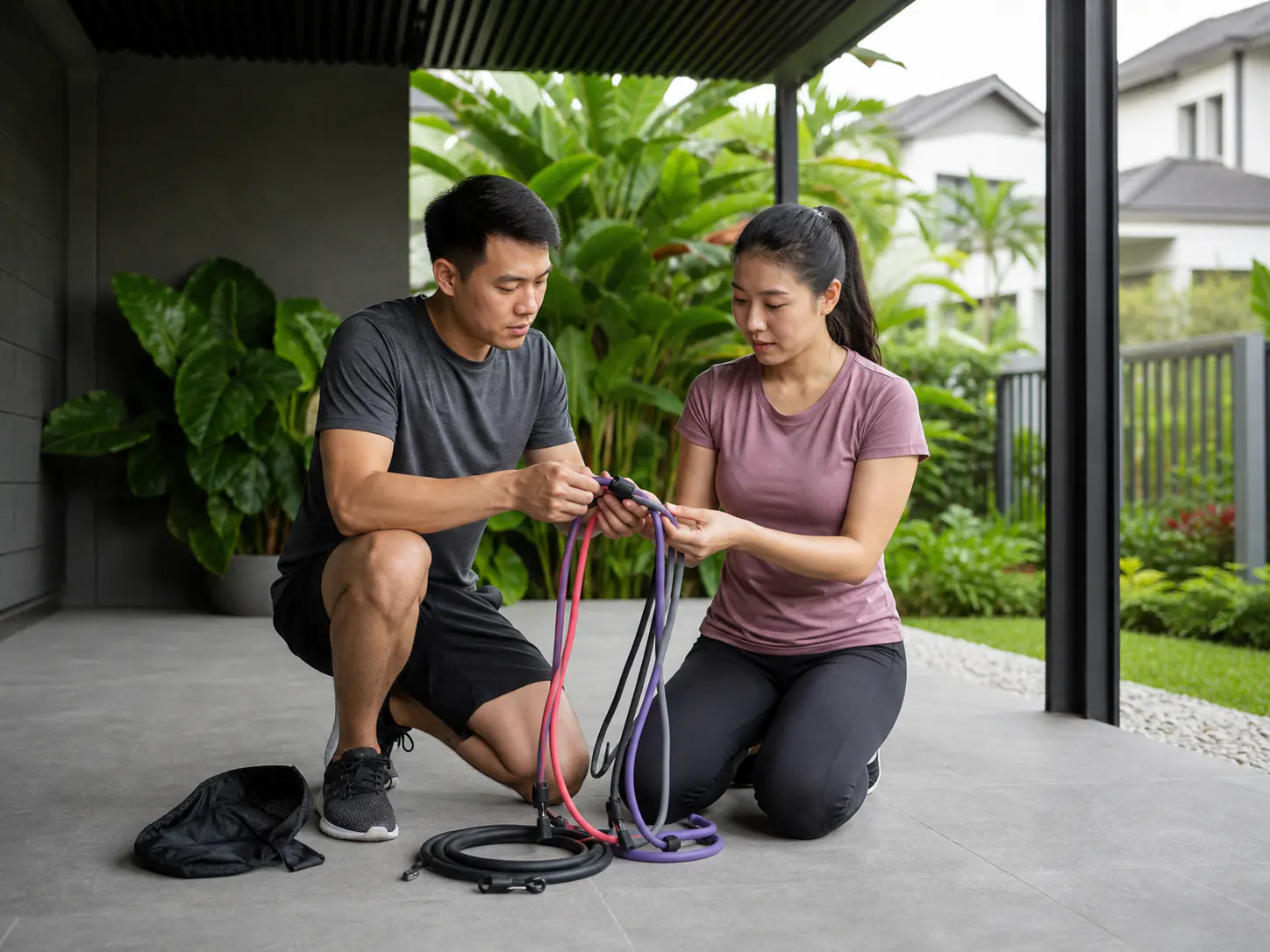
Fitness preparation on a shaded Klang Valley residential terrace

One of the quiet luxuries of living around KL is how much hiking sits close by. Bukit Gasing, Bukit Kiara, Gasing hill trails and the tougher climbs a little further out give you real nature within a short drive. But anyone who has hauled themselves up a steep, humid trail and felt their knees complain on the way down knows that enjoying it depends on being reasonably strong.

Hiking and strength training feed each other. A bit of targeted gym work makes the uphill grind easier, steadies your knees and hips on the descent, and turns a hike from an ordeal into something you actually look forward to. You do not need to be an athlete, you need legs that are ready for the climb and a plan that builds toward the trails you love.

Why hiking is harder than it looks

Climbing is demanding on the legs and lungs, and the descent is where knees take the real hammering. Add Malaysian humidity and uneven ground, and even a short trail asks a lot of an underprepared body. Being stronger does not make the hill smaller, it makes you bigger relative to it, so the same climb feels manageable.

Strength work that carries to the trail

  • Squats and lunges for climbing power and knee control
  • Step-ups to mimic the exact demand of going uphill
  • Single-leg work for balance on uneven ground
  • Core and calves for stability and the long descents

Protecting your knees on the way down

Most hikers dread the downhill more than the climb, because that is where knee pain shows up. Strong quads and glutes act as shock absorbers, controlling each step down instead of letting the joint take the impact. Building that strength in the gym is the single best thing you can do to hike pain-free for years.

Building toward a specific hike

  1. Start with basic leg strength twice a week
  2. Add step-ups and loaded carries as you progress
  3. Practise on shorter local trails first
  4. Build your hiking distance gradually, not in one jump
  5. Recover well between hikes as they get longer

Frequently Asked Questions

Do I need to train to hike near KL?+

For easy trails, not really. But even a little leg strength makes the climb easier and, more importantly, protects your knees on the descent. Stronger legs turn a tough hike into an enjoyable one.

My knees hurt going downhill. Can I fix that?+

Often, yes. Downhill knee pain is frequently down to weak quads and glutes not controlling the descent. Building that strength usually helps a lot. If the pain is sharp or persistent, see a doctor or physio first.

What is the best gym work for hiking?+

Squats, lunges and step-ups build climbing power and knee control; single-leg work improves balance on uneven ground; strong calves and core steady you on descents. We combine these into a simple plan that carries straight to the trail.

How do I prepare for a longer hike?+

Build leg strength first, practise on shorter trails, then increase your distance gradually rather than jumping to a big climb. We can structure a plan around a specific hike so you arrive genuinely ready for it.

Continue exploring

Programmes

Home Strength Programme

A home strength programme lets you build genuine strength without a gym, we bring the coaching to your home or condo, work with the space and kit you have, and design a plan you can keep up. Perfect for parents, busy professionals and anyone who hates the commute.

See what it includes →
Programmes

Functional Fitness

Functional fitness trains your body for the things you actually do, carrying shopping up to the condo, picking a child off the floor, twisting to reach the back seat. We build strength, stability and mobility in real movement patterns, not isolated machine work, so daily life gets easier.

See what it includes →
Personal Training

Small-Space Home Training

You do not need a spare room or a home gym to train properly. A two-by-two-metre patch of floor, minimal equipment and a good plan are enough for a real strength session. Small-space training is designed around compact, quiet, effective movements that fit a KL apartment.

Compare this option →
Weight Loss

Weight-Loss Training for Men

Weight-loss training for men focuses on dropping the gut while keeping and building muscle, so you end up leaner and stronger rather than just lighter. We use simple strength work, honest food coaching and a plan that survives long work hours, teh tarik and weekend mamak.

See the coaching approach →
Weight Loss

Weight-Loss Training for Women

Weight-loss training for women uses strength work to drop fat while keeping, not shrinking, the shape you want. It sidesteps the crash-diet cycle, respects your energy and cycle, and builds strength that carries into daily life. No bulking, no starving, a supportive setting.

See the coaching approach →
Personal Training

Home Personal Trainer

A home personal trainer brings the coaching to you and adapts the session to your available space, equipment and household routine. It suits people who value privacy, have limited travel time or find that removing the commute makes regular training easier to maintain.

Compare this option →

Want help applying this guide to your own training?

Private coaching adapts exercise choice, loading and progression to your level, equipment and goal.

Ask a question first Request an assessment time