Skip to content

Practical fitness guide

How To Read A Workout Programme Like A Pro

A workout programme uses shorthand to tell you what to do: the exercise, the number of sets and reps, the rest, and sometimes the tempo or effort. Once you learn to read the notation, like "3 x 10" meaning three sets of ten reps, following any plan becomes straightforward and much less intimidating.
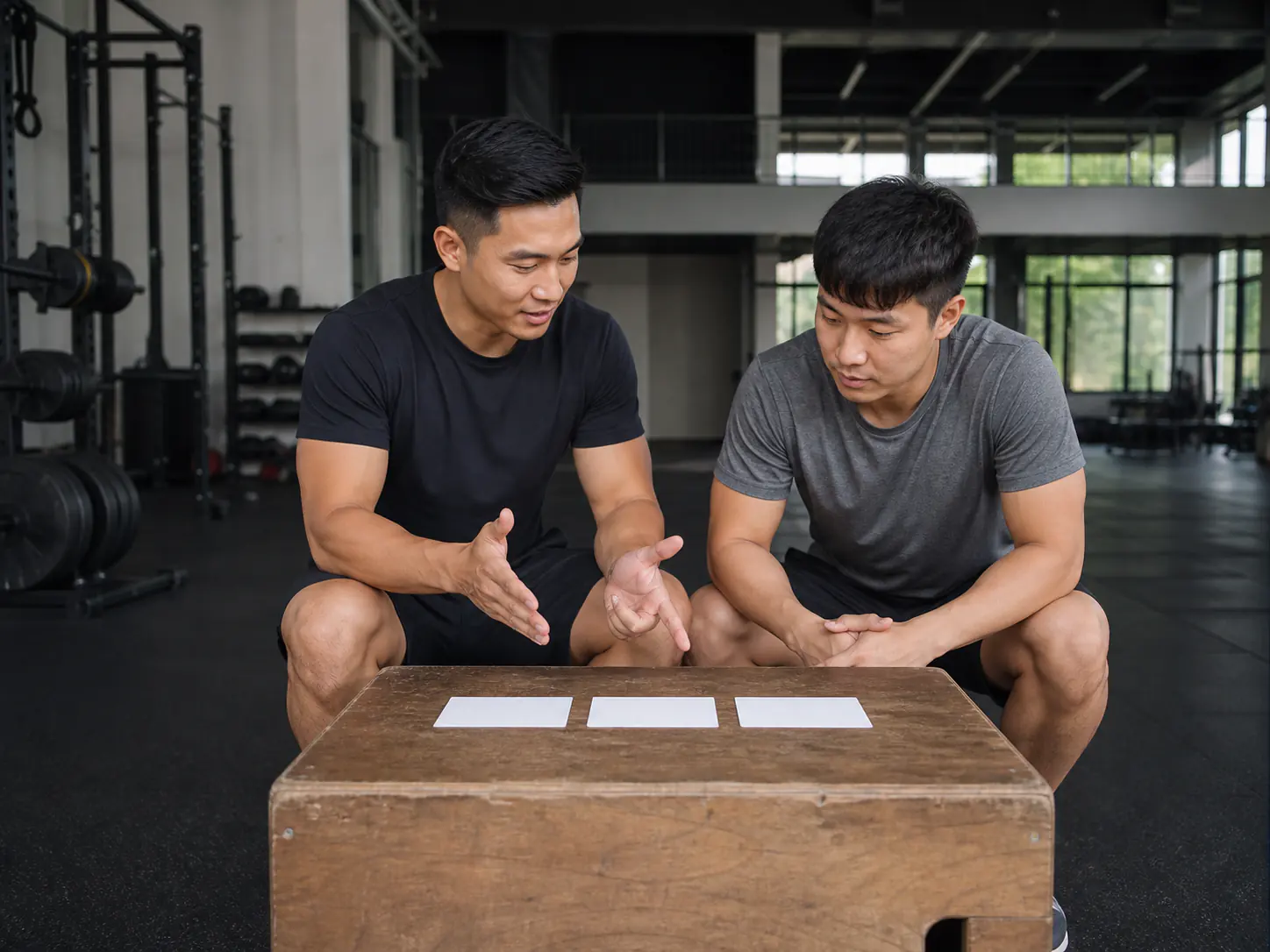
A trainer explaining a practical fitness guide

A written workout programme can look like a foreign language at first, full of numbers, abbreviations and shorthand. Beginners often feel lost trying to decode "3 x 10 @ RPE 7" or wondering what the rest column means. But the notation is simple once explained, and learning to read it lets you follow any plan with confidence instead of guessing.

This is a genuinely useful skill, because clear programmes are how you train with structure and progress deliberately. Once you can read the shorthand, a wall of numbers turns into clear instructions. This guide walks you through the common notation so you can pick up any sensible programme and know exactly what to do.

The core notation

The heart of any programme is the exercise plus its sets and reps, usually written as sets times reps. So "3 x 10" means three sets of ten reps. There is often a column for the weight or how hard it should feel, and one for how long to rest between sets. Learn these and you can read most plans.

  • "3 x 10" means three sets of ten reps
  • A weight or effort column tells you how hard to go
  • A rest column tells you how long to rest between sets
  • The exercise name tells you the movement

Common abbreviations and terms

Programmes often use shorthand like RPE for how hard an effort should feel, or note a tempo for how fast to lift. Sometimes reps are given as a range, like 8 to 12, meaning aim somewhere in that band. None of it is complicated once you know the terms; a good programme or coach will define anything unusual.

Following a programme in practice

To follow a plan, work through the exercises in order, doing the prescribed sets and reps at the right effort, resting as instructed. Track what you actually do so you can progress over time. If a programme is unclear or uses terms you do not know, ask, rather than guessing and doing it wrong.

Reading a plan step by step

  1. Identify the exercise and the movement it calls for
  2. Read the sets and reps, like "3 x 10"
  3. Check the weight or effort you should use
  4. Note the rest between sets
  5. Ask about any abbreviation or term you do not know

Frequently Asked Questions

What does "3 x 10" mean?+

It means three sets of ten reps: do ten reps, rest, then repeat twice more for three sets total. This sets-times-reps notation is the core of most programmes. Once you know it, a big part of reading any training plan becomes straightforward.

What does RPE mean in a programme?+

RPE stands for rate of perceived exertion, a scale for how hard an effort should feel, often up to ten. It tells you how challenging to make a set. A higher RPE means closer to your limit; a lower one means leaving reps in reserve.

What if a rep range is given, like 8 to 12?+

A rep range means aim to do somewhere within that band with good form, often choosing a weight where you land in the range. When you can comfortably hit the top of the range, it is usually a cue to increase the weight next time.

What should I do if a programme confuses me?+

Ask, rather than guessing. A good programme or coach will explain any abbreviations or terms you do not understand. Following a plan you have misread can lead to doing the wrong thing, so it is always worth clarifying before you train.

Continue exploring

Why KinesioFitness

Assessment-Led Coaching

Assessment-led coaching means we test before we prescribe. Before your first real workout we screen how you move, what you can lift, your history and your schedule, then build a plan on facts, not a template. It is the single biggest reason our clients progress safely.

Compare this option →
Personal Training

Trainer-Provided Equipment

You do not have to own any equipment to train at home. We bring the dumbbells, bands, mat and tools your session needs, coach the workout, then take everything away. All you provide is a bit of clear floor space and yourself, ready to work.

Compare this option →
Personal Training

Your First Session

Your first session is an assessment plus a gentle introductory workout, not a fitness test you can fail. We take your history and goals, check how you move, and coach a light first workout so you leave knowing what to expect and how to prepare for the next one.

Compare this option →
Goals

Better Sleep and Less Stress

Exercise is one of the most reliable ways to sleep better and manage stress, but the type, timing and dose matter. We coach a plan 1-to-1 that leaves you calmer and sleeping deeper, rather than wired and restless, as a supportive habit alongside any care you already have.

See the coaching approach →
Assessments

Strength Baseline Test

A strength baseline test measures how much you can safely handle at the start, using controlled reps, not one-rep maxes. It gives us a fair number to progress from, highlights left-right imbalances, and keeps early training safe. It is a fitness marker, not an injury diagnosis.

See how it works →
Why KinesioFitness

Why 1-to-1 Beats Group

In a group class the coach splits attention across a room and the workout is one-size-fits-all. In 1-to-1 training, every minute, every cue and the entire plan is built around you. That is why 1-to-1 produces faster, safer results, especially for beginners and anyone with a niggle.

Compare this option →

Want help applying this guide to your own training?

Private coaching adapts exercise choice, loading and progression to your level, equipment and goal.

Ask a question first Request an assessment time