Skip to content

Exercise technique guide

How to Do Glute Activation

Glute activation uses light exercises like band walks or bridges to wake up the glutes before training. In people who sit a lot, the glutes can switch off, letting the back take over. A few activation reps get them firing, improving your squats, hinges and back safety.
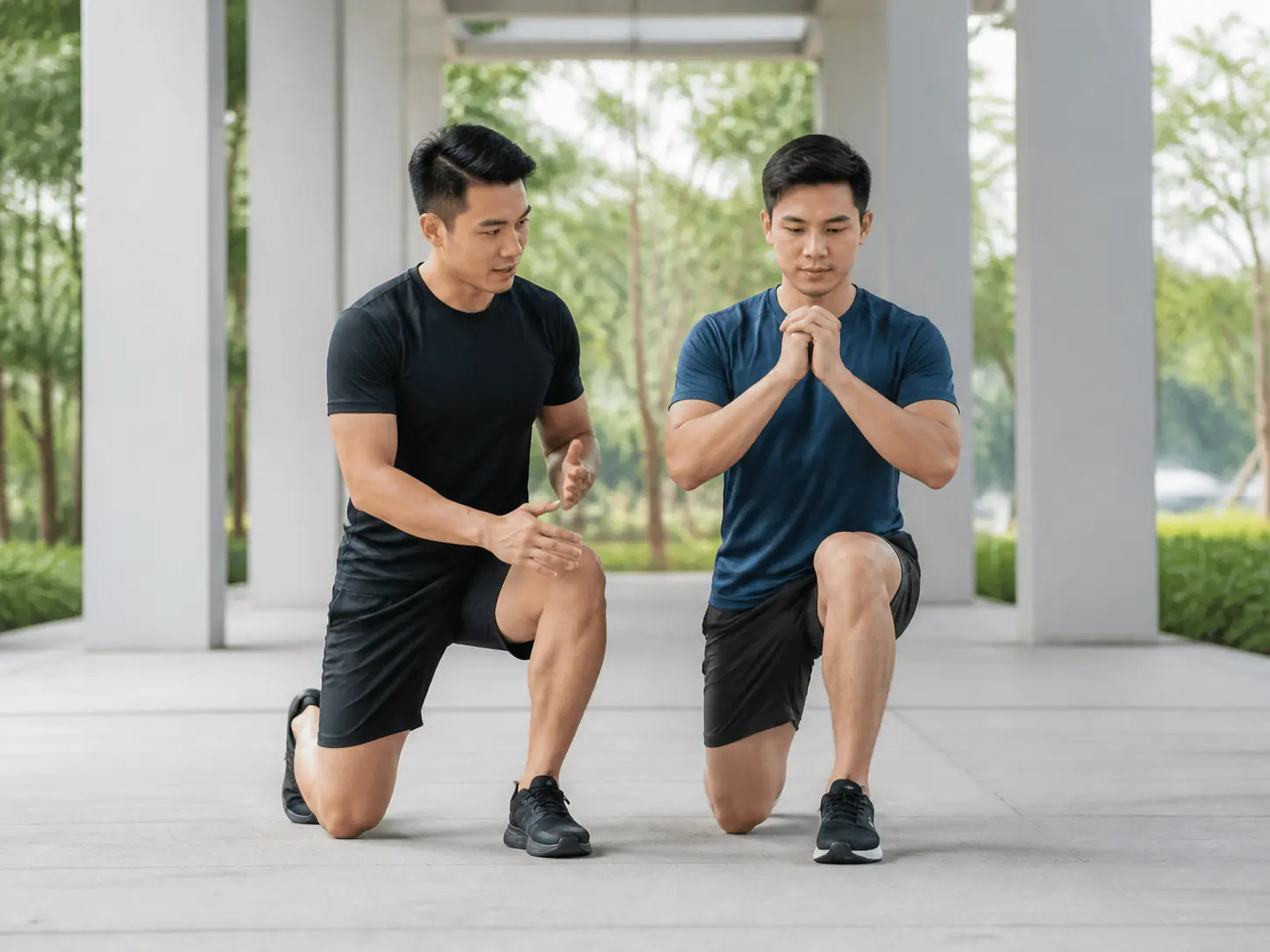
A trainer demonstrating controlled split-squat technique

If you sit all day, your glutes can get lazy, leaving your lower back to pick up work it was never meant to do. Glute activation uses light drills to wake those muscles up before you train, so they fire when you squat, hinge and lift.

A band is all you need, so it fits any home or our Putra Heights centre. It takes only a few minutes as part of a warm-up, and it makes your bigger lifts feel stronger and your back feel more protected.

What it trains and who it suits

It wakes up the glutes so they work properly during bigger lifts. It suits desk workers with sleepy glutes, beginners, and anyone whose back takes over during squats and hinges.

Because it is light and done as a warm-up, it primes the muscles rather than fatiguing them, setting you up for stronger, safer training.

Step-by-step cues

  1. Loop a band around your legs, above or below the knees
  2. For band walks, sit into a slight squat and step sideways
  3. Keep tension on the band and knees pushed out
  4. For bridges, squeeze the glutes hard at the top
  5. Do a few sets until you feel the glutes switched on

Common mistakes and quick fixes

  • Letting the knees cave in, push them out against the band
  • Standing too tall on band walks, stay in a slight squat
  • Feeling it in the back, focus on squeezing the glutes
  • Rushing, move with control to feel the muscle work

Regressions, progressions and when to stop

Cannot feel the glutes? Slow down and squeeze harder, or reduce the band tension. Too easy? Use a stronger band or add reps. At home a band is perfect; at our centre we use activation before your main leg work.

  • Stop if you feel sharp hip or back pain rather than a glute contraction
  • See a professional if you genuinely cannot feel your glutes working at all

Frequently Asked Questions

What does glute activation actually do?+

It wakes up glutes that have gone quiet from sitting, so they contribute properly during squats, hinges and lifts. This improves your lifts and takes strain off your lower back.

Do I really need to activate my glutes?+

Many desk-bound people benefit, because their glutes underperform and the back compensates. A few minutes of activation in your warm-up often makes lifts feel noticeably stronger.

When should I do glute activation?+

As part of your warm-up, before squats, hinges or any leg-focused session. Keep it light so it primes the muscles rather than tiring them out before your main work.

What if I still cannot feel my glutes?+

Slow the movement right down and squeeze deliberately, or reduce the band tension. If you truly cannot feel them working, a professional can help you find the connection.

Continue exploring

Programmes

Fat Loss for Beginners

Fat loss for beginners strips away the confusion and starts you off simply: a few key habits, gentle training you can sustain, and no crash diets. It is built for people new to fitness who want to lose fat for good without being overwhelmed or embarrassed.

See what it includes →
Programmes

Strength Training Programme

A private strength programme teaches the main squat, hinge, push, pull and carry patterns, then progresses them according to your technique, recovery and available equipment. The focus is useful strength you can measure and continue building over time.

See what it includes →
Goals

Do Your First Pull-Up

Getting your first pull-up is a specific strength goal with a clear path: build your back and arm pulling strength through progressions like assisted and negative reps until you can lift your full bodyweight once. We coach that ladder 1-to-1 so you actually get there.

See the coaching approach →
Weight Loss

How Fast Can You Lose Fat Safely

A safe, sustainable fat-loss rate is roughly 0.5 to 1 percent of your bodyweight a week. Faster than that usually costs you muscle, energy and the ability to keep it off. Heavier people can lose faster at first; leaner people should go slower. Patience protects your results.

See the coaching approach →
Personal Training

No-Gym Personal Training

You do not need a gym membership to get strong. No-gym training coaches you at home, in a park or in your condo gym using minimal equipment, so people who dislike gyms, the crowds, the contracts, the intimidation, can still train properly and progress.

Compare this option →
Personal Training

Your First Session

Your first session is an assessment plus a gentle introductory workout, not a fitness test you can fail. We take your history and goals, check how you move, and coach a light first workout so you leave knowing what to expect and how to prepare for the next one.

Compare this option →

Want help applying this guide to your own training?

Private coaching adapts exercise choice, loading and progression to your level, equipment and goal.

Ask a question first Request an assessment time