Skip to content

Sport-specific coaching

Badminton Conditioning in KL & Selangor

Badminton conditioning builds the explosive lunges, split-second direction changes and repeat-sprint stamina the court demands. We train the specific pattern, push, lunge, recover, reset, plus knee and ankle strength, so you win the long rallies instead of fading in the third game.
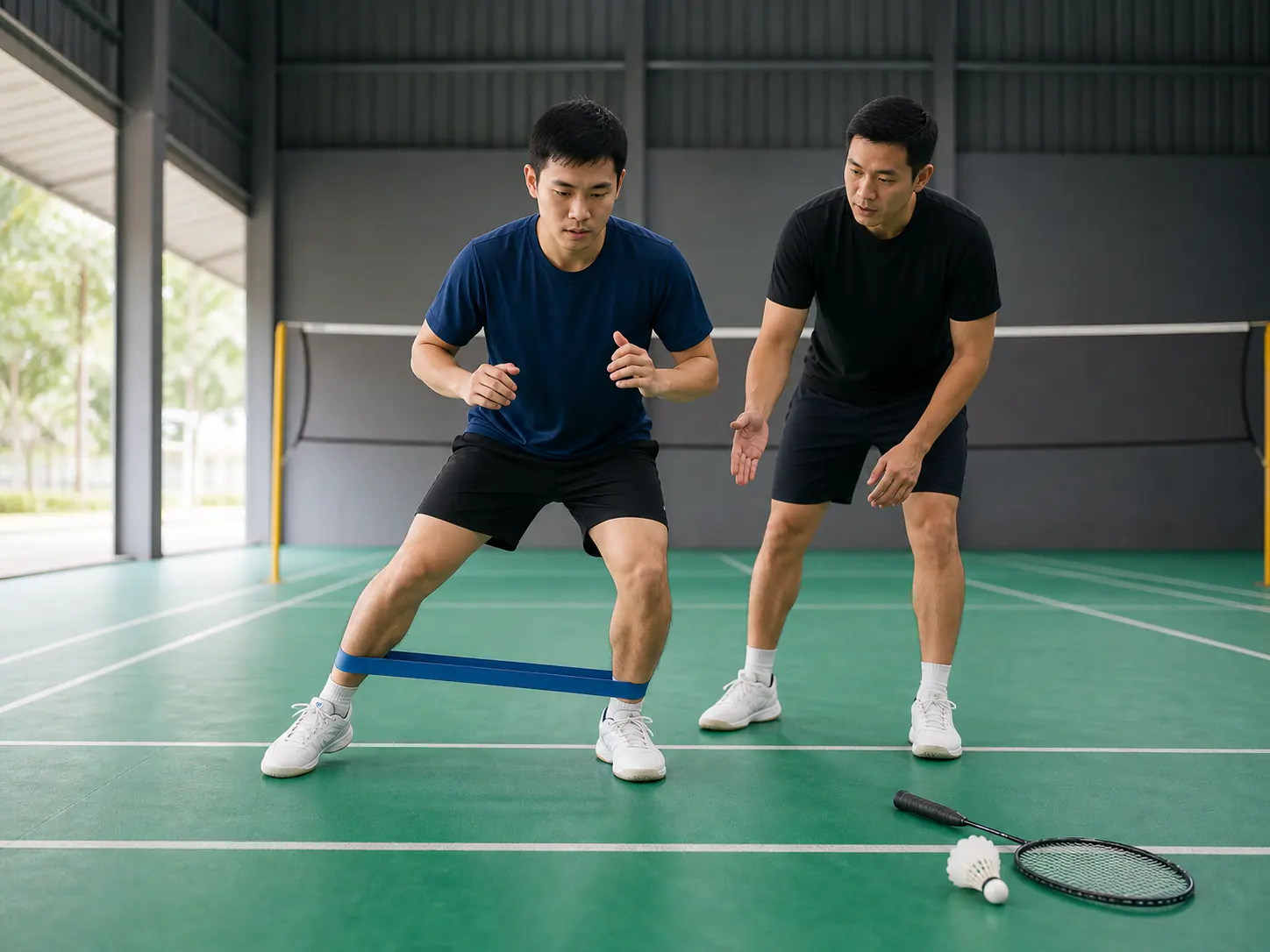
Badminton conditioning with a lateral resistance-band exercise

Weekend badminton in KL is brutal on the body, the game looks like wrist and racket, but the legs do the real work. Deep lunges into the front corners, hard pushes back to base, and dozens of stop-start sprints per game. If your legs are not conditioned for that, your footwork slows, your shots get late, and knees and ankles take a beating.

We do not coach your smash, that is your club coach's job. We build the engine underneath it: single-leg strength for those lunges, hip and ankle mobility so you get low without strain, and the repeat-sprint fitness to keep moving cleanly through three long games instead of gassing out after one.

The physical demands of badminton

A single rally can involve six to ten explosive changes of direction. The front lunge loads one knee heavily while the rear-court jump-smash asks the calf, hip and core to fire together. Rallies are short and sharp but repeat for an hour or more, so both power and repeat-effort stamina matter.

The most common weak links we see are shy single-leg strength (so the lunge collapses inward), stiff ankles (so you cannot get low safely), and poor recovery between points (so the fourth rally already feels like the fortieth).

What we assess first

  • Single-leg squat and lunge control, does the knee track or cave
  • Ankle mobility and calf strength for landings and pushes
  • Split-step timing and how fast you re-accelerate
  • Repeat-sprint recovery, how quickly your heart rate settles

A sample 8-week progression

  1. Weeks 1-2: build base strength, split squats, calf work, core anti-rotation
  2. Weeks 3-4: add jump-and-land control and lateral shuffle drills
  3. Weeks 5-6: reactive lunges and short shadow-footwork intervals
  4. Weeks 7-8: full court-pattern conditioning matched to game tempo

Common mistakes and home alternatives

The biggest mistake is only ever playing and never training the legs, then wondering why the knees ache. The second is skipping the warm-up and going straight into deep lunges cold. At home you can do split squats, calf raises off a step, and lateral bounds in a corridor; no gym needed for the foundation.

Frequently Asked Questions

Will this improve my footwork?+

Indirectly, yes. We build the strength and mobility that good footwork needs, so your club coach's footwork drills actually stick. Strong, mobile legs move to the shuttle faster and recover to base sooner.

My knees hurt after playing, can you fix that?+

We can often reduce it by strengthening the muscles around the knee and improving your landing control. But if the knee is swollen, locking or sharply painful, that needs a doctor or physio first, we will tell you honestly.

How often should I train alongside playing?+

Two short conditioning sessions a week alongside your normal games works well for most club players. We keep the load light on days you play so you are fresh for the court.

I am over 45 and still play weekly, is this for me?+

Absolutely. Older players benefit most, because single-leg strength and ankle mobility fade with age and that is exactly where lunging injuries start. We scale everything to your current level.

Continue exploring

Programmes

Sports Performance Programme

A sports performance programme develops the speed, strength, power and resilience your sport demands, whether that is football, badminton, running or cycling. We build a targeted plan around your sport and position, so you perform better on the pitch, court or road and break down less often.

See what it includes →
Goals

Recreational Sport Performance

Recreational sport performance training builds the strength, conditioning and resilience that make you better and more durable at the sport you love, futsal, badminton, tennis, running, hiking. We coach it 1-to-1 to complement your game, so you play harder and break down less.

See the coaching approach →
Exercise Library

Sled Push

The sled push has you drive a weighted sled across the floor. It builds leg strength, power and cardio conditioning with almost no impact and no eccentric muscle damage, so it is brutally effective yet easy to recover from. A favourite for legs and fitness.

Learn the technique →
Exercise Library

Walking Lunge

The walking lunge has you step forward into a lunge and continue moving with each rep. It builds single-leg strength plus balance and coordination, and mimics real walking and stairs. Best once you are comfortable with the stationary split squat.

Learn the technique →
Programmes

Flexibility Training

Flexibility training lengthens chronically tight muscles, hamstrings, hip flexors, calves, chest, so you can bend, reach and sit comfortably again. We use guided, progressive stretching plus supporting strength so the new range sticks instead of snapping back within a day.

See what it includes →
Assessments

Fitness vs Clinical Assessment

A fitness assessment sets a safe starting point for training, mapping strength, stamina and movement. A clinical assessment diagnoses injuries and medical conditions, and only qualified healthcare professionals do that. We do the first, never the second, and refer you on the moment something needs a doctor or physio.

See how it works →

Ready for a more structured way to train?

Start with an assessment so we understand your level, goal, schedule and preferred training location.

The request opens WhatsApp; a time is confirmed only after we reply and agree it with you.

Request an assessment time Ask a question first