Skip to content

Exercise technique guide

How to Do a Sled Push

The sled push has you drive a weighted sled across the floor. It builds leg strength, power and cardio conditioning with almost no impact and no eccentric muscle damage, so it is brutally effective yet easy to recover from. A favourite for legs and fitness.
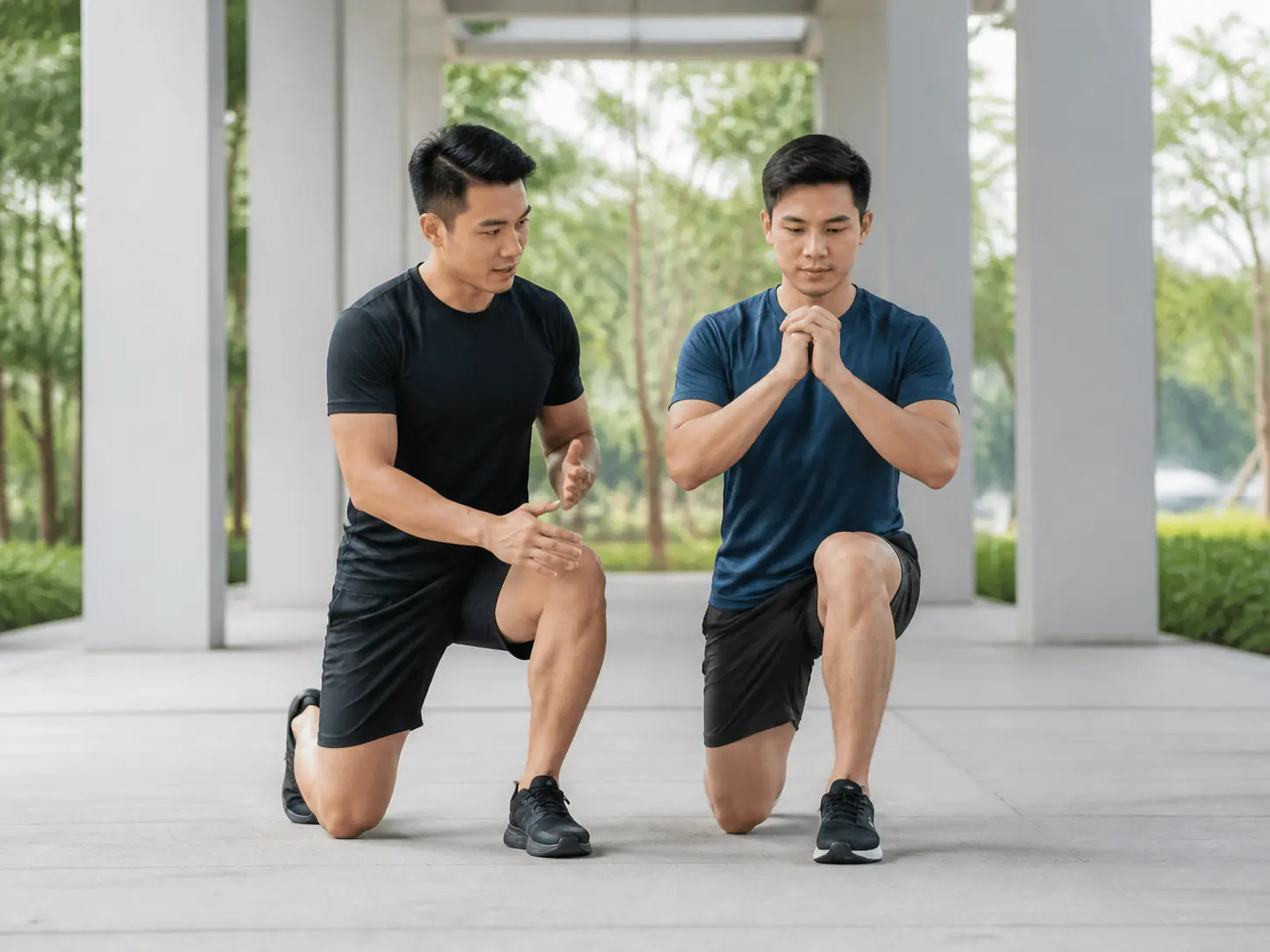
A trainer demonstrating controlled split-squat technique

The sled push is about as effective as conditioning gets while being remarkably kind to your body. There is no jumping and no lowering phase, so you can push hard, build serious leg strength and fitness, and still walk fine the next day.

You need a sled and a suitable surface, so it lives at our Putra Heights centre. It is friendly on the joints, hard to do wrong, and works for everyone from beginners to athletes simply by changing the load or distance.

What it trains and who it suits

It builds leg strength and power in the quads, glutes and calves, plus strong cardio conditioning. It suits everyone, especially people who want intensity without the joint stress of running or jumping.

Because there is no eccentric loading, muscle soreness is minimal, making it easy to train hard and recover quickly.

Step-by-step cues

  1. Grip the sled posts with arms straight and lean forward
  2. Set a strong angle with your body in a straight line
  3. Brace your core and drive through the balls of your feet
  4. Take powerful, driving steps to move the sled
  5. Keep a steady rhythm for the set distance

Common mistakes and quick fixes

  • Standing too upright, lean into the sled for more drive
  • Short choppy steps, take longer, powerful strides
  • Rounding the back, keep a straight line from head to heels
  • Going too heavy to move well, pick a load you can push smoothly

Regressions, progressions and when to stop

Too hard? Reduce the load or distance. Too easy? Add weight, push further, or go faster. This is a centre exercise; at home, hill walks or stair climbs give a similar low-impact leg and cardio effect.

  • Stop if you feel sharp knee, hip or back pain rather than effort
  • See a professional if a knee hurts sharply as you drive

Frequently Asked Questions

Why is the sled push so easy to recover from?+

There is no lowering or eccentric phase, which is what causes most muscle soreness. You only push, so you can train hard and still feel fresh the next day.

Is the sled for strength or cardio?+

Both, depending on load and pace. Heavy and slow builds strength and power; lighter and faster builds cardio. It is one of the most versatile conditioning tools we use.

Is it hard on the knees?+

Generally it is very joint-friendly since there is no impact. If a knee hurts sharply, reduce the load and check your driving position, and get it assessed if it persists.

What can I do at home instead?+

Without a sled, brisk incline treadmill walks or stair climbs give a similar low-impact combination of leg work and conditioning.

Continue exploring

Programmes

Weight-Loss Training

Weight-loss training combines strength work, sensible conditioning and realistic food habits so you lose fat while keeping the muscle that keeps you toned. No crash diets, no punishing cardio, just a sustainable plan built around your body, your schedule and Malaysian food.

See what it includes →
Programmes

Senior Strength Programme

A senior strength programme rebuilds the muscle we naturally lose with age, using safe, progressive resistance work. Stronger legs and grip mean standing up easily, climbing stairs and carrying shopping without help, the strength that keeps you independent for years longer.

See what it includes →
Weight Loss

Strength Plus Cardio for Fat Loss

The best fat-loss plans use both strength and cardio, not one or the other. Strength keeps muscle and shape; cardio and walking add extra calorie burn and heart health. We show you how to combine them without overtraining, so fat drops while your body stays strong.

See the coaching approach →
Weight Loss

Build Muscle While Losing Fat

Building muscle while losing fat is possible if you get three things right: eat enough protein, train strength progressively, and keep the calorie deficit modest. It works best for beginners and returners, is slower than one goal alone, and needs measuring beyond the scale.

See the coaching approach →
Health & Exercise

Low-Impact Options for Sensitive Joints

If your joints are sensitive and your doctor has cleared you, low-impact training builds strength and fitness without the jarring that aggravates sore knees, hips or backs. We coach controlled, joint-friendly options and adjust to how you feel. This is general fitness coaching, not treatment for a joint problem.

Read the suitability guide →
Goals

Recreational Sport Performance

Recreational sport performance training builds the strength, conditioning and resilience that make you better and more durable at the sport you love, futsal, badminton, tennis, running, hiking. We coach it 1-to-1 to complement your game, so you play harder and break down less.

See the coaching approach →

Want help applying this guide to your own training?

Private coaching adapts exercise choice, loading and progression to your level, equipment and goal.

Ask a question first Request an assessment time