Skip to content

Sport-specific coaching

Padel Fitness in KL & Selangor

Padel fitness builds the short-court agility, rotational power and shoulder durability the game needs, including the awkward movements off the back glass. We prepare your body for the constant bursts, twists and overheads so you play sharper and avoid the sport's common shoulder and knee niggles.
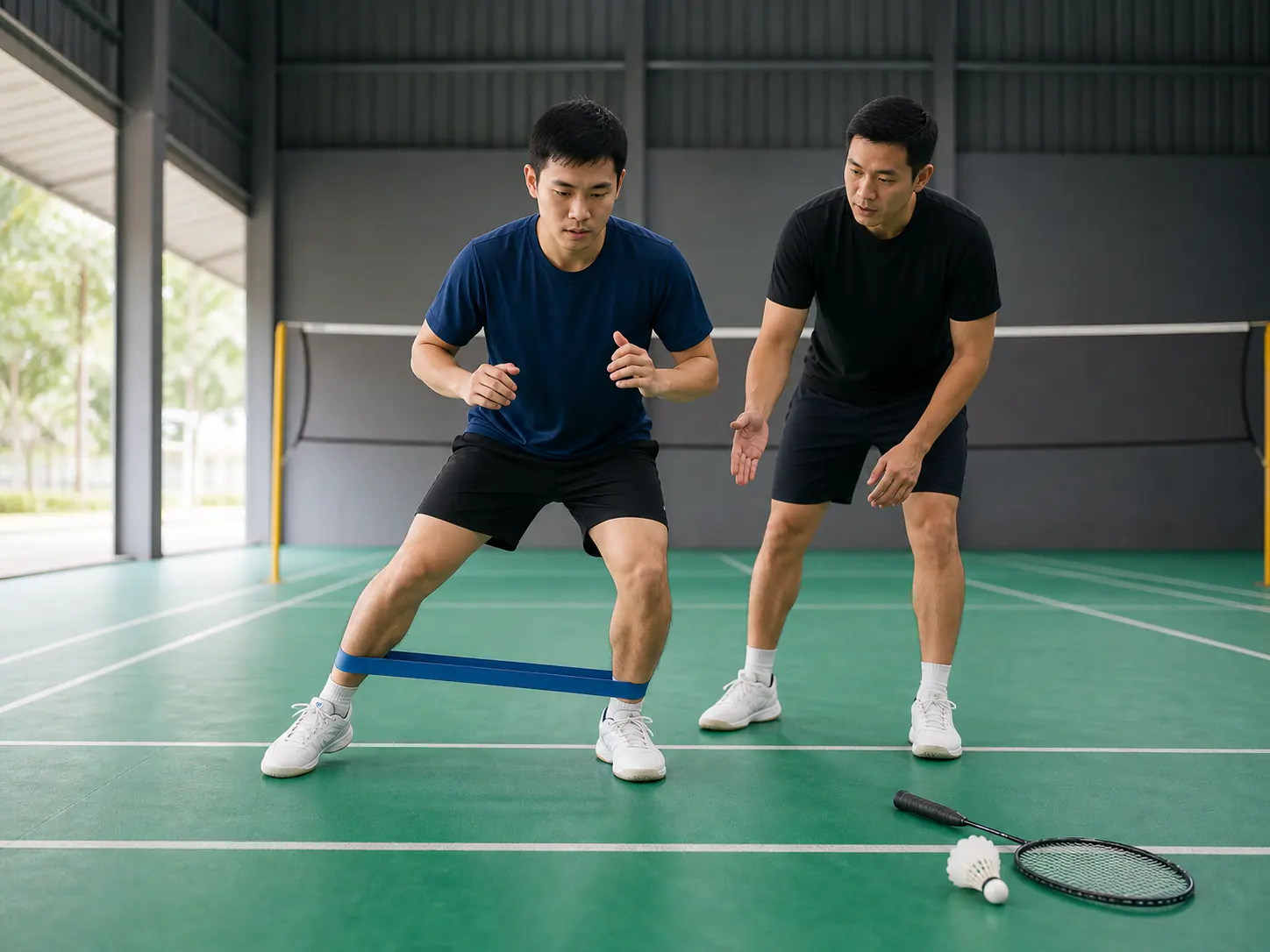
Badminton conditioning with a lateral resistance-band exercise

Padel is booming in KL, and it moves the body in ways that catch new players out. The enclosed court means constant short sprints, sudden stops, twists to play balls off the glass behind you, and repeated overheads. It is social and addictive, but the mix of explosive bursts and awkward rotations quickly exposes weak shoulders, stiff hips and unprepared knees.

We build padel-specific conditioning: agility and deceleration for the short court, rotational power and shoulder durability for smashes and glass shots, and the hip and knee stability that the constant twisting demands. You do not need to be an athlete, just prepared for the way padel actually moves, so the game stays fun rather than turning into a string of niggles.

How padel challenges the body

The court is small and walled, so points are quick, reactive and full of odd angles. You sprint, brake, twist to reach balls off the back glass, and hit overheads repeatedly. That combination loads the shoulder, trunk and knees in ways many players are not used to, especially those coming from gentler racket sports or none at all.

The glass shots in particular ask for awkward rotation and reaching, which is where backs and shoulders complain if the body is not prepared for it.

What we assess and build

  • Short-court agility and deceleration control
  • Rotational power for smashes and glass shots
  • Shoulder strength and control for overheads
  • Hip and knee stability for twisting and reaching

A sample conditioning progression

  1. Weeks 1-2: build shoulder, hip and single-leg strength
  2. Weeks 3-4: add agility and rotational control drills
  3. Weeks 5-6: overhead power and glass-shot movement patterns
  4. Weeks 7-8: game-tempo conditioning with reactive movement

Common mistakes and home alternatives

Players jump straight into competitive games with no warm-up and no off-court base, then strain a shoulder reaching for a glass shot. A short mobility and activation warm-up helps a lot. At home, band shoulder work, rotational core drills and lateral agility build the qualities padel demands.

Frequently Asked Questions

Why does my shoulder ache after padel?+

Repeated overheads and awkward glass shots load the shoulder, and if it is under-supported it complains. We strengthen the shoulder and upper back and improve control. Sharp, weak or catching shoulder pain needs a professional first.

How is padel different from tennis for fitness?+

The court is smaller and walled, so there is more reactive short movement and unusual twisting off the glass, with less sustained running. We emphasise agility, rotation and shoulder durability over court-covering endurance.

I am new to racket sports, where do I start?+

With a base of shoulder, hip and single-leg strength plus gentle agility, built up gradually. That preparation makes the game safer and more enjoyable while you learn the skills on court.

When should I stop and get checked?+

A shoulder that is sharply painful or weak, a twisted knee that swells, or back pain that radiates or lingers needs a doctor or physio before you play on. We coach fitness, not injury treatment.

Continue exploring

Programmes

Functional Fitness

Functional fitness trains your body for the things you actually do, carrying shopping up to the condo, picking a child off the floor, twisting to reach the back seat. We build strength, stability and mobility in real movement patterns, not isolated machine work, so daily life gets easier.

See what it includes →
Programmes

Lower-Body Strength

Lower-body strength training builds your legs, hips and glutes, the biggest muscles you own and the engine behind walking, stairs, sport and standing up. Strong legs make daily life easier, protect your knees and back, and burn plenty of energy in the process.

See what it includes →
Goals

Recreational Sport Performance

Recreational sport performance training builds the strength, conditioning and resilience that make you better and more durable at the sport you love, futsal, badminton, tennis, running, hiking. We coach it 1-to-1 to complement your game, so you play harder and break down less.

See the coaching approach →
Exercise Library

Bear Crawl

The bear crawl has you move on your hands and feet with your knees just off the floor. It builds full-body strength, core stability and coordination in one move, needs no equipment, and doubles as a challenging warm-up or conditioning drill for any level.

Learn the technique →
Exercise Library

Medicine Ball Slam

The medicine ball slam has you lift a heavy ball overhead and slam it into the ground with full force. It builds explosive full-body power, works your core hard, and is a genuinely satisfying way to blow off steam. Use a non-bouncing slam ball for safety.

Learn the technique →
Weight Loss

Keeping Weight Off

Many people can lose weight; far fewer keep it off, because they treat the diet as temporary. Keeping weight off means building habits you can hold for life, regular strength training, enough protein and daily movement, and shifting from a short diet to a lasting way of living.

See the coaching approach →

Ready for a more structured way to train?

Start with an assessment so we understand your level, goal, schedule and preferred training location.

The request opens WhatsApp; a time is confirmed only after we reply and agree it with you.

Request an assessment time Ask a question first