Skip to content

Exercise technique guide

How to Do a Medicine Ball Slam

The medicine ball slam has you lift a heavy ball overhead and slam it into the ground with full force. It builds explosive full-body power, works your core hard, and is a genuinely satisfying way to blow off steam. Use a non-bouncing slam ball for safety.
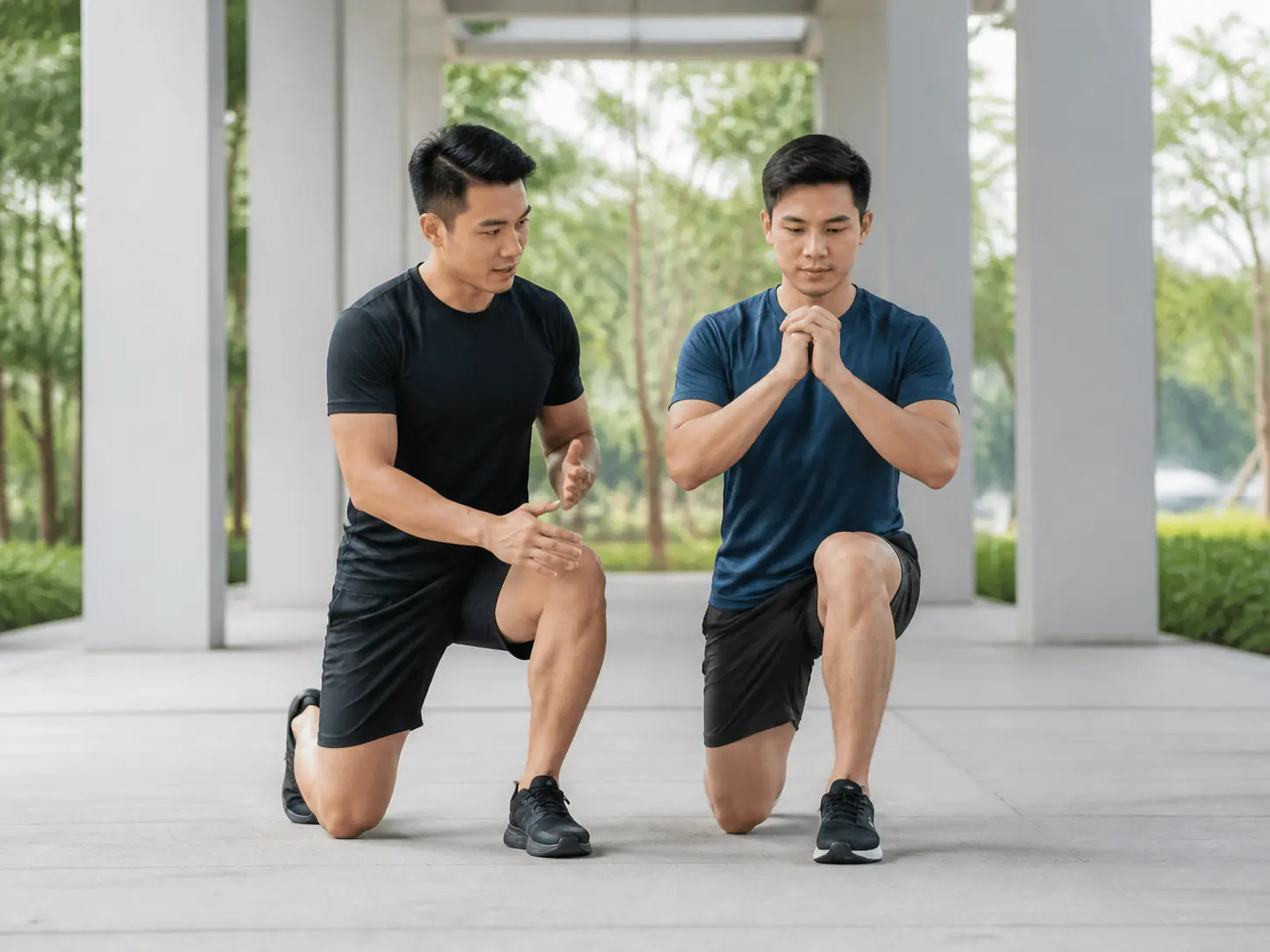
A trainer demonstrating controlled split-squat technique

The medicine ball slam is where a workout gets to feel a bit primal. You raise a heavy ball overhead and drive it into the floor with everything you have, building explosive power through your whole body while giving stress a healthy outlet.

You need a proper non-bouncing slam ball and floor space, so it lives at our Putra Heights centre. It trains power and conditioning while teaching you to generate and control force, which few gym exercises do so directly.

What it trains and who it suits

It builds explosive power in the core, shoulders and hips, plus cardio conditioning from repeated efforts. It suits people wanting power and intensity, and anyone who enjoys a hard, expressive movement.

Because it is dynamic and forceful, it needs a stable base and a safe ball, so we coach the timing and setup before adding speed.

Step-by-step cues

  1. Stand tall holding the slam ball with both hands
  2. Reach the ball overhead, extending your whole body
  3. Hinge and slam it into the floor in front of you
  4. Follow through with your arms and core
  5. Pick it up with a flat back and repeat

Common mistakes and quick fixes

  • Slamming with just the arms, drive with the core and hips
  • Rounding the back to pick up, hinge with a flat spine
  • Using a bouncing ball, always use a dead-bounce slam ball
  • Slamming too far forward, bring it down close to your feet

Regressions, progressions and when to stop

Too hard? Use a lighter ball or slow the pace. Too easy? Use a heavier ball, add reps, or slam faster. This is a centre exercise; at home, a similar effect is hard to copy safely without a proper slam ball.

  • Stop if you feel sharp back or shoulder pain rather than effort
  • See a professional before slamming if you have shoulder or back issues

Frequently Asked Questions

Can I use any medicine ball for slams?+

No. Use a dedicated slam ball that does not bounce back. A regular medicine ball can rebound into your face and cause injury, so the right equipment matters here.

Where should I feel slams?+

Across your whole body, especially the core, shoulders and hips as you generate and absorb force. Repeated slams also raise your heart rate for conditioning.

Are slams good for stress?+

Many people find them a great release. The full-body effort and the act of slamming can feel genuinely satisfying while building real power and fitness.

How many slams should I do?+

Because they are explosive, keep sets crisp: six to ten powerful reps for a few rounds. Stop when your power or form drops off rather than grinding out tired reps.

Continue exploring

Programmes

Core Training

Core training builds the deep trunk muscles that stabilise your spine, protect your back and transfer force between your upper and lower body. It is about a strong, functional midsection that supports everything you do, not just chasing visible abs with endless crunches.

See what it includes →
Programmes

Power Training

Power training develops your ability to produce force quickly, jumping, throwing, sprinting, reacting. It builds on a base of strength to make you explosive and athletic, and it is one of the first qualities to fade with age, which makes keeping it worth the effort.

See what it includes →
Weight Loss

Body Recomposition Explained

Body recomposition means losing fat and building muscle at the same time, so your weight may barely move while your body changes shape completely. It works best for beginners, returners and people carrying extra fat. It is slower on the scale but often the most satisfying way to transform.

See the coaching approach →
Weight Loss

Cardio for Fat Loss

Cardio helps fat loss by burning extra calories and improving fitness, but it is a supporting act, not the star. Diet and strength training do the heavy lifting; cardio tops up the burn. We help you use the right amount and type without overdoing it or letting it eat your recovery.

See the coaching approach →
Guides & Tools

Core Training Basics

Your core is the group of muscles around your trunk that stabilise your spine and transfer force between your upper and lower body. Training it well means more than crunches; it means bracing, anti-movement exercises and heavy compound lifts. A strong core supports every movement you do.

Read the guide →
Fitness in Malaysia

Cycling in the Klang Valley

Cycling around the Klang Valley is popular and great for fitness, but riders who never lift end up strong on the bike and fragile off it. Strength training builds power, protects your back and knees, and helps you ride longer without breaking down. The two complement each other perfectly.

Read the guide →

Want help applying this guide to your own training?

Private coaching adapts exercise choice, loading and progression to your level, equipment and goal.

Ask a question first Request an assessment time