Skip to content

Sport-specific coaching

Sports Mobility & Warm-Up Coaching in KL & Selangor

Sports mobility and warm-up coaching gives you the movement quality and pre-game routine that improve performance and cut injury risk. We build the mobility your sport needs and teach you an effective warm-up, so you start every session moving well and ready to go, not cold and stiff.
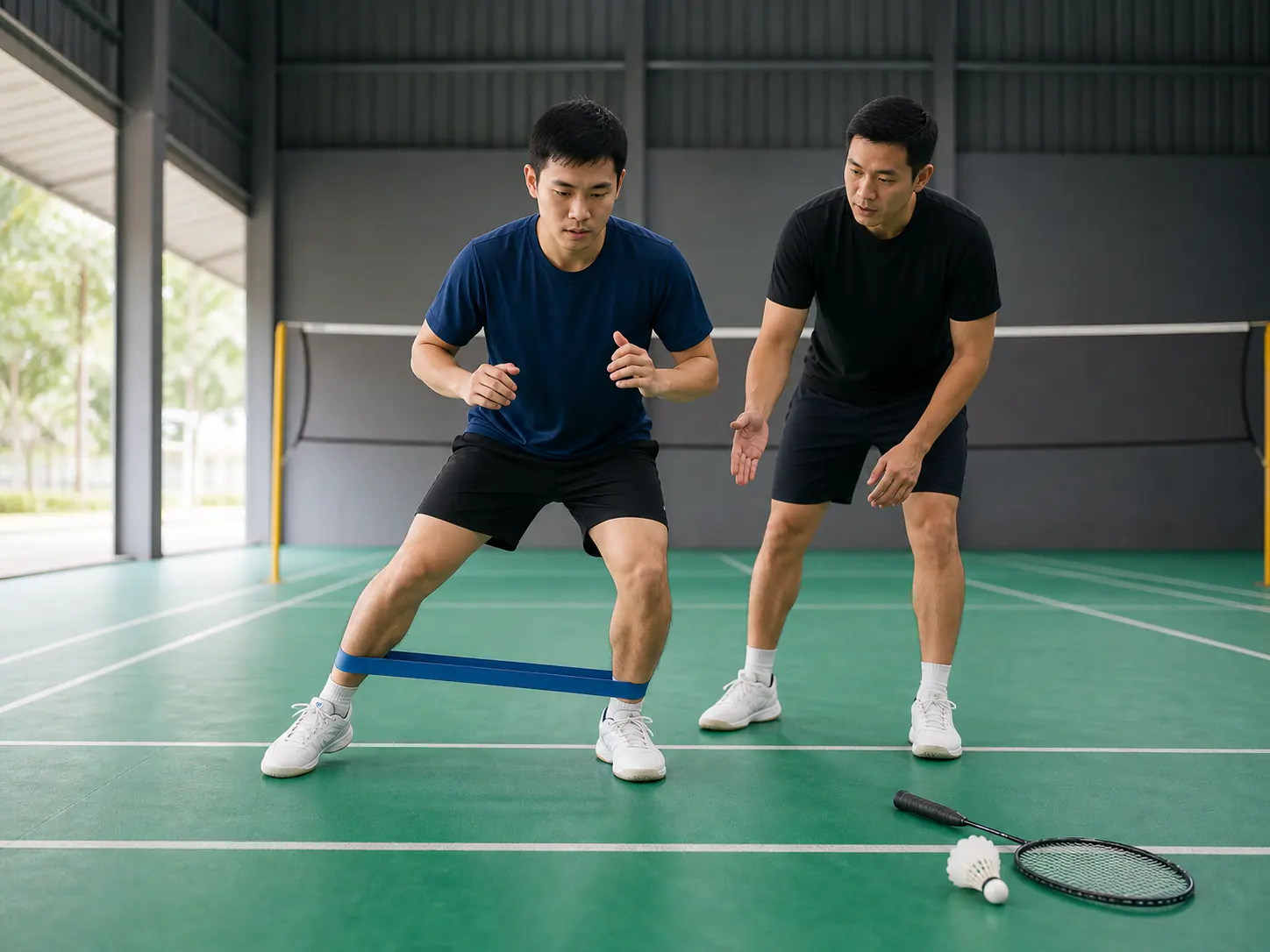
Badminton conditioning with a lateral resistance-band exercise

Two of the most neglected things in recreational sport are mobility and a proper warm-up, and both quietly cost people performance and injuries. Poor mobility limits how well you can move in your sport and forces compensations that lead to strain. Skipping the warm-up, or doing a token one, means asking cold muscles for explosive effort, which is a classic setup for a pull or tweak in the first ten minutes.

We fix both. We assess the specific mobility your sport demands and build what is lacking, then teach you an effective, sport-specific warm-up you can actually do before you play. This is not stretching for its own sake; it is targeted movement quality and preparation that makes you move better, perform better and get injured less, whatever your sport in the Klang Valley.

Why mobility and warm-up matter

Mobility is your usable range of motion with control, and every sport needs it somewhere, hips for kicking and squatting, shoulders for throwing and racquet sports, ankles for running and cutting. Lacking it means you compensate, which both limits performance and loads other tissues until they complain.

A warm-up prepares your body for what is coming: raising temperature, activating muscles and rehearsing movement. A good one measurably reduces injury risk and improves early performance, yet Many people skip it or waste time on static stretches that do not prepare them to move.

What we assess and build

  • The specific mobility your sport actually demands
  • Targeted work to restore any restricted range
  • An effective, sport-specific warm-up routine
  • Movement quality that reduces compensations and strain

Building your routine

  1. Assess your mobility and how your sport loads you
  2. Address the key restrictions limiting your movement
  3. Build a short, effective warm-up specific to your sport
  4. Teach you to run it yourself before every session

Common mistakes and home alternatives

People either skip warming up entirely or do long static stretches that do not prepare them to move explosively. Others never address the mobility restrictions holding them back. At home, a short daily mobility routine and a dynamic warm-up before you play deliver most of the benefit with no equipment.

Frequently Asked Questions

Is stretching before sport actually useful?+

A dynamic warm-up is very useful; long static stretching right before explosive sport is not, and can even reduce power briefly. We teach a dynamic, sport-specific warm-up that prepares you to move, and use mobility work at the right times.

How long should a warm-up take?+

Often just five to ten minutes, done properly. It is about quality and specificity, not length. We build you a short, efficient routine targeted at your sport so it is realistic to do every time.

Will better mobility improve my performance?+

Usually, yes. When you can move freely through the ranges your sport needs, you perform better and compensate less, which also reduces strain. We build the specific mobility your sport actually uses.

When should I see a professional?+

If a joint is painful, stiff in a way that is not improving, or was previously injured, get it assessed. Some restrictions need clinical input, and we refer when mobility work alone is not the answer.

Continue exploring

Programmes

Mobility Training

Mobility training restores the range of motion desk life and age quietly take away, stiff hips, tight shoulders, a locked-up back. We coach controlled movement through full ranges so you squat deeper, reach higher and move without that stiff, creaky feeling.

See what it includes →
Assessments

Strength Baseline Test

A strength baseline test measures how much you can safely handle at the start, using controlled reps, not one-rep maxes. It gives us a fair number to progress from, highlights left-right imbalances, and keeps early training safe. It is a fitness marker, not an injury diagnosis.

See how it works →
Programmes

Sports Performance Programme

A sports performance programme develops the speed, strength, power and resilience your sport demands, whether that is football, badminton, running or cycling. We build a targeted plan around your sport and position, so you perform better on the pitch, court or road and break down less often.

See what it includes →
Weight Loss

Beginner Weight-Loss Training

Beginner weight-loss training starts from the assumption that you have done nothing for years. We teach a handful of basic movements well, keep the intensity honest, and pair it with one or two food habits, so you lose fat steadily without pain, injury or confusion.

See the coaching approach →
Goals

Recreational Sport Performance

Recreational sport performance training builds the strength, conditioning and resilience that make you better and more durable at the sport you love, futsal, badminton, tennis, running, hiking. We coach it 1-to-1 to complement your game, so you play harder and break down less.

See the coaching approach →
Assessments

Fitness vs Clinical Assessment

A fitness assessment sets a safe starting point for training, mapping strength, stamina and movement. A clinical assessment diagnoses injuries and medical conditions, and only qualified healthcare professionals do that. We do the first, never the second, and refer you on the moment something needs a doctor or physio.

See how it works →

Ready for a more structured way to train?

Start with an assessment so we understand your level, goal, schedule and preferred training location.

The request opens WhatsApp; a time is confirmed only after we reply and agree it with you.

Request an assessment time Ask a question first