Skip to content
Assessments

Fitness Assessment vs Clinical Assessment: The Difference

In short

A fitness assessment sets a safe starting point for training, mapping strength, stamina and movement. A clinical assessment diagnoses injuries and medical conditions, and only qualified healthcare professionals do that. We do the first, never the second, and refer you on the moment something needs a doctor or physio.
Written & reviewed by M. Thurairaj & team, Registered Physiotherapist & Certified Trainers

This is the most important line we draw, so we want it crystal clear. A fitness assessment, which is what we do, looks at how you move, how strong you are, and how your stamina holds up, so we can build safe, effective training. A clinical assessment diagnoses what is medically wrong, a torn ligament, a heart condition, a disc problem, and only doctors and physios are qualified to do that.

We say this plainly because the line protects you. A trainer who blurs it, guessing at diagnoses or promising to "fix" a medical problem, is doing something they are not qualified for. Our job is to train you well within your limits and to recognise, honestly and early, when something belongs in a clinic rather than a gym.

What a fitness assessment does

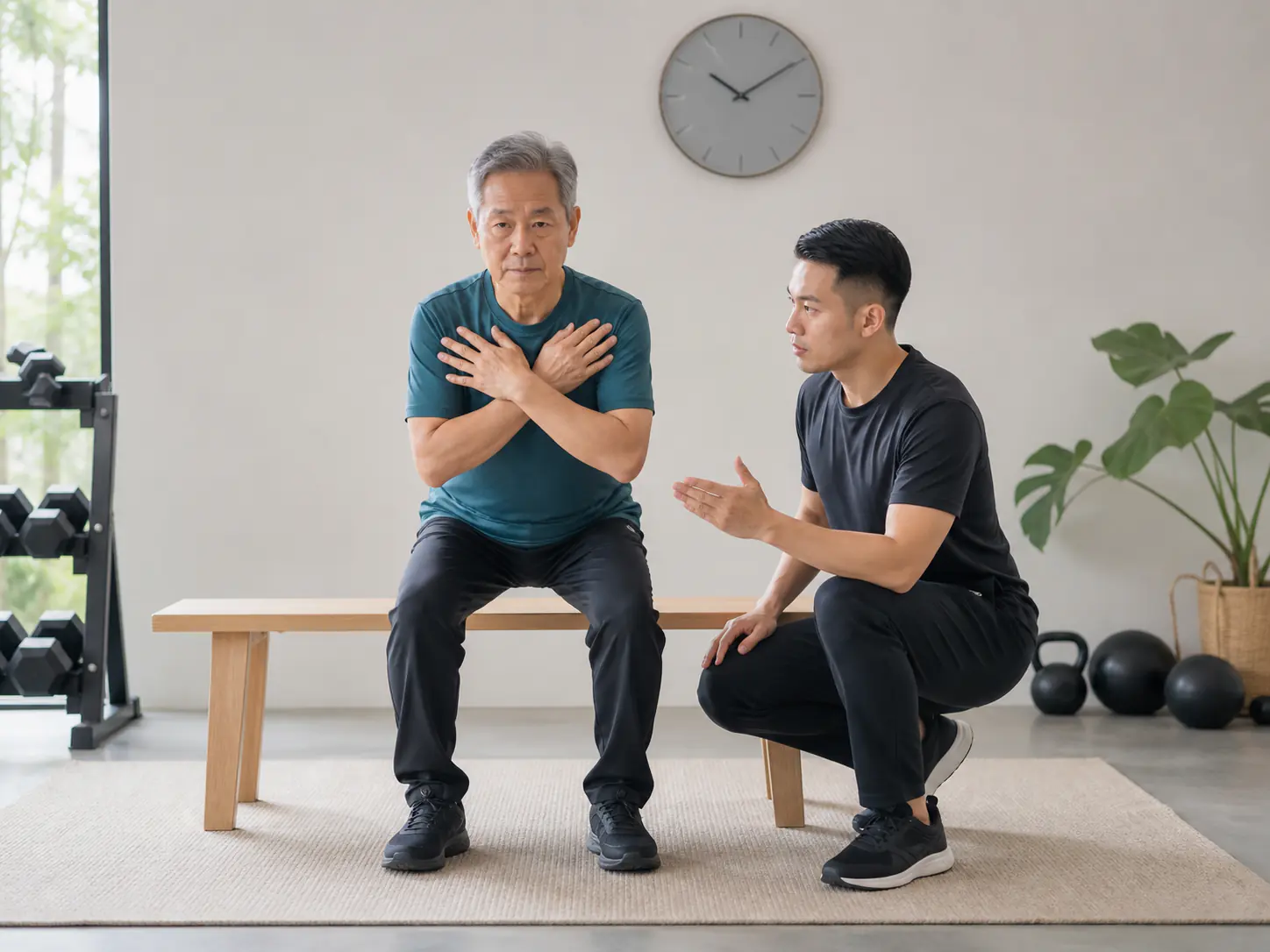
It maps your starting point for training: how you move, your strength and stamina, your mobility and balance, and any history we should train around. From that, we build a programme that is safe for you and points it at your goals. It is about setting a sensible, effective place to begin and progress.

What it never does is diagnose. We do not name what is wrong with a painful knee or a racing heart. We recognise when those need a professional and send you there.

What only a clinical assessment can do

  • Diagnose injuries like tears, strains or disc problems
  • Assess and manage medical conditions
  • Order and interpret scans and medical tests
  • Provide treatment, rehabilitation or medical clearance
  • Give a formal prognosis for a condition

How we work alongside your doctor

  1. We screen and flag anything that needs medical input
  2. We refer you to a doctor or physio when it does
  3. We wait for their clearance or guidance where needed
  4. We build your training within any limits they set
  5. We keep coaching within our lane, fitness, done well

Why this honesty serves you

Plenty of injuries and conditions do fine with the right exercise, once a professional has assessed them. By knowing our lane and staying in it, we can be the trainer who works safely with your physio or doctor rather than against them. That teamwork is what lets people with real histories train confidently for years.

Frequently Asked Questions

Can you diagnose my knee or back pain?+

No. Diagnosing pain is a clinical job for a doctor or physio, not a fitness assessment. We can train around a cleared issue, but naming what is wrong is outside our lane, and we will refer you.

Can a fitness assessment replace seeing a doctor?+

No. It sets a safe starting point for training but never diagnoses or treats anything medical. If something needs clinical attention, we point you to a doctor or physio first, then train once you are cleared.

Do you work with physios and doctors?+

Yes, gladly. When a client has been assessed or cleared by a professional, we build training within the limits they set. That teamwork is exactly how people with real histories train safely and confidently.

Why won't you just tell me what's wrong?+

Because guessing at a diagnosis without the right training and tests could be flat wrong and even harmful. The honest, safe move is to send you to someone qualified, then coach you well once they have looked.

Related pages

Assessments

Balance Assessment

A balance assessment measures how steady you are on your feet, standing, shifting weight, single-leg holds. It is a fitness screen, not a neurological diagnosis. It tells us how much stability to build before loading balance-heavy exercises, and it matters most for older adults and anyone who feels unsteady.

Assessments

Beginner Fitness Assessment

A beginner fitness assessment is a gentle first session where we map where you are starting from, movement, strength, stamina and goals. No fitness is needed to take it. It sets a safe, realistic starting point, not a diagnosis, and turns "I don't know where to begin" into a clear first plan.

Assessments

Body Composition Measurement

Body composition measurement estimates how much of your weight is fat versus muscle, rather than just a scale number. We use simple, consistent methods to track change over time. It is a fitness tool for motivation and planning, not a medical diagnosis of health from a single reading.

Assessments

Cardio Fitness Baseline

A cardio fitness baseline shows how your heart and lungs cope with light-to-moderate effort at the start. We measure it gently, never all-out, so we can set safe conditioning intensities and track improvement. It is a fitness marker, not a heart diagnosis; anything concerning gets referred first.

Assessments

Grip Strength Test

A grip strength test measures how hard you can squeeze, usually with a hand dynamometer. Grip is a surprisingly good marker of overall strength and healthy ageing. We track it as a simple, motivating fitness signal, not as a medical diagnosis, and we build it through your training over time.

Assessments

Your Health History

Your health history is the record of past injuries, conditions, surgeries and medications you share before training. It is not judged or diagnosed, it is used to set safe loads, train around old problems, and know when to refer you to a doctor first. The fuller it is, the safer you train.

Ready to start?

Train at our Putra Heights centre, your home, or your condo gym

WhatsApp Book an Assessment