Skip to content
Assessments

Your First Beginner Fitness Assessment

In short

A beginner fitness assessment is a gentle first session where we map where you are starting from, movement, strength, stamina and goals. No fitness is needed to take it. It sets a safe, realistic starting point, not a diagnosis, and turns "I don't know where to begin" into a clear first plan.
Written & reviewed by M. Thurairaj & team, Registered Physiotherapist & Certified Trainers

If you have never trained, or not in a decade, the hardest part is knowing where to start. The beginner assessment is built for exactly that person. There is no bleep test to survive and nobody watching. We simply find out how you move, how much you can comfortably do today, and what you want out of this.

A lot of new clients arrive apologising for being unfit. There is nothing to apologise for, being new is the whole reason the assessment exists. Everything we measure is just a starting line, and starting lines are meant to be modest. From there, week by week, is where the real change happens.

What we look at, gently

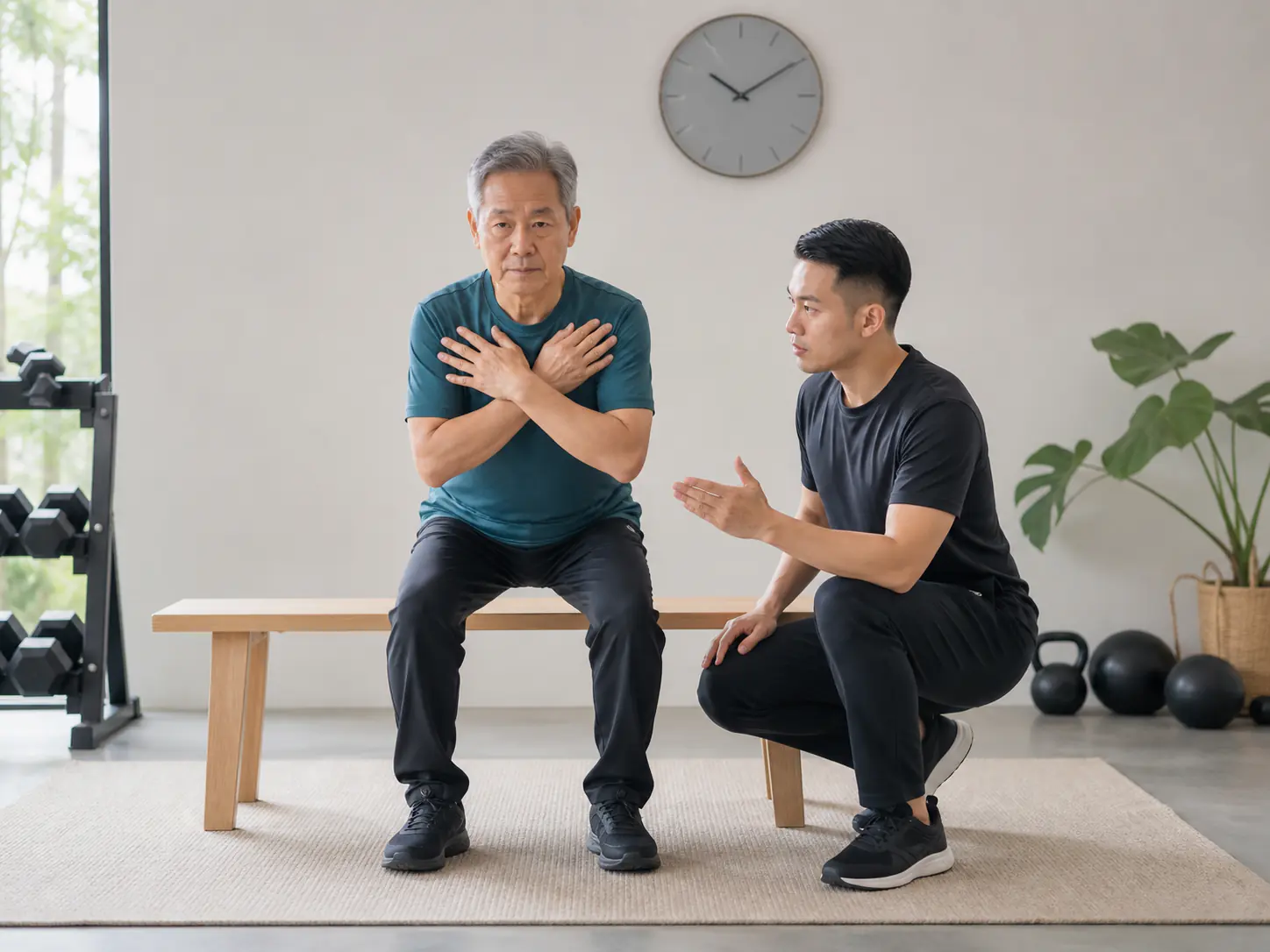
We watch a few basic movements, standing up from a chair, a supported squat, reaching overhead, walking, to see how your body moves right now. We check how a light effort feels and where your comfort ends. None of it is pass-or-fail; it is just information to plan with.

If anything hurts or feels off, we note it and, where needed, suggest you see a doctor or physio before we load it. The assessment is about a safe start, so we would rather find that on day one than in week three.

What makes it beginner-friendly

  • No prior fitness, gear or gym experience needed
  • Private, one-to-one, nobody else is watching
  • Every movement scaled to what you can do today
  • Plain-language explanations, no jargon
  • You leave knowing your exact next step

How your first assessment runs

  1. A relaxed chat about your goals and any health flags
  2. A few easy movements so we can see how you move
  3. A short, light effort to gauge your current stamina
  4. We agree realistic first targets together
  5. You leave with a simple plan for week one

What happens after

You walk out with a clear starting plan, how often to train, what your first sessions look like, and one or two simple things to do at home. Nothing overwhelming. The whole point is that a beginner leaves feeling capable and clear, not lectured or sore for a week.

Frequently Asked Questions

I am really unfit, is this assessment too much?+

No. It is designed for people starting from nothing. Every movement is scaled to you, and there is no minimum fitness to take part. Being a beginner is exactly who it is for.

Will I be exhausted after?+

You should not be. A beginner assessment is light on purpose, we are measuring your starting point, not testing your limits. You will leave with information and a plan, not wiped out.

Do I need special clothes or shoes?+

Just comfortable clothes you can move in and flat shoes. No special gear. If you train at home, we work with the space and whatever you already have there.

What if a movement hurts during the assessment?+

We stop that movement and note it. If it looks like something a doctor or physio should see first, we tell you honestly and adjust the plan around it in the meantime.

Related pages

Assessments

Balance Assessment

A balance assessment measures how steady you are on your feet, standing, shifting weight, single-leg holds. It is a fitness screen, not a neurological diagnosis. It tells us how much stability to build before loading balance-heavy exercises, and it matters most for older adults and anyone who feels unsteady.

Assessments

Body Composition Measurement

Body composition measurement estimates how much of your weight is fat versus muscle, rather than just a scale number. We use simple, consistent methods to track change over time. It is a fitness tool for motivation and planning, not a medical diagnosis of health from a single reading.

Assessments

Cardio Fitness Baseline

A cardio fitness baseline shows how your heart and lungs cope with light-to-moderate effort at the start. We measure it gently, never all-out, so we can set safe conditioning intensities and track improvement. It is a fitness marker, not a heart diagnosis; anything concerning gets referred first.

Assessments

Fitness vs Clinical Assessment

A fitness assessment sets a safe starting point for training, mapping strength, stamina and movement. A clinical assessment diagnoses injuries and medical conditions, and only qualified healthcare professionals do that. We do the first, never the second, and refer you on the moment something needs a doctor or physio.

Assessments

Grip Strength Test

A grip strength test measures how hard you can squeeze, usually with a hand dynamometer. Grip is a surprisingly good marker of overall strength and healthy ageing. We track it as a simple, motivating fitness signal, not as a medical diagnosis, and we build it through your training over time.

Assessments

Your Health History

Your health history is the record of past injuries, conditions, surgeries and medications you share before training. It is not judged or diagnosed, it is used to set safe loads, train around old problems, and know when to refer you to a doctor first. The fuller it is, the safer you train.

Ready to start?

Train at our Putra Heights centre, your home, or your condo gym

WhatsApp Book an Assessment