Skip to content

Exercise technique guide

How to Do a Bird Dog

The bird dog has you kneel on all fours and extend opposite arm and leg while keeping your torso perfectly still. It trains the core and back muscles that stabilise your spine, improves balance, and is gentle enough for almost anyone, including back-pain sufferers cleared to train.
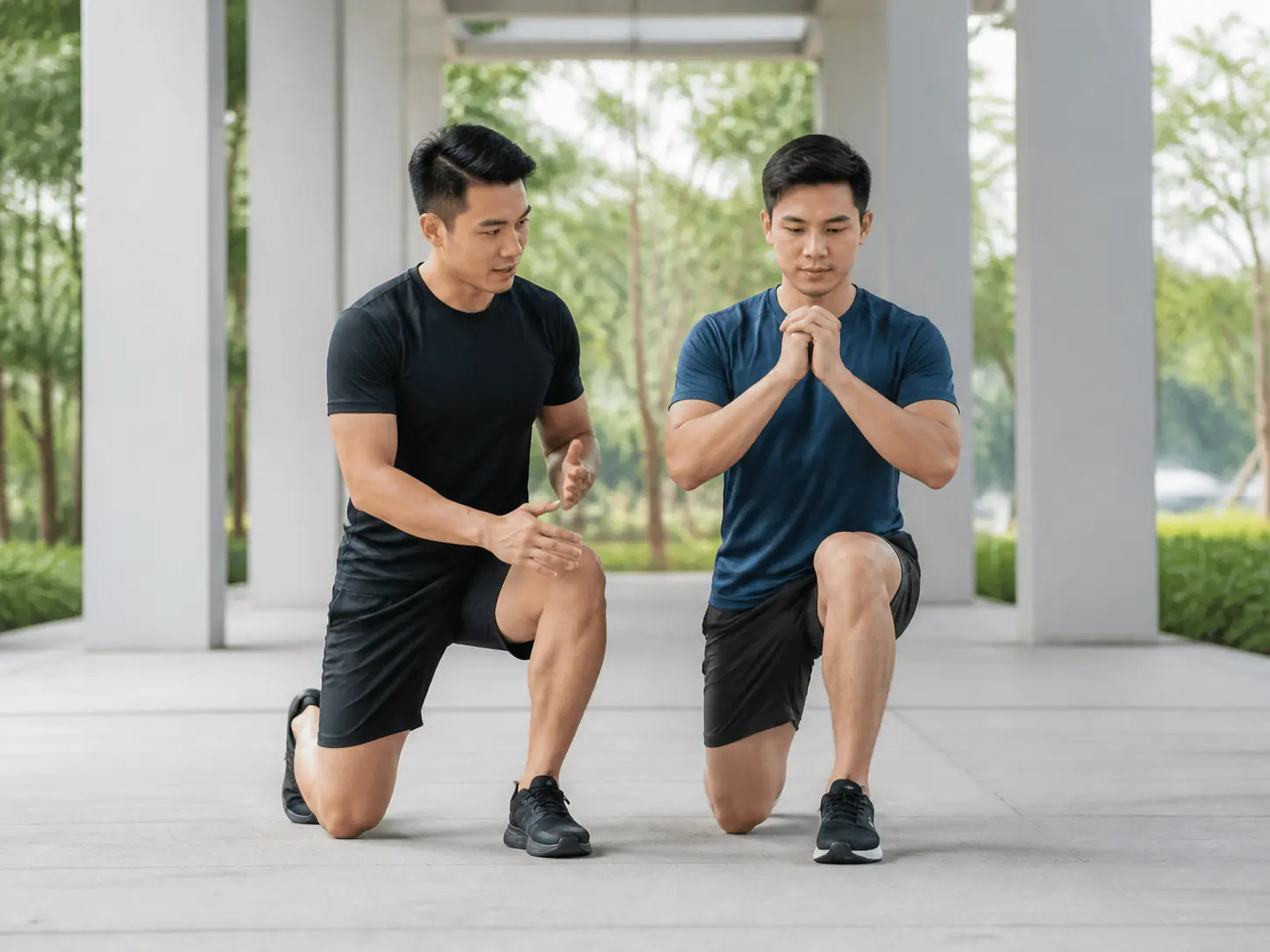
A trainer demonstrating controlled split-squat technique

The bird dog is a favourite of back specialists because it strengthens the spine-stabilising muscles without loading the spine much at all. On all fours, you reach out an opposite arm and leg while your midsection stays rock steady.

You need only floor space, so it works at home or our Putra Heights centre. It builds control and balance, and it teaches you to keep your back stable while your limbs move, a skill that protects you when lifting.

What it trains and who it suits

It trains the deep core, lower back and glutes to resist twisting and sagging. It suits beginners, older adults, and people with back concerns who have been cleared to exercise.

Because it demands balance and control rather than heavy effort, it is safe and accessible while still building meaningful stability.

Step-by-step cues

  1. Kneel on all fours, hands under shoulders and knees under hips
  2. Brace your core and set a flat back
  3. Reach one arm forward and the opposite leg back
  4. Keep your hips level and torso still
  5. Return with control and switch sides

Common mistakes and quick fixes

  • Hips twisting open, keep them square to the floor
  • Back sagging or arching, hold a flat, braced spine
  • Reaching too high with the leg, keep it level with the hips
  • Rushing, move slowly to stay balanced and controlled

Regressions, progressions and when to stop

Too hard? Extend just the arm or just the leg at first. Too easy? Add a pause at the end, slow the tempo, or add a light ankle weight. At home the floor is enough; at our centre we cue precise control and add variations.

  • Stop if you feel sharp low-back pain rather than steady core effort
  • See a professional if you cannot keep your hips level at all

Frequently Asked Questions

Why do my hips twist when I extend my leg?+

Your core is not resisting the rotation. Brace your stomach, keep your hips square to the floor, and lift the leg no higher than hip height to stay stable.

Is the bird dog good for back pain?+

It is often recommended because it strengthens the spine stabilisers gently. Keep it pain-free and cleared, and see a professional for ongoing or worsening back pain.

How many reps should I do?+

Two or three sets of six to ten controlled reps per side works well. Slow, steady movement with a still torso beats fast, sloppy reps every time.

Bird dog or dead bug?+

Both train spinal stability from different positions. We often use both: the dead bug on your back and the bird dog on all fours, for well-rounded core control.

Continue exploring

Programmes

Core Training

Core training builds the deep trunk muscles that stabilise your spine, protect your back and transfer force between your upper and lower body. It is about a strong, functional midsection that supports everything you do, not just chasing visible abs with endless crunches.

See what it includes →
Goals

Core Strength and Flat Stomach

A strong core and a flat stomach are two separate jobs. Core strength comes from training the muscles that stabilise your spine; a flatter stomach comes from losing belly fat. We coach both together 1-to-1, so you get a back-protecting core and a tighter midsection.

See the coaching approach →
Weight Loss

Weight Loss After 50

Weight loss after 50 is really about protecting muscle and bone while losing fat. We use gentle, controlled strength training, enough protein and daily walking to reshape your body without crash diets, improving how you move, your balance and your health, not just the number on the scale.

See the coaching approach →
Weight Loss

Build Muscle While Losing Fat

Building muscle while losing fat is possible if you get three things right: eat enough protein, train strength progressively, and keep the calorie deficit modest. It works best for beginners and returners, is slower than one goal alone, and needs measuring beyond the scale.

See the coaching approach →
Programmes

Functional Fitness

Functional fitness trains your body for the things you actually do, carrying shopping up to the condo, picking a child off the floor, twisting to reach the back seat. We build strength, stability and mobility in real movement patterns, not isolated machine work, so daily life gets easier.

See what it includes →
Personal Training

Small-Group Training

Small-group training coaches three to five people together under one trainer. You get a lower per-person cost and the energy of training with others, while the coach keeps groups small enough to still watch form and scale each person's weights and exercises.

Compare this option →

Want help applying this guide to your own training?

Private coaching adapts exercise choice, loading and progression to your level, equipment and goal.

Ask a question first Request an assessment time