Skip to content

Sport-specific coaching

Golf Conditioning in KL & Selangor

Golf conditioning builds the rotational power, hip and thoracic mobility, and core stability that a repeatable, powerful swing needs. We train the body behind the swing so you add clubhead speed, protect your lower back, and still swing well on the 18th hole in the KL heat.
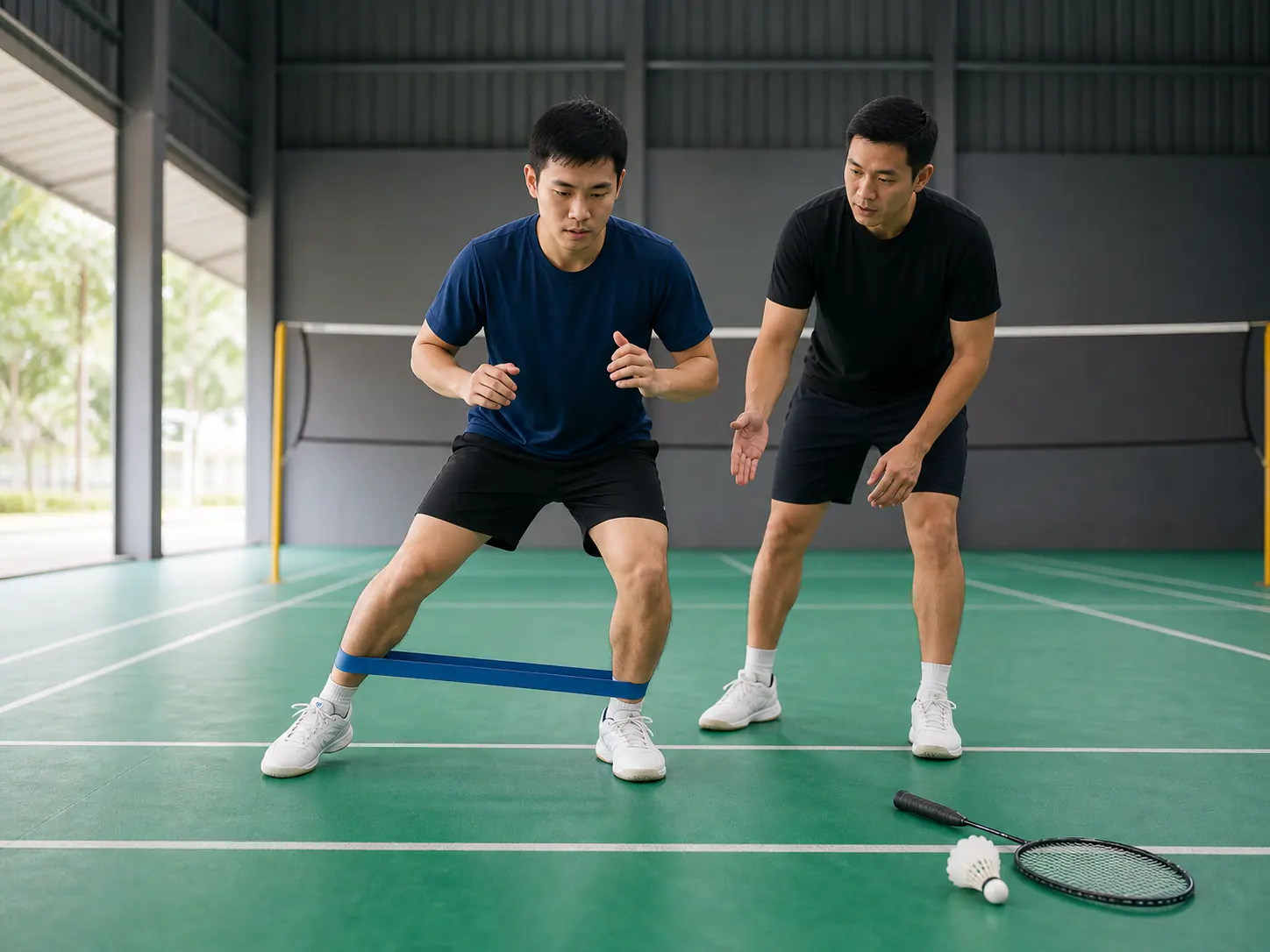
Badminton conditioning with a lateral resistance-band exercise

Golfers spend fortunes on clubs and lessons, then swing with a body that cannot rotate. Distance comes from the ground up, hips and torso generating rotational speed, and the most common limiters are stiff hips, a locked upper back, and a weak core that leaks power and overloads the lower back. That is why so many golfers live with a nagging back.

We do not touch your swing mechanics, your pro handles that. We build the physical platform underneath it: the mobility to make a full turn, the core stability to transfer power without dumping it into your spine, and the stamina to keep your swing sharp across a full round in humid Malaysian weather.

Where distance and back pain both come from

A powerful swing needs separation, hips and shoulders rotating at different rates, which demands mobile hips and a mobile thoracic spine. When those are stiff, golfers compensate by twisting through the lower back, which both leaks power and grinds the spine over hundreds of swings.

So the same limitation that costs you distance is often the one hurting your back. Fix the mobility and stability, and you usually gain speed and lose the ache together.

What we assess and build

  • Hip and thoracic rotation, the engine of the swing
  • Core anti-rotation strength to protect the lower back
  • Single-leg stability for a grounded, powerful base
  • Walking-round stamina for 18 holes in the heat

A sample conditioning progression

  1. Weeks 1-2: restore hip and thoracic mobility, build core control
  2. Weeks 3-4: add rotational strength and single-leg stability
  3. Weeks 5-6: introduce power work, medicine-ball throws, speed
  4. Weeks 7-8: integrate stamina so power holds across a full round

Common mistakes and home alternatives

The big mistakes are never warming up before teeing off, and only ever practising the swing while neglecting the body that produces it. A five-minute mobility routine before you play protects your back immediately. At home, thoracic rotations, hip openers and simple core anti-rotation work need no equipment.

Frequently Asked Questions

Will this add distance to my drives?+

For most amateurs, yes, because their limiter is body, not technique. More hip and thoracic rotation plus core power that transfers cleanly usually adds clubhead speed. It complements, not replaces, your coaching.

My lower back aches after golf, can conditioning help?+

Often, yes. Much golf back pain comes from stiff hips and a weak core forcing the lower back to over-rotate. We improve mobility and core control to take that load off the spine. Persistent or sharp back pain, though, needs a doctor first.

I am not young, is it worth starting?+

Especially then. Mobility and stability fade with age, which is exactly why older golfers lose distance and gain aches. Targeted conditioning often gives the biggest gains to players over 50.

How often should I train?+

Two short sessions a week, plus a quick warm-up before you play, is plenty for most club golfers. We keep it efficient so it fits around your rounds rather than replacing them.

Continue exploring

Programmes

Core Training

Core training builds the deep trunk muscles that stabilise your spine, protect your back and transfer force between your upper and lower body. It is about a strong, functional midsection that supports everything you do, not just chasing visible abs with endless crunches.

See what it includes →
Programmes

Lower-Body Strength

Lower-body strength training builds your legs, hips and glutes, the biggest muscles you own and the engine behind walking, stairs, sport and standing up. Strong legs make daily life easier, protect your knees and back, and burn plenty of energy in the process.

See what it includes →
Exercise Library

Ankle Mobility Drill

The ankle mobility drill, often a knee-to-wall movement, improves how far your knee can travel forward over your foot. Better ankle range helps you squat deeper, lunge comfortably and protect your knees. It needs no equipment and is a quick daily win for lower-body movement.

Learn the technique →
Exercise Library

Bear Crawl

The bear crawl has you move on your hands and feet with your knees just off the floor. It builds full-body strength, core stability and coordination in one move, needs no equipment, and doubles as a challenging warm-up or conditioning drill for any level.

Learn the technique →
Goals

Core Strength and Flat Stomach

A strong core and a flat stomach are two separate jobs. Core strength comes from training the muscles that stabilise your spine; a flatter stomach comes from losing belly fat. We coach both together 1-to-1, so you get a back-protecting core and a tighter midsection.

See the coaching approach →
Goals

Recreational Sport Performance

Recreational sport performance training builds the strength, conditioning and resilience that make you better and more durable at the sport you love, futsal, badminton, tennis, running, hiking. We coach it 1-to-1 to complement your game, so you play harder and break down less.

See the coaching approach →

Ready for a more structured way to train?

Start with an assessment so we understand your level, goal, schedule and preferred training location.

The request opens WhatsApp; a time is confirmed only after we reply and agree it with you.

Request an assessment time Ask a question first