Skip to content

Exercise technique guide

How to Do a Bodyweight Squat

The bodyweight squat trains your quads, glutes and core using nothing but your own weight. It builds the pattern behind sitting, standing and lifting, so it suits total beginners and older adults. Master it before adding load with dumbbells or a barbell.
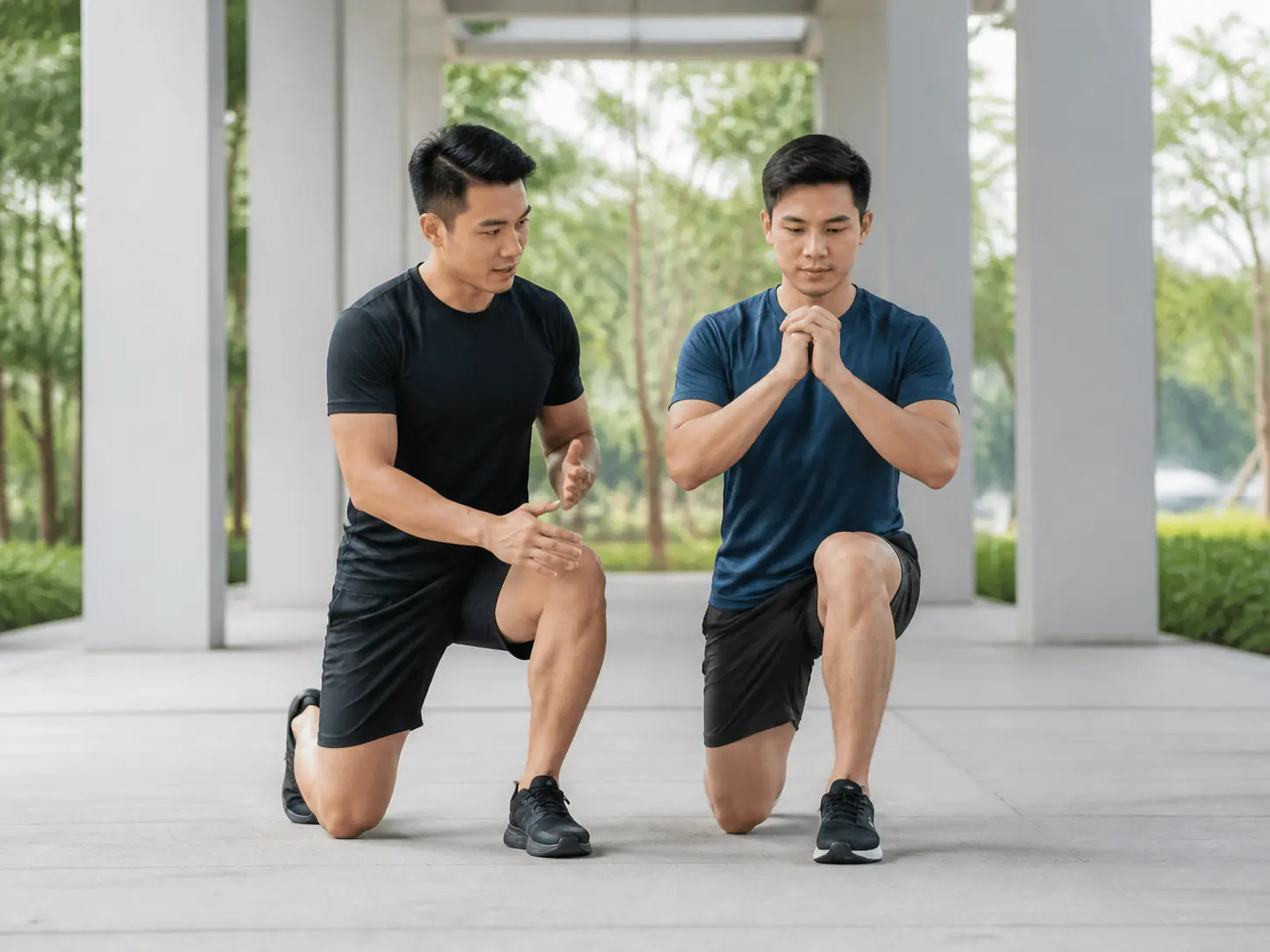
A trainer demonstrating controlled split-squat technique

The bodyweight squat is the first movement we teach almost every new client. It rebuilds the strength to sit down and stand up without using your hands, which matters more as you age or after a long desk-bound stretch.

You need zero equipment and about a metre of floor, so it works in a Subang condo, a hotel room, or our Putra Heights centre. Get the pattern clean here and every loaded squat later becomes far easier and safer.

What it trains and who it suits

The squat mainly works your quadriceps and glutes, with your core bracing to keep you upright. It suits complete beginners, over-50s wanting stronger legs, and anyone rebuilding after time off.

Because there is no external load, the risk is low and the learning curve is gentle. It is the foundation we test before letting anyone touch a barbell.

Step-by-step cues

  1. Stand with feet about shoulder-width, toes slightly turned out
  2. Take a breath and brace your stomach like bracing for a light push
  3. Push your hips back and down as your knees bend
  4. Go as low as you can keep your heels flat and back neutral
  5. Drive through your whole foot to stand tall again

Common mistakes and quick fixes

  • Heels lifting, sit back more and try a slightly wider stance
  • Knees caving in, think about spreading the floor with your feet
  • Rounding the lower back, brace before you descend, not after
  • Rushing, lower for two counts to feel the muscles working

Regressions, progressions and when to stop

Too hard? Squat to a chair or bench and touch it lightly. Too easy? Slow the lowering phase, pause at the bottom, or hold a dumbbell. At home a chair is enough; at our centre we add load once your depth and control are solid.

  • Stop if you feel sharp knee or back pain, not muscle effort
  • See a professional if a knee keeps clicking painfully or gives way

Frequently Asked Questions

How low should I squat?+

As low as you can keep your heels down and your back from rounding. For Many people that is thighs near parallel. Depth improves with practice, never force it past where control breaks.

How many should I do?+

Beginners can start with two or three sets of eight to twelve, resting between. When that feels easy, slow the tempo or add a dumbbell rather than chasing very high reps.

Is squatting bad for my knees?+

Well-coached squats generally strengthen the knees. Pain that is sharp or lingers is different from normal muscle burn, if that happens, stop and get it assessed before continuing.

Can I do these every day?+

Light practice most days is fine for grooving the pattern. For strength, two or three harder sessions a week with rest between usually beats daily grinding.

Continue exploring

Programmes

Lower-Body Strength

Lower-body strength training builds your legs, hips and glutes, the biggest muscles you own and the engine behind walking, stairs, sport and standing up. Strong legs make daily life easier, protect your knees and back, and burn plenty of energy in the process.

See what it includes →
Programmes

Low-Impact Training

Low-impact training builds strength and fitness without the jumping, pounding and jarring that bother sensitive joints. It suits heavier clients, older adults and anyone with cranky knees, hips or ankles, proving you can get genuinely fit while being kind to your body.

See what it includes →
Goals

Get Stronger

Getting stronger means lifting more weight on the movements that matter, squat, hinge, press, pull and carry, through a planned progression. We coach technique first, then add load week by week 1-to-1 so the numbers climb safely and your daily life gets easier.

See the coaching approach →
Goals

Lift Your Own Bodyweight

Lifting your own bodyweight, squatting or deadlifting a barbell loaded to your weight, is a classic, motivating strength milestone. We coach you there 1-to-1 with proper technique and a planned progression, so you hit a real number safely rather than chasing it recklessly.

See the coaching approach →
Guides & Tools

Bodyweight Training Basics

Bodyweight training uses your own body as resistance, push-ups, squats, lunges, planks and more. It builds real strength, needs no equipment, and can be done anywhere. You progress by making exercises harder rather than adding weight, which makes it perfect for beginners and home training.

Read the guide →
Weight Loss

Home Training for Weight Loss

Home training for weight loss brings a coach to your living room or condo gym so distance and traffic stop being reasons to skip. With bands, a couple of dumbbells or just bodyweight, we run real strength and conditioning sessions and set the daily habits that drive fat loss.

See the coaching approach →

Want help applying this guide to your own training?

Private coaching adapts exercise choice, loading and progression to your level, equipment and goal.

Ask a question first Request an assessment time