Skip to content
Exercise Library

How to Do a Dead Hang

In short

The dead hang has you simply hang from a bar with straight arms. It builds grip strength, stretches the shoulders and lats, and can feel relieving for the spine. It is also the first step toward pull-ups, teaching your hands and shoulders to hold your bodyweight.
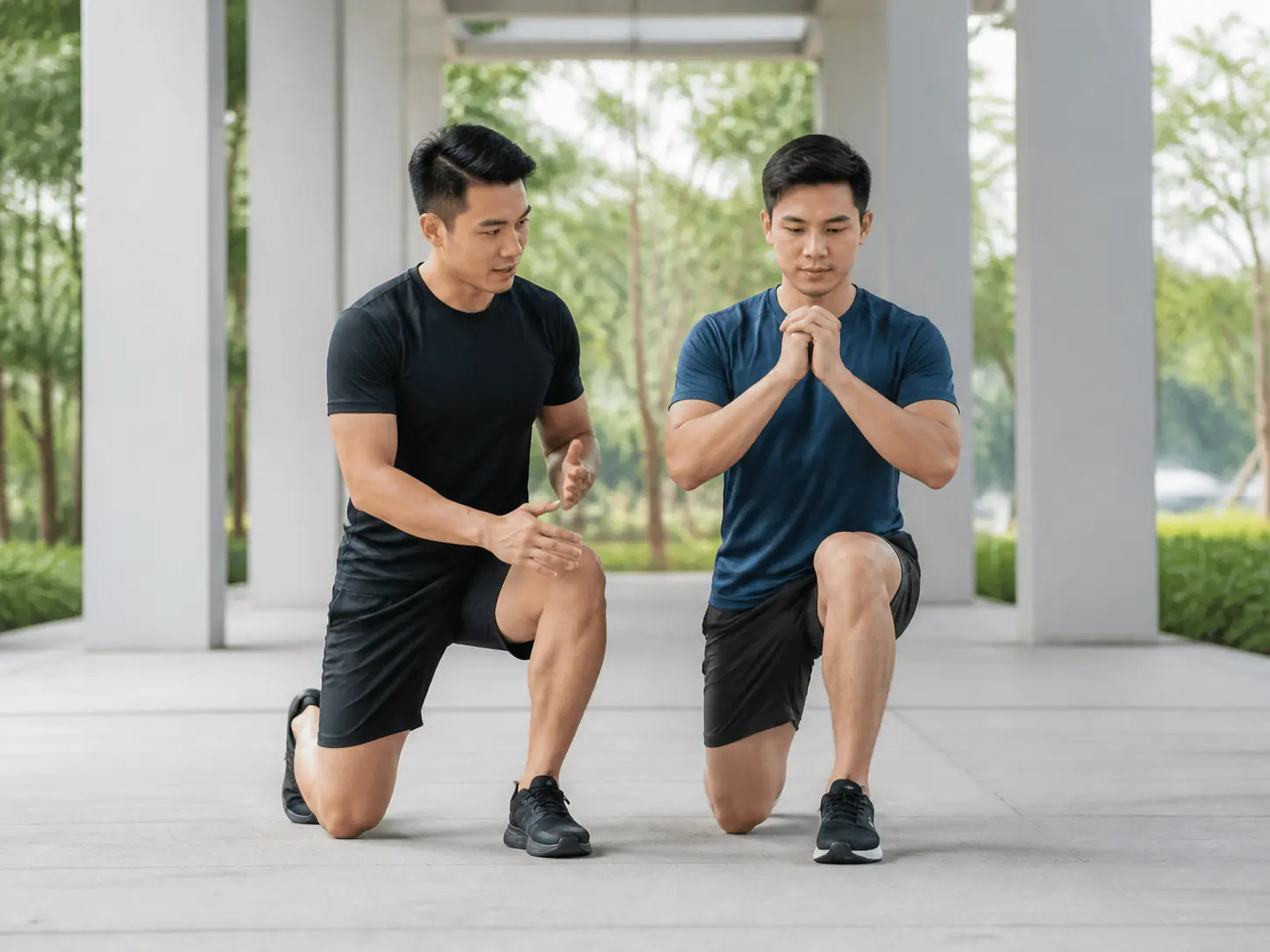
Written & reviewed by M. Thurairaj & team, Registered Physiotherapist & Certified Trainers

The dead hang is deceptively simple: grab a bar and hang. Yet it builds serious grip strength, gently stretches the shoulders and lats, and gives many people a pleasant sense of decompression through the upper body and spine.

You need a sturdy bar, so it fits a home pull-up bar or our Putra Heights centre. It is the foundation for pull-ups, teaching your grip and shoulders to support your bodyweight, and it is a great standalone move too.

What it trains and who it suits

It builds grip and forearm strength and stretches the shoulders and lats. It suits anyone working toward pull-ups, people wanting stronger grip, and those who enjoy the decompressing feel through the upper body.

Because it is a simple hold, it is easy to scale by supporting some of your weight with your feet if a full hang is too much at first.

Step-by-step cues

  1. Reach up and grip a sturdy bar with both hands
  2. Let your body hang with straight arms
  3. Keep your shoulders gently engaged, not fully slumped
  4. Relax your legs and breathe steadily
  5. Hold for time, then step or lower down safely

Common mistakes and quick fixes

  • Gripping in a rush and dropping off, build hang time gradually
  • Fully shrugging into the shoulders, keep them lightly engaged
  • Swinging around, let the body settle and stay still
  • Holding the breath, breathe steadily while you hang

Regressions, progressions and when to stop

Too hard? Keep your feet on a box to take some weight, or hang for less time. Too easy? Hang longer, go single-arm briefly, or add pull-up work. At home a pull-up bar works; at our centre we use it to build toward pull-ups.

  • Stop if you feel sharp shoulder or elbow pain rather than a stretch or grip fatigue
  • See a professional if a shoulder feels unstable or painful when hanging

Frequently Asked Questions

What are dead hangs good for?+

They build grip and forearm strength, stretch the shoulders and lats, and often feel decompressing through the upper body. They are also the first step toward pull-ups.

How long should I hang?+

Start with short hangs of ten to twenty seconds and build up over time. Grip strength improves quickly, so you will be able to hold longer within a few weeks.

Will dead hangs help my pull-ups?+

Yes. They teach your grip and shoulders to support your bodyweight, which is the foundation of a pull-up. Combined with assisted work, they help you build toward your first rep.

Should my shoulders be relaxed or engaged?+

Keep them lightly engaged rather than fully slumped, so the shoulder stays stable. A gentle active hang is safer and more useful than hanging completely limp.

Related pages

Exercise Library

Ankle Mobility Drill

The ankle mobility drill, often a knee-to-wall movement, improves how far your knee can travel forward over your foot. Better ankle range helps you squat deeper, lunge comfortably and protect your knees. It needs no equipment and is a quick daily win for lower-body movement.

Exercise Library

Assisted Pull-Up

The assisted pull-up uses a resistance band or machine to reduce how much bodyweight you lift, so you can practise the full pull-up movement. It bridges the gap to your first unassisted rep by letting you train the exact pattern with steadily less help.

Exercise Library

Band Pull-Apart

The band pull-apart has you stretch a resistance band across your chest by squeezing your shoulder blades. It strengthens the upper back and rear shoulders, muscles that improve posture and shoulder health. It is simple, low-risk, and perfect between other exercises.

Exercise Library

Battle Ropes

Battle ropes have you whip two heavy ropes to create waves, driving your heart rate up while working your arms, shoulders and core. They deliver intense cardio with little joint impact, are easy to scale, and are a fun way to build upper-body stamina.

Exercise Library

Bear Crawl

The bear crawl has you move on your hands and feet with your knees just off the floor. It builds full-body strength, core stability and coordination in one move, needs no equipment, and doubles as a challenging warm-up or conditioning drill for any level.

Exercise Library

Bench Press

The bench press has you lie on a bench and press a barbell from your chest. It is the benchmark for upper-body pushing strength, loading the chest, shoulders and triceps heavily. With good setup and a spotter, it is a safe and highly effective strength lift.

Ready to start?

Train at our Putra Heights centre, your home, or your condo gym

WhatsApp Book an Assessment