Skip to content

Exercise technique guide

How to Do a Glute Bridge

The glute bridge is a floor exercise where you lift your hips by squeezing your glutes. It strengthens the muscles that support your back and hips, needs no equipment, and is gentle enough for almost anyone. A great first step toward stronger hips.
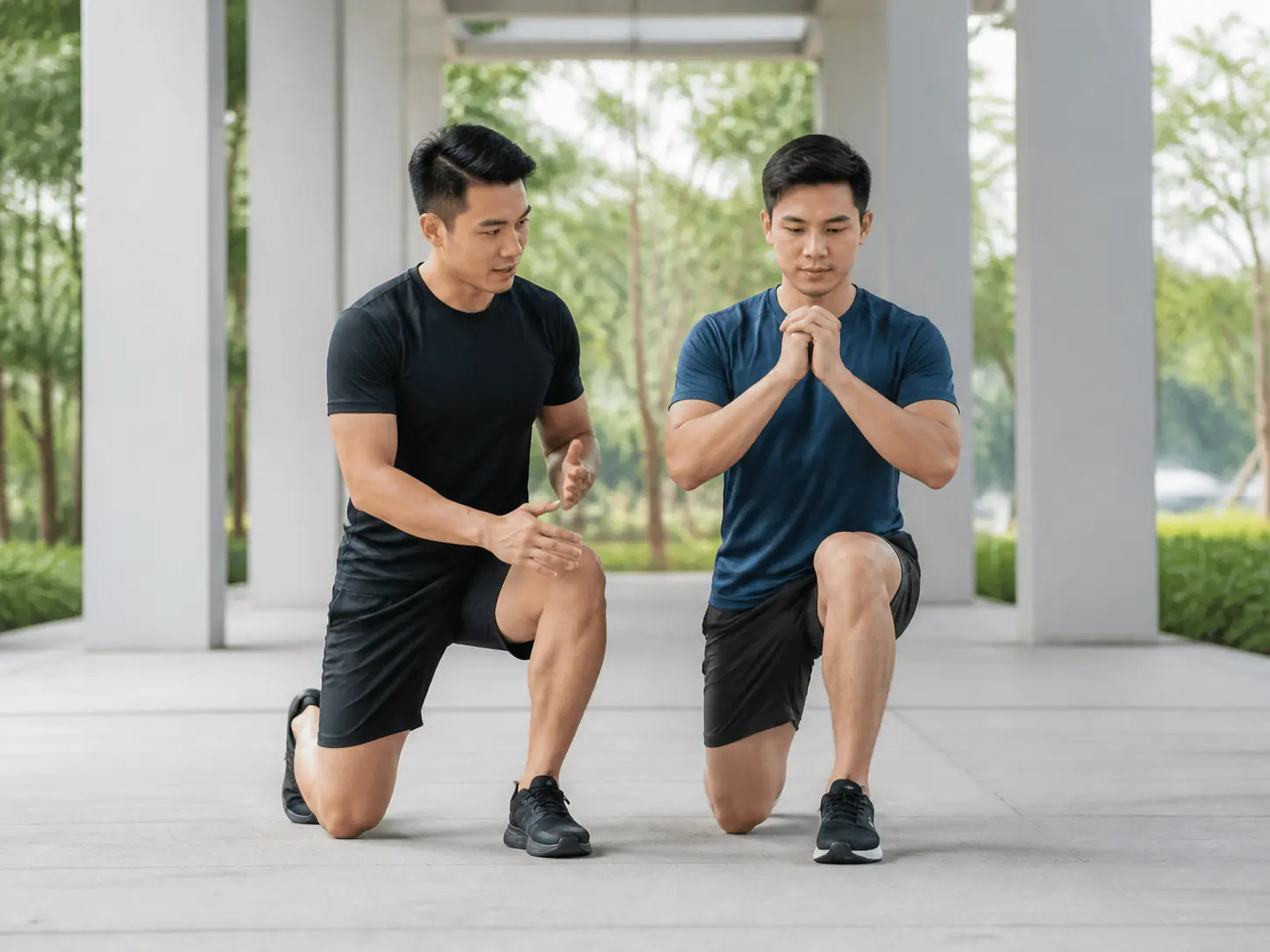
A trainer demonstrating controlled split-squat technique

For people who sit all day, the glutes often go quiet and the lower back picks up the slack. The glute bridge is the simplest way to switch those muscles back on and start building the hip strength that supports a healthy back.

You only need a bit of floor, so it works in any bedroom or our Putra Heights centre. It is low-risk, beginner-friendly, and a building block for stronger moves like the hip thrust later on.

What it trains and who it suits

It targets the glutes with support from the hamstrings and core. It suits complete beginners, desk workers with sleepy glutes, and anyone easing back into training after a break.

Because you lie on the floor, there is almost no balance demand, so you can focus entirely on feeling the right muscles work.

Step-by-step cues

  1. Lie on your back, knees bent, feet flat and hip-width
  2. Rest your arms by your sides for a little support
  3. Push through your heels and squeeze your glutes
  4. Lift your hips until your body is straight from knees to shoulders
  5. Lower slowly and repeat without resting on the floor

Common mistakes and quick fixes

  • Arching the lower back, tuck the ribs and squeeze the glutes harder
  • Feeling it in the hamstrings, move your feet a touch closer
  • Pushing through the toes, drive through your heels instead
  • Rushing the reps, pause at the top and squeeze for a second

Regressions, progressions and when to stop

Too hard? Reduce the range and just lift a little. Too easy? Pause at the top, try single-leg bridges, or rest a weight on your hips. At home nothing is needed; at our centre we progress toward loaded hip thrusts.

  • Stop if you feel sharp low-back pain instead of a glute squeeze
  • See a professional if you cannot feel your glutes working at all

Frequently Asked Questions

Why do I feel it in my hamstrings, not glutes?+

Usually your feet are too far away. Bring them closer to your hips, then focus on squeezing the glutes hard as you lift. A pause at the top helps too.

How many should I do?+

Two or three sets of ten to fifteen, with a squeeze at the top, is a good start. Progress to single-leg bridges before adding weight.

Are glute bridges good for back pain?+

Strong glutes support the lower back, and many people find bridges helpful. If you have ongoing back pain, keep it pain-free and get guidance before pushing harder.

Bridge or hip thrust, which is better?+

The bridge is the easier floor version and a great starting point. The hip thrust, with your back on a bench, allows more range and heavier loading later on.

Continue exploring

Programmes

Balance Training

Balance training strengthens the muscles, reflexes and coordination that keep you steady, on stairs, wet bathroom tiles, uneven pavements. Whether you feel a bit unsteady or just want to move with confidence, we build your stability step by step in a safe, supported setting.

See what it includes →
Programmes

Lower-Body Strength

Lower-body strength training builds your legs, hips and glutes, the biggest muscles you own and the engine behind walking, stairs, sport and standing up. Strong legs make daily life easier, protect your knees and back, and burn plenty of energy in the process.

See what it includes →
Weight Loss

Build Muscle While Losing Fat

Building muscle while losing fat is possible if you get three things right: eat enough protein, train strength progressively, and keep the calorie deficit modest. It works best for beginners and returners, is slower than one goal alone, and needs measuring beyond the scale.

See the coaching approach →
Weight Loss

Muscle Building for Beginners

Building muscle as a beginner is simpler than the internet suggests: learn a handful of big lifts, add a little weight or reps over time, eat enough protein and sleep well. Beginners grow fastest of anyone, so the first year is the most rewarding if you start with good habits.

See the coaching approach →
Personal Training

Small-Space Home Training

You do not need a spare room or a home gym to train properly. A two-by-two-metre patch of floor, minimal equipment and a good plan are enough for a real strength session. Small-space training is designed around compact, quiet, effective movements that fit a KL apartment.

Compare this option →
Personal Training

Your First Session

Your first session is an assessment plus a gentle introductory workout, not a fitness test you can fail. We take your history and goals, check how you move, and coach a light first workout so you leave knowing what to expect and how to prepare for the next one.

Compare this option →

Want help applying this guide to your own training?

Private coaching adapts exercise choice, loading and progression to your level, equipment and goal.

Ask a question first Request an assessment time