Skip to content

Exercise suitability guide

Getting Back to Exercise After Illness in KL & Selangor

Coming back to exercise after illness works best when you start well below where you left off and rebuild gradually. We ease you in, watch your energy, and back off if symptoms return. For anything more than a mild bug, get your doctor's clearance first. We coach the comeback, not the recovery.
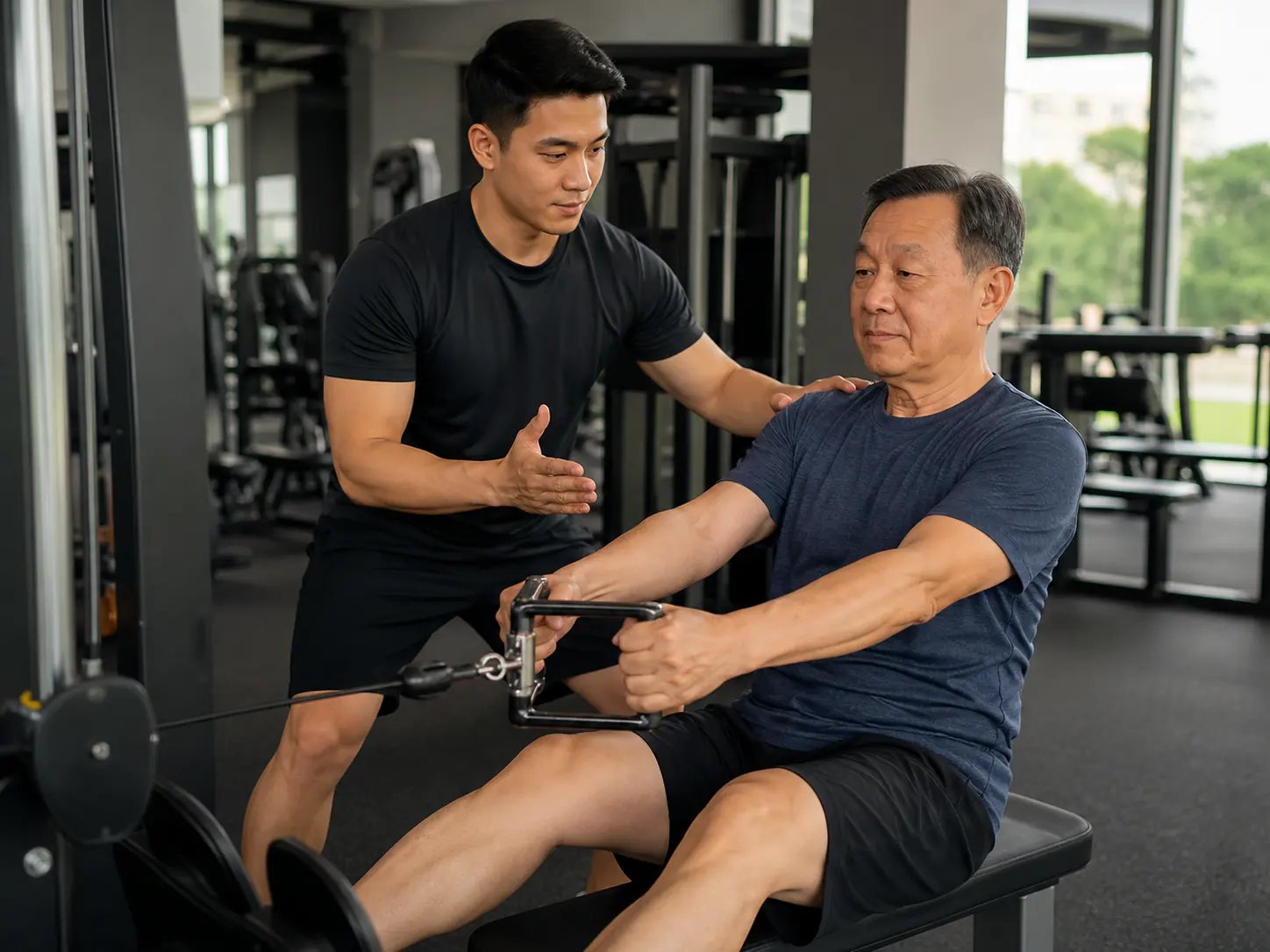
An older adult completing a supervised cable-row exercise

The urge after being unwell is to pick up exactly where you left off, and that is exactly how people set themselves back. Illness takes more out of you than it feels like, so a smart return starts deliberately easy and rebuilds step by step, giving your body room to catch up rather than demanding it perform on day one.

For a mild cold you have shaken off, gentle movement is usually fine. For anything more, a fever, a chest infection, a longer illness, or lingering symptoms, get your doctor's clearance before we start. We coach the comeback safely; assessing whether you have actually recovered is your doctor's call, not ours.

How we rebuild after illness

We start noticeably lighter than your pre-illness level, shorter sessions, lower intensity, more rest, and only add load once your energy and recovery show you are ready. Progress is gradual and led by how you feel, not by rushing to reclaim old numbers.

We pay close attention to fatigue. If a session leaves you wiped out for days rather than pleasantly tired, that is a sign we went too fast, and we adjust. Patience now prevents a longer setback later.

Principles for a safe return

  • Start well below where you left off, not at it
  • Add intensity gradually as energy and recovery allow
  • Judge progress by how you feel, not old personal bests
  • Prioritise sleep and rest between sessions
  • Stop and reassess if old symptoms return

Red flags, stop and get review

  • Return of your illness symptoms during or after exercise
  • Chest pain, palpitations or unusual breathlessness, important after chest or viral illness
  • Fatigue that is severe or lasts for days after a session
  • Fever returning, or feeling generally unwell again
  • Anything your doctor told you to watch for, check in before continuing

When to get cleared first

A lingering cough, a fever, a chest or heart-related illness, or anything that put you in bed for a while all deserve a doctor's clearance before returning to exercise. We are trainers, not doctors, we do not judge whether you have recovered. Once cleared, we build the comeback around any guidance they give.

Frequently Asked Questions

How soon can I train after being ill?+

For a mild cold, gentle movement is usually fine once you feel up to it. For anything more serious, get your doctor's clearance first. When you do start, we begin well below your old level and build up gradually.

Why start so much easier than before?+

Illness drains more than it feels like, and jumping straight back in is how people relapse or get injured. Starting light lets your body catch up, and you will regain your old level faster than by forcing it.

I still feel wiped out, should I push through?+

No. Severe or lingering fatigue after a session is a sign to ease back, not push on. We adjust the plan, and if that fatigue is unusual or persistent we ask you to check with your doctor.

What about after a chest infection?+

Chest and viral illnesses deserve extra care, get your doctor's clearance first, especially if you had any breathing or heart symptoms. Once cleared, we rebuild very gradually and stop at any sign of chest trouble.

Continue exploring

Assessments

Your Health History

Your health history is the record of past injuries, conditions, surgeries and medications you share before training. It is not judged or diagnosed, it is used to set safe loads, train around old problems, and know when to refer you to a doctor first. The fuller it is, the safer you train.

See how it works →
Assessments

When You Need Medical Clearance

Medical clearance means getting your doctor's okay before starting exercise. Certain answers on your screening, chest pain, uncontrolled blood pressure or diabetes, recent surgery, dizziness, mean we pause and ask you to see a doctor first. Once cleared, we train around whatever you have.

See how it works →
Why KinesioFitness

Safety & Screening

Before you lift anything heavy, we screen you: a health-history questionnaire, a movement check, and a look at any conditions or medications that affect training. If we spot a red flag, we get you cleared by a doctor first. Good screening is why serious injuries in our sessions are so rare.

Compare this option →
Why KinesioFitness

Our Scope & Referral Policy

Our scope is fitness coaching: assessing movement, building strength, and guiding fat loss and conditioning for healthy or medically cleared adults. We do not diagnose, treat injuries or manage disease. When something falls outside our lane, we refer you to a doctor or physiotherapist first.

Compare this option →
Personal Training

Small-Group Training

Small-group training coaches three to five people together under one trainer. You get a lower per-person cost and the energy of training with others, while the coach keeps groups small enough to still watch form and scale each person's weights and exercises.

Compare this option →
Guides & Tools

Deload Weeks Explained

A deload is a planned lighter week where you reduce training weight or volume to let accumulated fatigue clear. It helps you recover, avoid burnout and injury, and often come back stronger. You do not lose progress from a well-timed deload; you set yourself up for the next push.

Read the guide →

Not sure whether exercise is suitable for your situation?

Share your situation, any medical clearance and your training goal. We will explain the fitness scope and when referral is needed.

Ask about exercise suitability Request an assessment time