Skip to content
Assessments

Pre-Exercise Screening Before You Start Training

In short

Pre-exercise screening is a short set of health and lifestyle questions we run before your first session. It is not a medical diagnosis, it simply helps us set a safe starting intensity, spot anything that needs a doctor first, and build a plan that fits your body today.

Written & reviewed by M. Thurairaj & team, Registered Physiotherapist & Certified Trainers

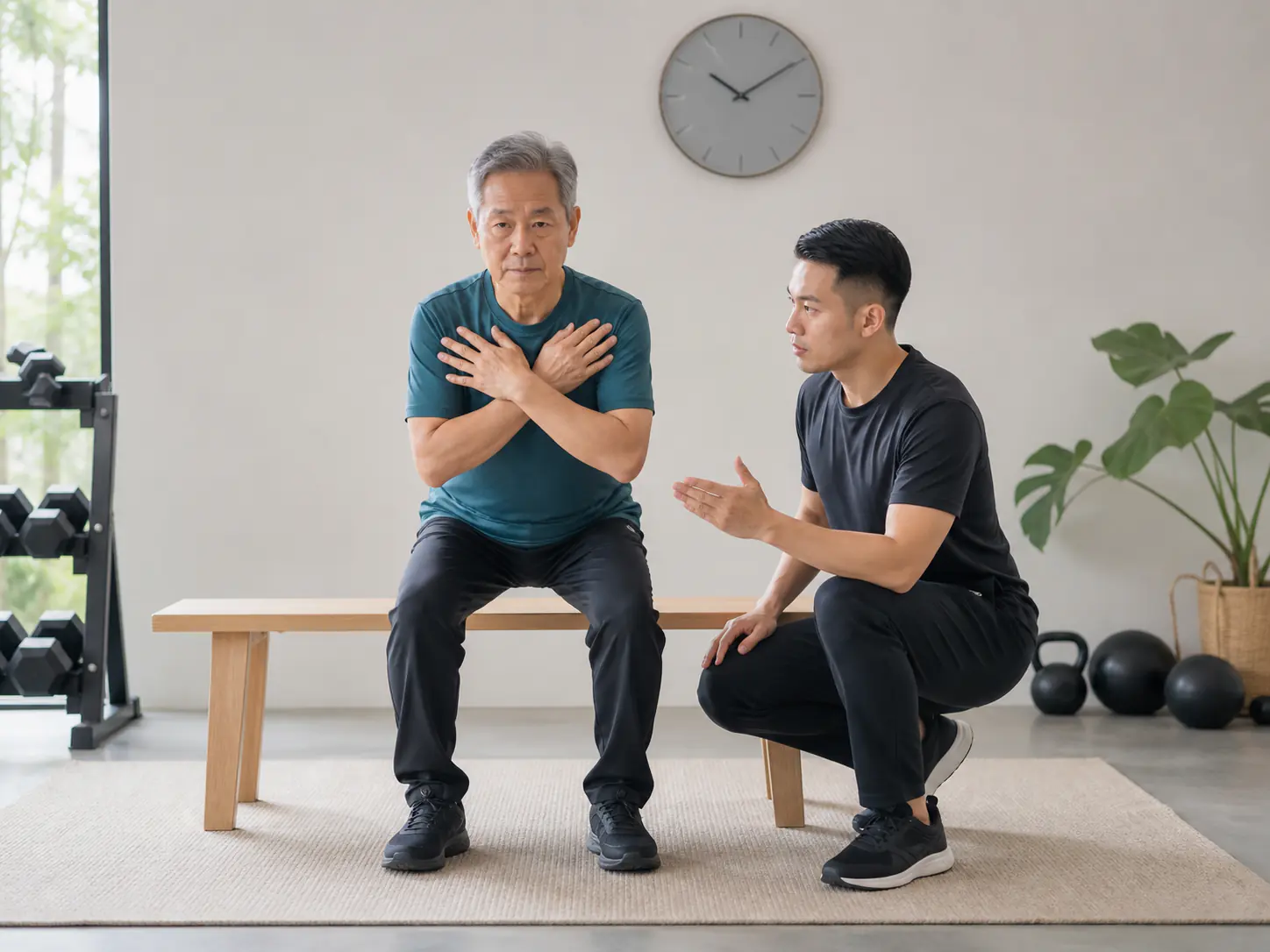
Before anyone lifts a single weight with us, we sit down for ten minutes and ask about your health, past injuries, medications and how active you have actually been. This is not a test you can fail. It is how a responsible trainer avoids pushing a new client into something their body is not ready for on day one.

Think of it as the difference between a coach who cares and a gym that just swipes your card. The answers you give shape your first few weeks, how hard we start, which movements we hold back, and whether we ask you to get a doctor's nod before we begin. For 1,000+ clients, this ten minutes has kept training safe and steady.

What screening is, and what it is not

Screening is fitness safety, not medicine. We are checking whether it is sensible for you to start moderate exercise now, or whether something should be looked at by a doctor or physio first. We do not diagnose conditions, read your scans, or tell you what is wrong with your knee.

If your answers raise a flag, chest pain on exertion, dizziness, an uncontrolled condition, we pause and refer you to the right professional before we train. That is the honest version of "safety first", not a slogan on a wall.

What we ask about

  • Past and current injuries, surgeries and ongoing pain
  • Heart, blood pressure, diabetes and breathing conditions
  • Medications that affect heart rate, balance or energy
  • Recent activity level and any long gaps from exercise
  • Pregnancy, recent birth, or being new to lifting entirely

How the screening runs

  1. You fill a short written health questionnaire, honestly
  2. We talk through anything you flagged, with no judgement
  3. We agree a safe starting intensity or a "see a doctor first" pause
  4. We note what to train around and what to strengthen
  5. We set your first session goal and stop-signals to watch for

Why honesty here matters most

People sometimes hide an old back problem because they are embarrassed or worried we will turn them away. We almost never turn people away, we adjust. Hiding it is the only thing that actually causes trouble, because we then load a movement your body was quietly warning you about.

Frequently Asked Questions

Is screening a medical check-up?+

No. It is a fitness safety questionnaire, not a diagnosis. If anything looks like it needs medical attention, we stop and point you to a doctor or physio before we start training.

Will you refuse to train me?+

Rarely. Most flags mean we adjust intensity or get a doctor's clearance first, then train. We only decline when starting now would clearly be unsafe until a professional has seen you.

How long does screening take?+

About ten minutes of questions plus a short chat. We do it before your first workout so the session itself is already built around what we learned about you.

Do I need to bring anything?+

Just honest answers, and any medication names or a recent doctor's note if you have a known condition. That helps us set the right starting point on the very first day.

Related pages

Assessments

Balance Assessment

A balance assessment measures how steady you are on your feet, standing, shifting weight, single-leg holds. It is a fitness screen, not a neurological diagnosis. It tells us how much stability to build before loading balance-heavy exercises, and it matters most for older adults and anyone who feels unsteady.

Assessments

Beginner Fitness Assessment

A beginner fitness assessment is a gentle first session where we map where you are starting from, movement, strength, stamina and goals. No fitness is needed to take it. It sets a safe, realistic starting point, not a diagnosis, and turns "I don't know where to begin" into a clear first plan.

Assessments

Body Composition Measurement

Body composition measurement estimates how much of your weight is fat versus muscle, rather than just a scale number. We use simple, consistent methods to track change over time. It is a fitness tool for motivation and planning, not a medical diagnosis of health from a single reading.

Assessments

Cardio Fitness Baseline

A cardio fitness baseline shows how your heart and lungs cope with light-to-moderate effort at the start. We measure it gently, never all-out, so we can set safe conditioning intensities and track improvement. It is a fitness marker, not a heart diagnosis; anything concerning gets referred first.

Assessments

Fitness vs Clinical Assessment

A fitness assessment sets a safe starting point for training, mapping strength, stamina and movement. A clinical assessment diagnoses injuries and medical conditions, and only qualified healthcare professionals do that. We do the first, never the second, and refer you on the moment something needs a doctor or physio.

Assessments

Grip Strength Test

A grip strength test measures how hard you can squeeze, usually with a hand dynamometer. Grip is a surprisingly good marker of overall strength and healthy ageing. We track it as a simple, motivating fitness signal, not as a medical diagnosis, and we build it through your training over time.

Ready to start?

Train at our Putra Heights centre, your home, or your condo gym

WhatsApp Book an Assessment