Skip to content

Exercise technique guide

How to Do a Goblet Carry

The goblet carry has you walk while holding a single weight against your chest. The front load challenges your core and upper back to keep you upright, building posture and midsection strength. It is a simple, safe carry that also teaches a tall, braced torso.
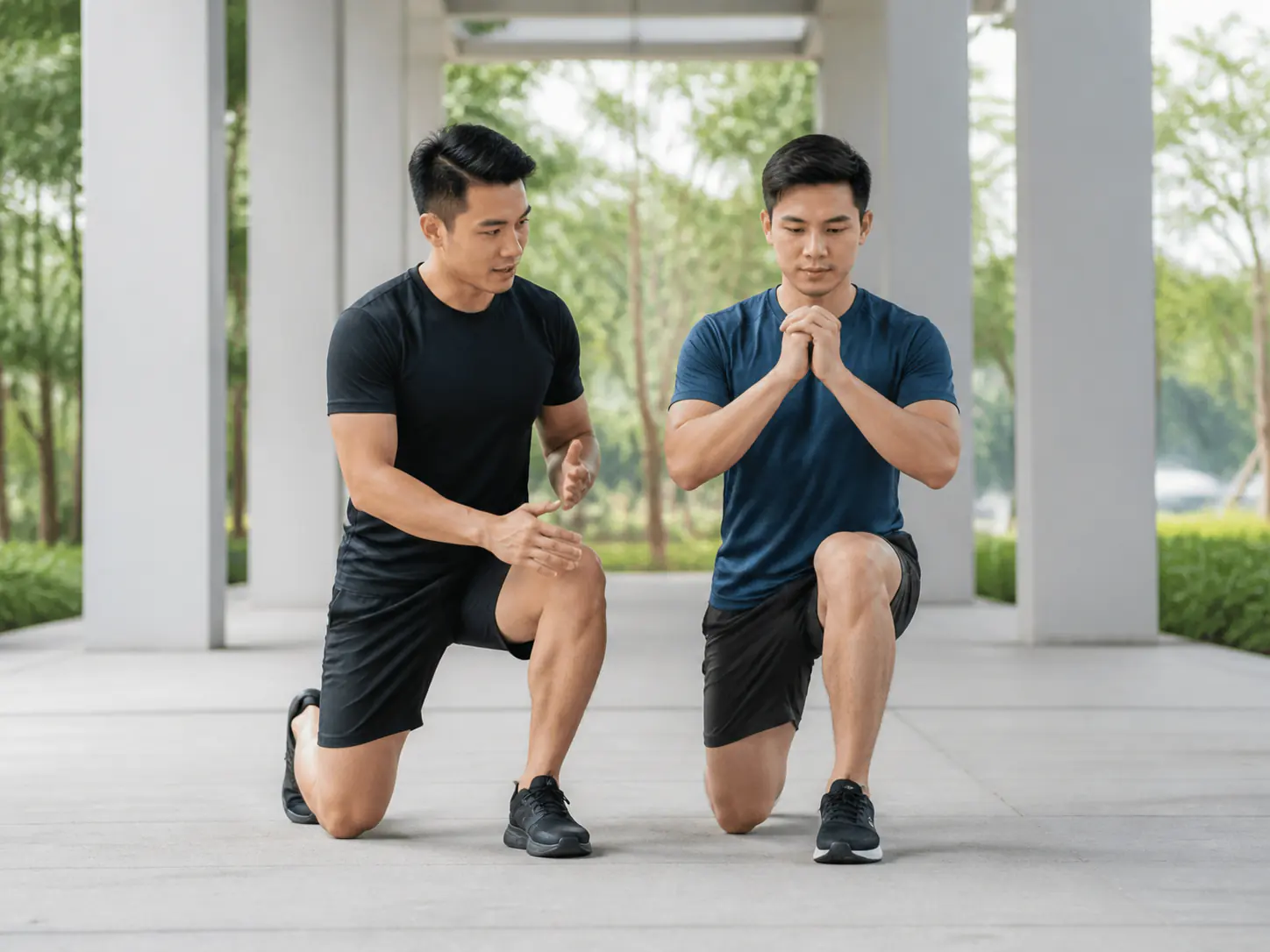
A trainer demonstrating controlled split-squat technique

The goblet carry is a deceptively effective way to strengthen your posture. Hugging a weight to your chest pulls you forward, so your core and upper back have to work hard to keep you standing tall as you walk.

One dumbbell or kettlebell is all you need, so it fits home or our Putra Heights centre. It is gentle on the joints, easy to learn, and pairs well with squats since it grooves the same tall, braced position.

What it trains and who it suits

It trains the core and upper back to hold an upright posture against a front load, plus the legs from walking. It suits beginners, desk workers, and anyone wanting posture and core strength gently.

Because the weight is held close and low-risk, it is very accessible, even for people newer to carrying exercises.

Step-by-step cues

  1. Hold a dumbbell or kettlebell against your chest with both hands
  2. Keep your elbows tucked in and chest tall
  3. Brace your core and squeeze your glutes
  4. Walk with steady, controlled steps
  5. Keep breathing and stay upright throughout

Common mistakes and quick fixes

  • Rounding forward, pull the chest tall and squeeze the upper back
  • Weight drifting away from the chest, hug it in tighter
  • Holding the breath, breathe steadily as you walk
  • Leaning back to counterbalance, brace and stay centred

Regressions, progressions and when to stop

Too hard? Use a lighter weight or a shorter distance. Too easy? Add load, walk further, or add a stair or incline. At home a dumbbell works; at our centre we load heavy and combine it with other carries.

  • Stop if you feel sharp back or shoulder pain rather than core effort
  • See a professional if you cannot stand tall with even a light weight

Frequently Asked Questions

How is this different from a farmer carry?+

The farmer carry holds weights at your sides; the goblet carry holds one weight at your chest. The front load challenges your posture and upper back more, while the farmer carry hits grip harder.

Where should I feel it?+

In your core and upper back as they work to keep you upright, and in your legs from walking. It should not strain your lower back if you stay tall and braced.

Is the goblet carry good for posture?+

Yes. Resisting the forward pull trains the muscles that hold you upright, which supports better posture over time, especially for people who sit a lot.

How long should I carry?+

Twenty to forty seconds per round, for a few rounds, works well. Stop when you can no longer keep a tall chest and braced core.

Continue exploring

Goals

Fix Your Posture

Fixing posture is less about standing straighter on command and more about building the strength and mobility to hold a good position without effort. We coach that 1-to-1, opening tight areas from desk life and strengthening the muscles that keep you upright all day.

See the coaching approach →
Goals

Core Strength and Flat Stomach

A strong core and a flat stomach are two separate jobs. Core strength comes from training the muscles that stabilise your spine; a flatter stomach comes from losing belly fat. We coach both together 1-to-1, so you get a back-protecting core and a tighter midsection.

See the coaching approach →
Weight Loss

How Fast Can You Lose Fat Safely

A safe, sustainable fat-loss rate is roughly 0.5 to 1 percent of your bodyweight a week. Faster than that usually costs you muscle, energy and the ability to keep it off. Heavier people can lose faster at first; leaner people should go slower. Patience protects your results.

See the coaching approach →
Weight Loss

Weight-Loss Training for Men

Weight-loss training for men focuses on dropping the gut while keeping and building muscle, so you end up leaner and stronger rather than just lighter. We use simple strength work, honest food coaching and a plan that survives long work hours, teh tarik and weekend mamak.

See the coaching approach →
Health & Exercise

Exercise With Osteopenia

If your doctor has cleared you and you have osteopenia, appropriate weight-bearing and strength exercise supports bone-healthy, active living. We coach with careful technique and steady progression. We do not treat osteopenia or interpret your bone scans, that stays with your doctor.

Read the suitability guide →
Guides & Tools

How To Progress As A Beginner

As a beginner, progress by keeping things simple: a few basic exercises, done consistently, with small increases in weight or reps each week. Focus on technique and showing up, not fancy programmes. The early months offer the fastest gains you will ever get, so keep it steady.

Read the guide →

Want help applying this guide to your own training?

Private coaching adapts exercise choice, loading and progression to your level, equipment and goal.

Ask a question first Request an assessment time