Skip to content

Exercise technique guide

How to Do Hip Abduction

Hip abduction moves your leg out to the side against resistance, targeting the outer glutes. These muscles stabilise your hips and knees during walking, running and single-leg movements. It can be done with a band, a machine, or lying on your side at home.
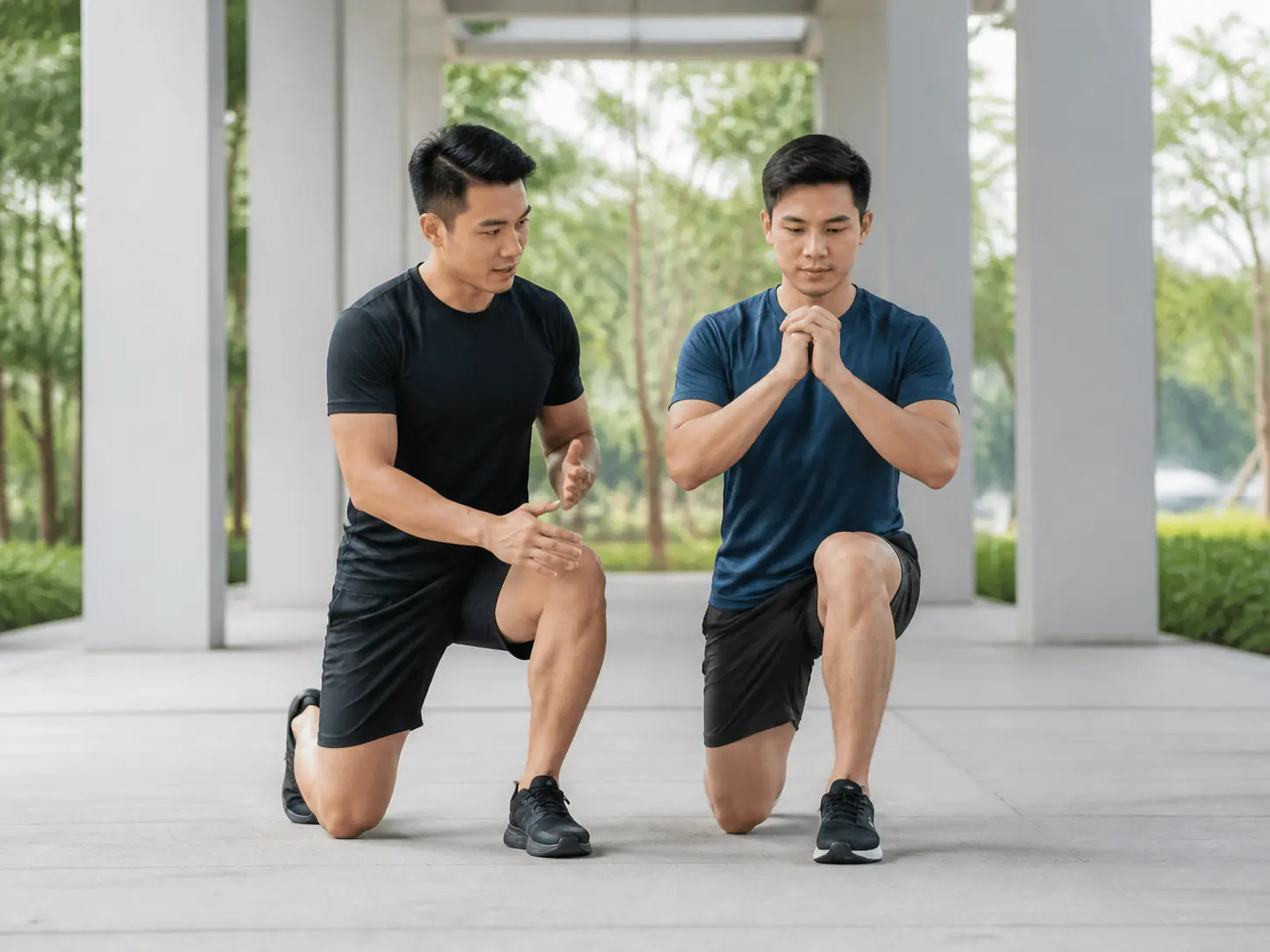
A trainer demonstrating controlled split-squat technique

The outer glutes are small but mighty: they stop your knees caving in and keep your hips level every time you stand on one leg, walk or run. Hip abduction trains them directly, which pays off in steadier, more stable movement.

A resistance band is all you need, so it fits home or our Putra Heights centre, with a machine option there too. It is especially useful for runners and anyone whose knees drift inward during squats or single-leg work.

What it trains and who it suits

It targets the outer glutes, which stabilise the hips and keep the knees tracking well. It suits runners, people whose knees cave inward, and anyone wanting better single-leg stability.

Because it isolates often-weak stabilisers, it complements big lifts and helps protect the knees during more demanding movements.

Step-by-step cues

  1. Loop a band around your legs, or set up side-lying or on a machine
  2. Keep your torso still and core braced
  3. Move the working leg out to the side against the resistance
  4. Pause and feel the outer glute working
  5. Return slowly under control and repeat

Common mistakes and quick fixes

  • Leaning the torso to swing the leg out, keep the body still
  • Rushing, move slowly to keep tension on the glute
  • Rotating the leg, keep the toes pointing forward
  • Tiny range, move through a full, controlled arc

Regressions, progressions and when to stop

Too hard? Use a lighter band or a smaller range. Too easy? Use a stronger band, add pauses, or increase reps. At home a band is perfect; at our centre we add the machine and pair it with single-leg exercises.

  • Stop if you feel sharp hip or outer-knee pain rather than glute effort
  • See a professional if your hip clicks painfully during the movement

Frequently Asked Questions

Why train the outer glutes?+

They stabilise your hips and stop your knees caving inward during walking, running and single-leg movements. Strengthening them improves stability and can help protect the knees.

Can I do hip abduction at home?+

Yes. A resistance band around your thighs or ankles, or lying on your side and lifting the top leg, both target the outer glutes without any machine.

Where should I feel it?+

On the outer part of your hip and glute, on the working side. If you feel it mainly in your lower back or hip flexor, slow down and keep your torso still.

Are these good for knee pain?+

Weak outer glutes can contribute to knees caving in, which may stress them. Strengthening these muscles often helps, but see a professional for ongoing knee pain.

Continue exploring

Programmes

Lower-Body Strength

Lower-body strength training builds your legs, hips and glutes, the biggest muscles you own and the engine behind walking, stairs, sport and standing up. Strong legs make daily life easier, protect your knees and back, and burn plenty of energy in the process.

See what it includes →
Programmes

Flexibility Training

Flexibility training lengthens chronically tight muscles, hamstrings, hip flexors, calves, chest, so you can bend, reach and sit comfortably again. We use guided, progressive stretching plus supporting strength so the new range sticks instead of snapping back within a day.

See what it includes →
Why KinesioFitness

Assessment-Led Coaching

Assessment-led coaching means we test before we prescribe. Before your first real workout we screen how you move, what you can lift, your history and your schedule, then build a plan on facts, not a template. It is the single biggest reason our clients progress safely.

Compare this option →
Sports

5K Training

A 5K is the perfect first running goal, long enough to matter, short enough to reach in weeks. We build the leg strength, pacing sense and heat tolerance to run all 5 kilometres without walking, while keeping shins, knees and hips out of trouble along the way.

See the training approach →
Guides & Tools

Breathing During Lifts

For most lifts, breathe out as you exert the hardest effort and breathe in as you lower or reset. For heavier lifts, a controlled breath held during the effort helps stabilise your trunk. The key is never straining with a fully held breath for too long, and never holding your breath if advised against it.

Read the guide →
Guides & Tools

How To Warm Up For Running

A good running warm-up starts with a few minutes of easy walking or gentle jogging, adds some dynamic leg movements, and gradually eases you up to pace. This prepares your body, makes the run feel smoother, and lowers injury risk. In Malaysian heat, you often warm up quickly, so keep it efficient.

Read the guide →

Want help applying this guide to your own training?

Private coaching adapts exercise choice, loading and progression to your level, equipment and goal.

Ask a question first Request an assessment time