Exercise technique guide
How to Do a Hip Hinge
The hip hinge is the basic skill of bending forward from the hips while keeping your back flat. It is the foundation of deadlifts, kettlebell swings and safe everyday lifting. We teach it before any loaded lift, because it protects your back for life.
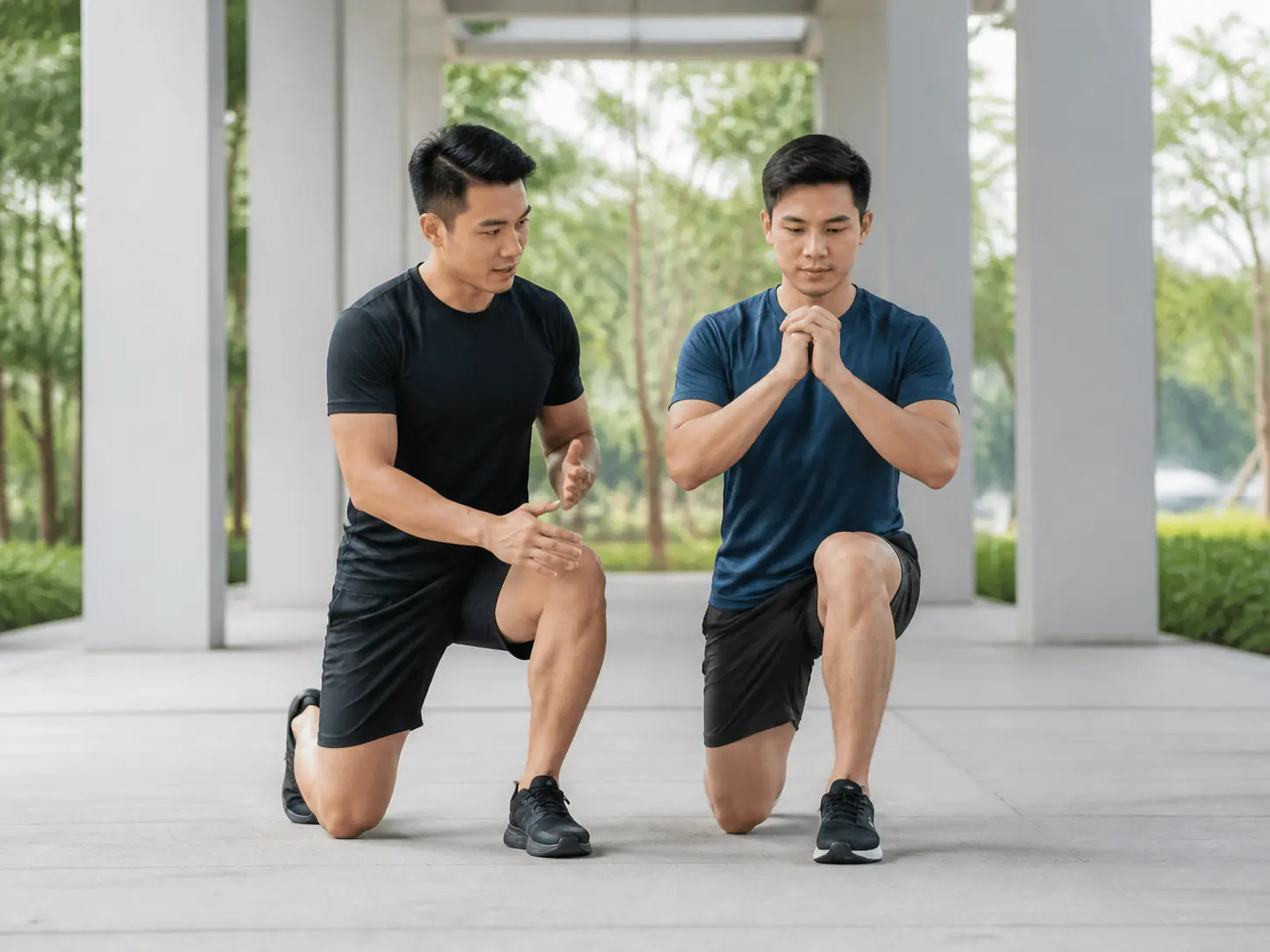
The hip hinge is less an exercise than a skill your back depends on. Every time you bend to pick something up, you either hinge at the hips or round your spine, and one of those is far kinder to your back.
No equipment is needed to learn it, just a broomstick or your own hands, so it fits any home or our Putra Heights centre. Master this and deadlifts, swings and daily bending all fall into place safely.
What it trains and who it suits
The hinge teaches the hamstrings and glutes to drive movement while the back stays neutral and strong. It suits everyone, but especially desk workers and anyone with a history of back niggles.
It is not about lifting heavy at first; it is about grooving a pattern you will reuse in dozens of stronger exercises.
Step-by-step cues
- Stand tall, feet hip-width, hands on the front of your hips
- Soften your knees slightly without squatting
- Push your hips back as if closing a car door with your bum
- Keep your back flat and let your chest travel toward the floor
- Squeeze your glutes to stand tall and repeat
Common mistakes and quick fixes
- Bending the knees like a squat, think hips back, not down
- Rounding the back, a broomstick along the spine should stay in contact
- Not going back far enough, reach the hips toward the wall behind you
- Overarching the low back, brace the core and keep ribs down
Regressions, progressions and when to stop
Too hard? Practise hinging back to lightly tap a wall behind you. Too easy? Add a dowel or light weight and progress to RDLs. At home a broomstick is the perfect teacher; at our centre we build straight into loaded hinges.
- Stop if you feel sharp back pain rather than a hamstring stretch
- See a professional if bending forward regularly triggers pain