Skip to content

Exercise technique guide

How to Do a Romanian Deadlift

The Romanian deadlift, or RDL, lowers a weight by pushing your hips back with slightly bent knees. It targets the hamstrings and glutes and teaches the hip hinge that protects your back when you lift anything from the floor. A key strength move.
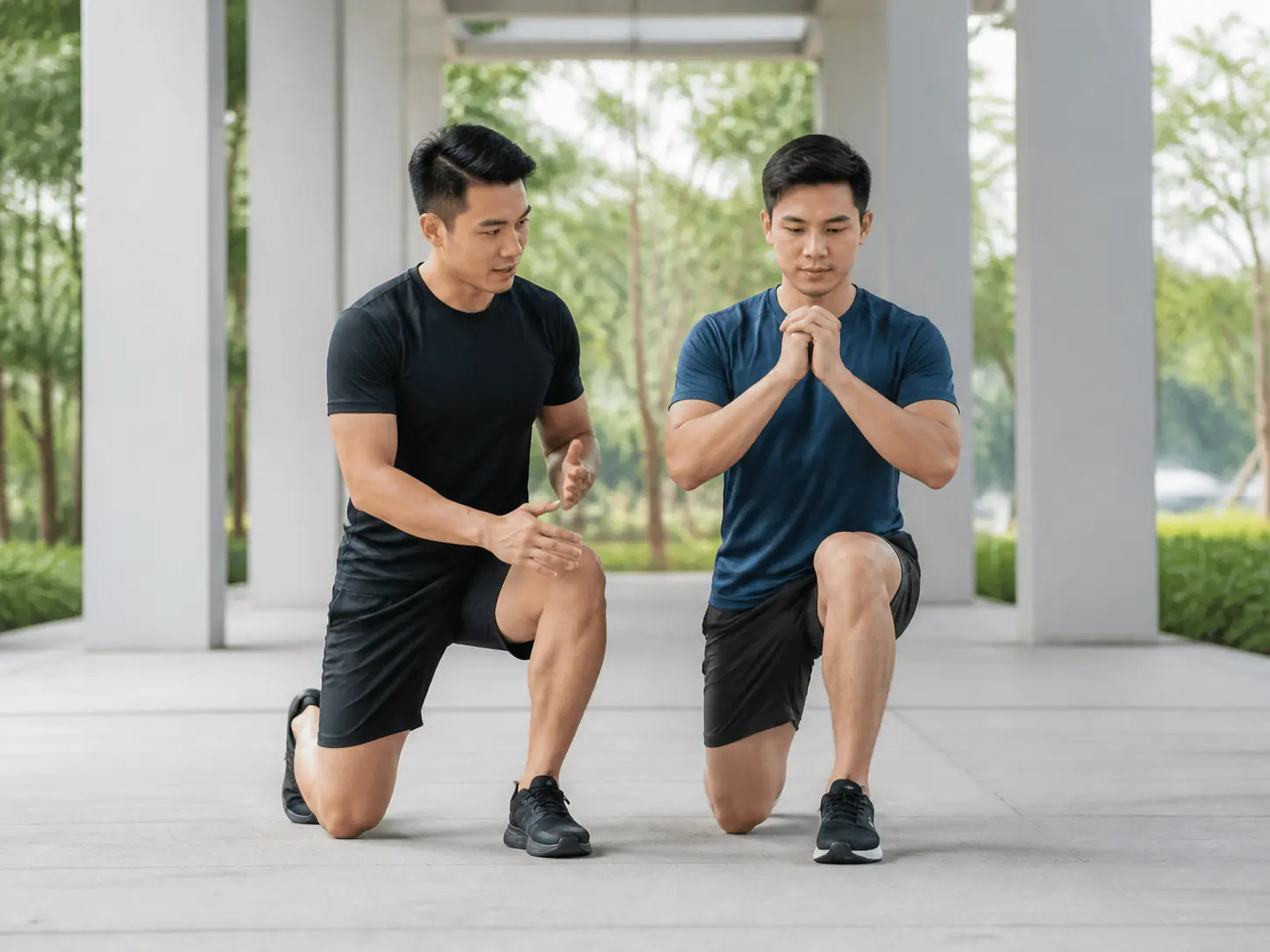
A trainer demonstrating controlled split-squat technique

The RDL teaches the single most useful pattern for a healthy back: hinging at the hips instead of rounding the spine. Get it right and picking up a child, a laundry basket or a barbell all become safer.

A pair of dumbbells or a barbell is enough, so it works in a condo gym or our Putra Heights centre. It builds the back of the legs and glutes, muscles most desk-bound Malaysians badly under-train.

What it trains and who it suits

It targets the hamstrings and glutes, with the whole back working to stay flat. It suits anyone wanting stronger, more resilient hips and a back that copes better with lifting.

It is especially valuable for people who sit all day, because it reawakens muscles that switch off during long hours at a desk.

Step-by-step cues

  1. Hold the weight in front of your thighs, feet hip-width
  2. Soften your knees slightly and keep them there
  3. Push your hips straight back, letting the weight slide down your legs
  4. Lower until you feel a stretch in the hamstrings, back flat
  5. Squeeze your glutes to stand tall again

Common mistakes and quick fixes

  • Rounding the back, keep the chest proud and bar close
  • Squatting instead of hinging, push hips back, do not bend knees more
  • Weight drifting forward, keep it grazing your legs the whole way
  • Going too low, stop where your back would start to round

Regressions, progressions and when to stop

Too hard? Reduce range or use lighter dumbbells. Too easy? Add load, slow the lowering, or try single-leg RDLs. At home dumbbells work well; at our centre we coach the barbell version once your hinge is grooved.

  • Stop if you feel sharp or pinching low-back pain, not a hamstring stretch
  • See a professional if you have nerve pain down the leg

Frequently Asked Questions

RDL or normal deadlift, what is the difference?+

The RDL starts standing and lowers only to a hamstring stretch, keeping tension on the muscles. A conventional deadlift starts from the floor each rep and involves more knee bend.

Where should I feel it?+

In your hamstrings and glutes, with a stretch as you lower. If you feel it mostly in your lower back, you are likely rounding, reduce the range and re-cue the hinge.

How low should I go?+

Only as low as you can keep a flat back, usually around mid-shin. Flexibility varies, so let a rounding back be your natural stopping point.

Are RDLs safe for my back?+

Done with a flat back and sensible load, they build a stronger, more resilient back. Pain that is sharp rather than a muscle stretch is a signal to stop and reassess.

Continue exploring

Programmes

Lower-Body Strength

Lower-body strength training builds your legs, hips and glutes, the biggest muscles you own and the engine behind walking, stairs, sport and standing up. Strong legs make daily life easier, protect your knees and back, and burn plenty of energy in the process.

See what it includes →
Programmes

Mobility Training

Mobility training restores the range of motion desk life and age quietly take away, stiff hips, tight shoulders, a locked-up back. We coach controlled movement through full ranges so you squat deeper, reach higher and move without that stiff, creaky feeling.

See what it includes →
Goals

Flexibility for Desk Workers

Flexibility for desk workers targets the specific tightness that eight hours in a chair creates, locked-up hips, short hamstrings, a stiff neck and tight chest. We coach a practical routine 1-to-1, plus desk-break habits, so you feel loose and comfortable instead of permanently seized up.

See the coaching approach →
Weight Loss

Weight Loss After 50

Weight loss after 50 is really about protecting muscle and bone while losing fat. We use gentle, controlled strength training, enough protein and daily walking to reshape your body without crash diets, improving how you move, your balance and your health, not just the number on the scale.

See the coaching approach →
Weight Loss

How Fast Can You Lose Fat Safely

A safe, sustainable fat-loss rate is roughly 0.5 to 1 percent of your bodyweight a week. Faster than that usually costs you muscle, energy and the ability to keep it off. Heavier people can lose faster at first; leaner people should go slower. Patience protects your results.

See the coaching approach →
Health & Exercise

Low-Impact Options for Sensitive Joints

If your joints are sensitive and your doctor has cleared you, low-impact training builds strength and fitness without the jarring that aggravates sore knees, hips or backs. We coach controlled, joint-friendly options and adjust to how you feel. This is general fitness coaching, not treatment for a joint problem.

Read the suitability guide →

Want help applying this guide to your own training?

Private coaching adapts exercise choice, loading and progression to your level, equipment and goal.

Ask a question first Request an assessment time