Skip to content

Exercise technique guide

How to Do a Kettlebell Deadlift

The kettlebell deadlift lifts a single bell placed between your feet using a hip hinge. It is one of the safest ways to learn the deadlift because the weight sits close to your body. Great for beginners and anyone building confidence lifting from the floor.
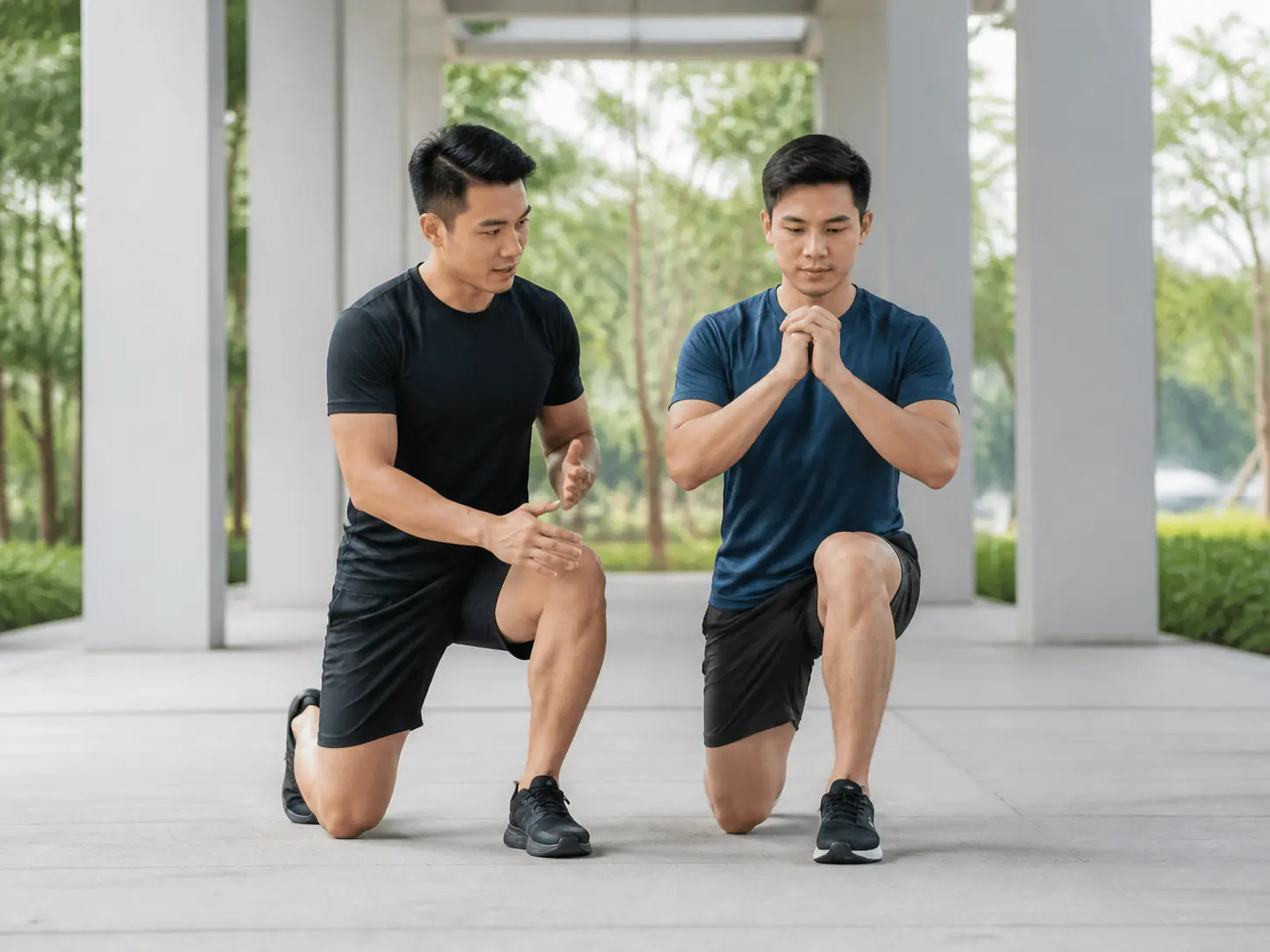
A trainer demonstrating controlled split-squat technique

Before anyone touches a barbell deadlift, we usually start them here. A kettlebell between the feet keeps the weight close to your centre, which makes a flat-back lift much easier to learn than a bar out in front.

One bell is all you need, so it is perfect for a home session or our Putra Heights centre. It teaches you to lift safely from the floor, the exact skill that prevents most everyday back tweaks.

What it trains and who it suits

It works the glutes, hamstrings and back as one strong unit while grip and core stabilise the load. It suits beginners learning to deadlift and anyone who lifts awkward objects at home or work.

Because the bell sits between your feet, the movement forgives small errors better than a barbell, making it a confidence-building starting point.

Step-by-step cues

  1. Stand over the kettlebell, feet hip to shoulder-width apart
  2. Push your hips back and hinge to reach the handle
  3. Grip with both hands, chest up and back flat
  4. Drive your feet into the floor and stand tall
  5. Hinge back down with control to set it lightly on the floor

Common mistakes and quick fixes

  • Rounding the back to reach, bend the knees a touch more first
  • Yanking the weight up, push the floor away smoothly instead
  • Hips shooting up first, hips and chest should rise together
  • Dropping the bell, control it down to protect your back

Regressions, progressions and when to stop

Too hard? Raise the bell onto a box to shorten the reach. Too easy? Use a heavier bell, slow the lowering, or progress to a barbell. At home one kettlebell covers it; at our centre we build toward full barbell deadlifts.

  • Stop if you feel sharp or pinching pain in the low back, not effort
  • See a professional before loading if you have a history of disc issues

Frequently Asked Questions

Why start with a kettlebell instead of a barbell?+

The bell sits between your feet, closer to your centre of gravity, so a flat-back lift is easier to learn and less demanding on your lower back than a barbell held out in front.

How heavy should the kettlebell be?+

Heavy enough to feel worthwhile but light enough for a flat back on every rep. Many beginners start around 8-16kg. Add weight only once your form holds.

Is the deadlift dangerous?+

The lift itself is not; poor technique with too much weight is. Learning with a kettlebell and good coaching makes it one of the most useful, back-protecting exercises you can do.

Can I do this if I have a weak back?+

Often yes, and it may help, but only if pain-free and cleared. Start light, keep the range controlled, and see a professional first if you have ongoing back problems.

Continue exploring

Weight Loss

Muscle Building for Beginners

Building muscle as a beginner is simpler than the internet suggests: learn a handful of big lifts, add a little weight or reps over time, eat enough protein and sleep well. Beginners grow fastest of anyone, so the first year is the most rewarding if you start with good habits.

See the coaching approach →
Weight Loss

Build Muscle While Losing Fat

Building muscle while losing fat is possible if you get three things right: eat enough protein, train strength progressively, and keep the calorie deficit modest. It works best for beginners and returners, is slower than one goal alone, and needs measuring beyond the scale.

See the coaching approach →
Programmes

Functional Fitness

Functional fitness trains your body for the things you actually do, carrying shopping up to the condo, picking a child off the floor, twisting to reach the back seat. We build strength, stability and mobility in real movement patterns, not isolated machine work, so daily life gets easier.

See what it includes →
Personal Training

Centre-Based Personal Training

Centre-based coaching gives you access to the Putra Heights training space, a wider equipment range and one-to-one guidance without relying on a busy commercial gym floor. It suits beginners who want a calm place to learn and clients who need heavier equipment to progress.

Compare this option →
Goals

Improve Balance

Improving balance means training the strength, ankle control and quick reactions that keep you steady on your feet. We coach it progressively 1-to-1 so stairs, uneven pavements, wet floors and one-legged moments stop feeling risky, a foundation for confidence at any age.

See the coaching approach →
Why KinesioFitness

Why 1-to-1 Beats Group

In a group class the coach splits attention across a room and the workout is one-size-fits-all. In 1-to-1 training, every minute, every cue and the entire plan is built around you. That is why 1-to-1 produces faster, safer results, especially for beginners and anyone with a niggle.

Compare this option →

Want help applying this guide to your own training?

Private coaching adapts exercise choice, loading and progression to your level, equipment and goal.

Ask a question first Request an assessment time