Skip to content

Exercise technique guide

How to Do a Lat Pulldown

The lat pulldown has you pull a bar down to your chest from overhead against a cable. It builds the lats and the pulling strength behind a pull-up, in an adjustable, beginner-friendly way. It is the go-to for building toward your first pull-up.
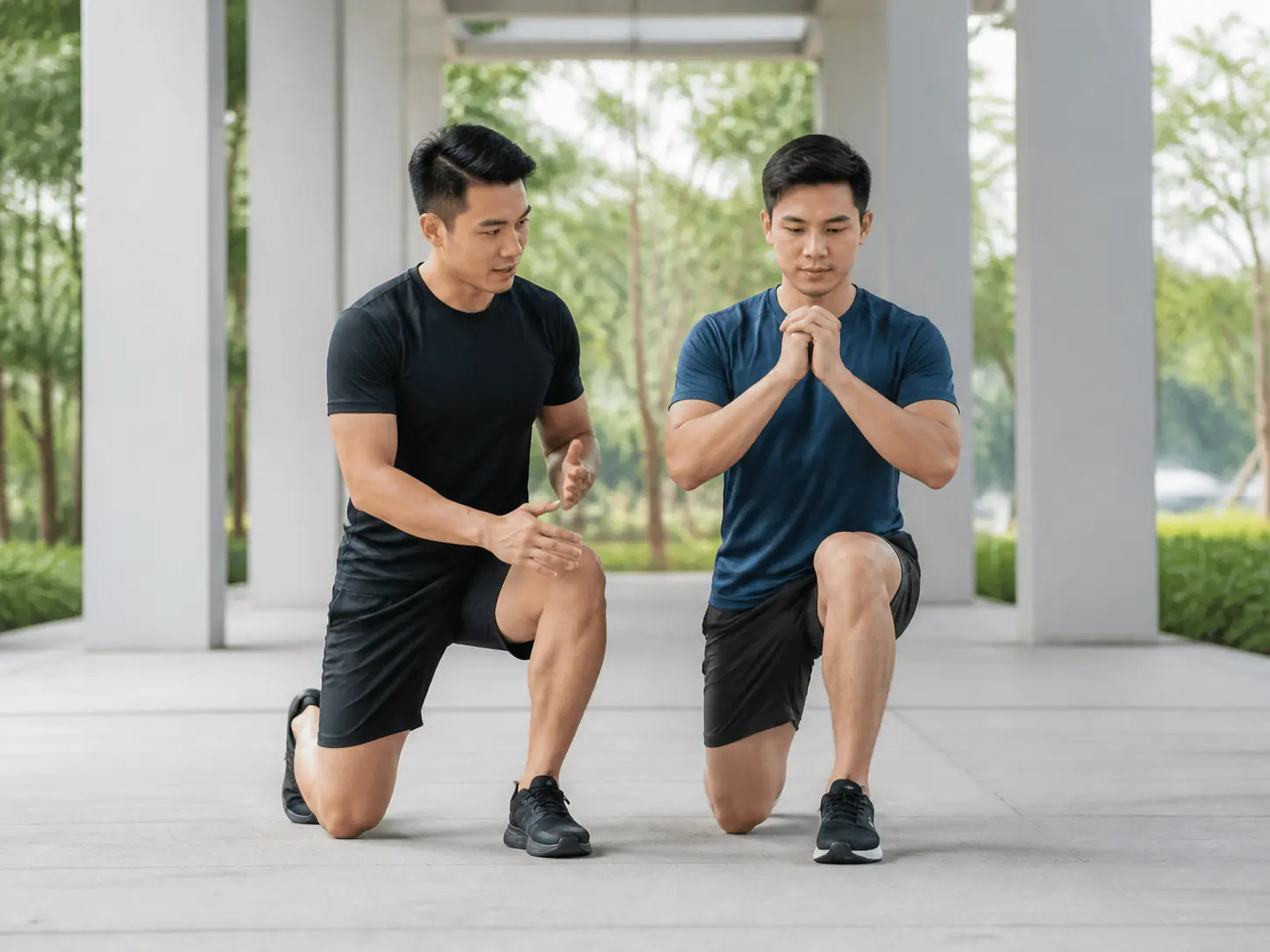
A trainer demonstrating controlled split-squat technique

If a pull-up feels a long way off, the lat pulldown is how we bridge the gap. It trains the exact same muscles as a pull-up but lets you dial the weight to your level, so you can build strength steadily and measurably.

It needs a pulldown machine, so it lives at our Putra Heights centre. The wide overhead pull builds the lats that shape your back and the strength you will eventually use to haul yourself over a bar.

What it trains and who it suits

It targets the lats and upper back, with the biceps and grip assisting. It suits anyone building toward pull-ups, and those wanting back width without needing to lift their whole bodyweight.

Because the load is adjustable, it fits complete beginners and stronger trainees alike, simply by changing the weight.

Step-by-step cues

  1. Sit with your thighs secured under the pads
  2. Grab the bar slightly wider than shoulder-width
  3. Sit tall, then pull the bar down to your upper chest
  4. Drive your elbows down and squeeze your back
  5. Let the bar rise slowly under control and repeat

Common mistakes and quick fixes

  • Leaning way back, keep just a slight lean and pull with the back
  • Pulling behind the neck, bring the bar to the front of your chest
  • Using momentum, control both the pull and the return
  • Shrugging up at the top, let the shoulders rise without straining

Regressions, progressions and when to stop

Too hard? Lower the weight and keep the range full. Too easy? Add load, pause at the bottom, or slow the return. This is a centre machine; at home, a band anchored overhead offers a similar pulldown pattern.

  • Stop if you feel sharp shoulder pain rather than a back stretch
  • See a professional if a shoulder catches at the top of the pull

Frequently Asked Questions

Should I pull the bar in front or behind my neck?+

Always to the front of your chest. Behind-the-neck pulldowns strain the shoulders and neck for no extra benefit, so keep the bar in front.

Will lat pulldowns help me do a pull-up?+

Yes. They train the same muscles and let you build strength progressively. Combined with band-assisted pull-ups, they are the reliable path to your first unassisted rep.

How wide should my grip be?+

Slightly wider than shoulder-width works well for Many people. A grip that is far too wide reduces range and can bother the shoulders.

Can I do this at home?+

Not without the machine, but a strong resistance band anchored over a door or beam lets you copy the pulldown and train the same muscles.

Continue exploring

Programmes

Beginner Training

Beginner training is for people starting from zero, no gym background, no idea where to begin. We keep the first weeks simple, teach you the basic movements, and build the habit before adding intensity. No crowds, no jargon, no being left to figure it out alone.

See what it includes →
Goals

Run Your First 5K

Running your first 5K is a beginner-friendly goal built on a gradual run-walk progression that grows your endurance without wrecking your joints. We coach it 1-to-1, including strength to keep you injury-free and pacing that works in KL's heat, until you run the full distance.

See the coaching approach →
Programmes

Lower-Body Strength

Lower-body strength training builds your legs, hips and glutes, the biggest muscles you own and the engine behind walking, stairs, sport and standing up. Strong legs make daily life easier, protect your knees and back, and burn plenty of energy in the process.

See what it includes →
Health & Exercise

Low-Impact Options for Sensitive Joints

If your joints are sensitive and your doctor has cleared you, low-impact training builds strength and fitness without the jarring that aggravates sore knees, hips or backs. We coach controlled, joint-friendly options and adjust to how you feel. This is general fitness coaching, not treatment for a joint problem.

Read the suitability guide →
Goals

Do Your First Pull-Up

Getting your first pull-up is a specific strength goal with a clear path: build your back and arm pulling strength through progressions like assisted and negative reps until you can lift your full bodyweight once. We coach that ladder 1-to-1 so you actually get there.

See the coaching approach →
Weight Loss

Weight-Loss Training for Women

Weight-loss training for women uses strength work to drop fat while keeping, not shrinking, the shape you want. It sidesteps the crash-diet cycle, respects your energy and cycle, and builds strength that carries into daily life. No bulking, no starving, a supportive setting.

See the coaching approach →

Want help applying this guide to your own training?

Private coaching adapts exercise choice, loading and progression to your level, equipment and goal.

Ask a question first Request an assessment time