Skip to content

Exercise technique guide

How to Do a Mountain Climber

The mountain climber has you hold a plank and drive your knees toward your chest one at a time. It combines core stability with a cardio hit, needs no equipment, and scales from slow and controlled to fast and intense, making it a versatile home conditioning move.
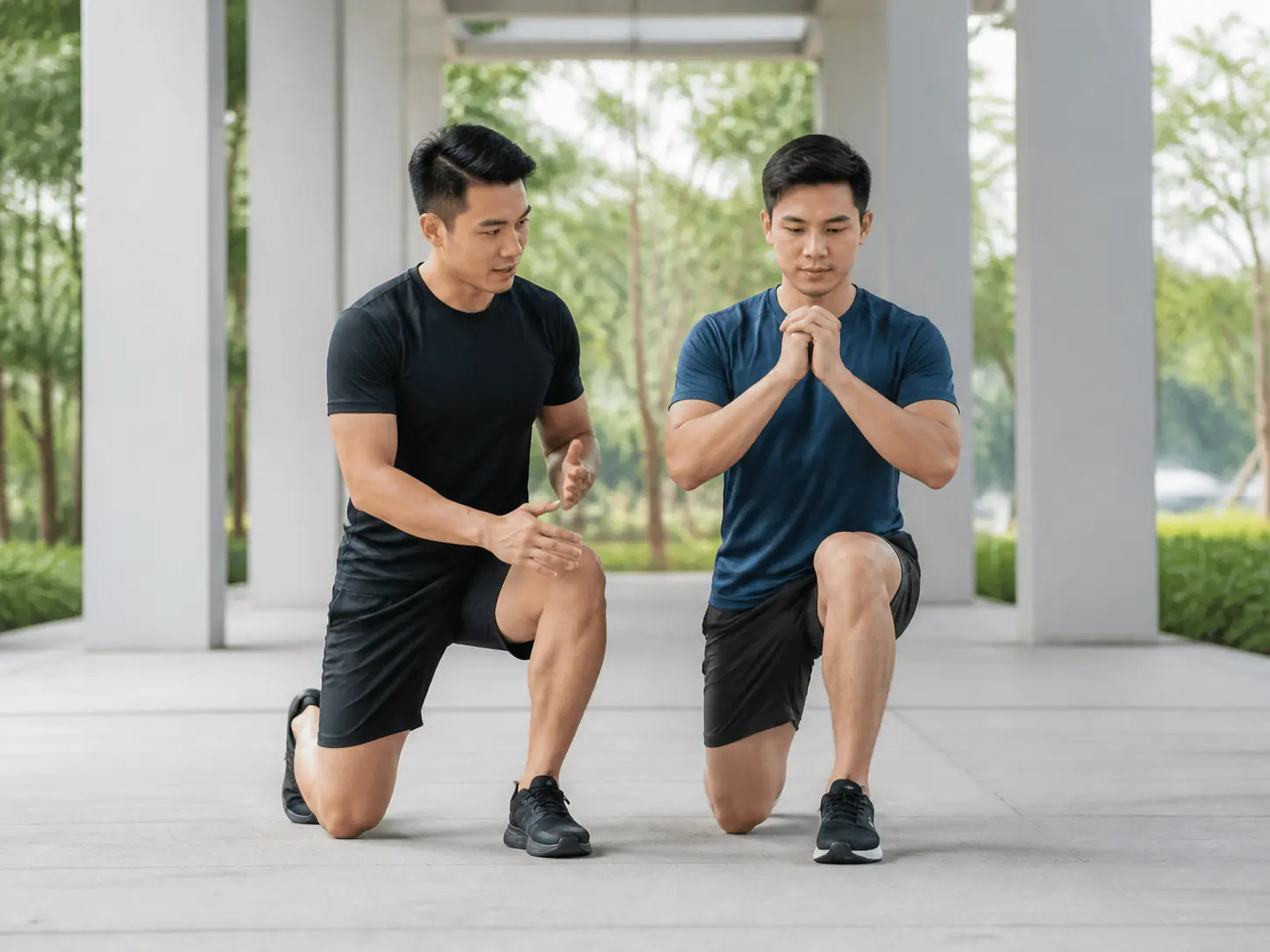
A trainer demonstrating controlled split-squat technique

The mountain climber is a plank that got up and started running. From a strong plank position, you drive one knee toward your chest at a time, which challenges your core to stay stable while your heart rate climbs.

You need nothing but floor space, so it fits a hotel room, condo or our Putra Heights centre. Slow it down and it is a core exercise; speed it up and it becomes intense cardio, so it adapts to almost any workout.

What it trains and who it suits

It trains the core to resist movement while the shoulders stabilise and the legs drive, plus cardio when done fast. It suits anyone wanting core and conditioning together in a small space.

Because you set the pace, it works for beginners going slowly and fitter people going fast, all from the same position.

Step-by-step cues

  1. Set up in a strong plank on your hands, body straight
  2. Brace your core and keep your hips level
  3. Drive one knee toward your chest
  4. Return it and drive the other knee in
  5. Keep alternating at a controlled, steady pace

Common mistakes and quick fixes

  • Hips piking up, keep them level with your shoulders
  • Bouncing the hips, stay stable and drive from the legs
  • Hands creeping forward, keep them under your shoulders
  • Going too fast to hold form, slow down until you can stay steady

Regressions, progressions and when to stop

Too hard? Do them slowly, or with hands on a bench. Too easy? Speed up, add time, or elevate your feet. At home the floor is all you need; at our centre we build them into circuits for conditioning.

  • Stop if you feel sharp wrist, shoulder or low-back pain rather than effort
  • See a professional if your wrists cannot bear the plank position

Frequently Asked Questions

Are mountain climbers cardio or core?+

Both, depending on pace. Done slowly they emphasise core stability; done fast they become a strong cardio and conditioning exercise. That flexibility is why they are so useful.

Why do my hips bounce up and down?+

Your core is not staying braced. Keep your hips level with your shoulders, brace your stomach, and slow the pace until you can control each knee drive.

My wrists hurt in the plank, what helps?+

Try placing your hands on a raised surface like a bench to reduce the angle, or do them on your forearms if the setup allows. Persistent wrist pain deserves a check.

How long should I do them?+

For cardio, work in intervals like twenty to forty seconds with rest. For core, go slower for a set number of controlled reps per side. Stop when form slips.

Continue exploring

Programmes

Weight-Loss Training

Weight-loss training combines strength work, sensible conditioning and realistic food habits so you lose fat while keeping the muscle that keeps you toned. No crash diets, no punishing cardio, just a sustainable plan built around your body, your schedule and Malaysian food.

See what it includes →
Programmes

Mobility Training

Mobility training restores the range of motion desk life and age quietly take away, stiff hips, tight shoulders, a locked-up back. We coach controlled movement through full ranges so you squat deeper, reach higher and move without that stiff, creaky feeling.

See what it includes →
Personal Training

Home Personal Trainer

A home personal trainer brings the coaching to you and adapts the session to your available space, equipment and household routine. It suits people who value privacy, have limited travel time or find that removing the commute makes regular training easier to maintain.

Compare this option →
Why KinesioFitness

Our Training Philosophy

Our philosophy is simple: assess before we prescribe, build strength as the base, and change one thing at a time so it lasts. We coach fitness, not medicine, and when something needs a doctor or physiotherapist, we say so and refer you.

Compare this option →
Personal Training

Private 1-to-1 Personal Training

Private one-to-one training gives you one coach for the full session, a plan based on your starting point, and real-time guidance on technique, load and progression. Choose the Putra Heights centre, your home or a suitable condo gym across KL and Selangor.

Compare this option →
Weight Loss

Weight Loss After 50

Weight loss after 50 is really about protecting muscle and bone while losing fat. We use gentle, controlled strength training, enough protein and daily walking to reshape your body without crash diets, improving how you move, your balance and your health, not just the number on the scale.

See the coaching approach →

Want help applying this guide to your own training?

Private coaching adapts exercise choice, loading and progression to your level, equipment and goal.

Ask a question first Request an assessment time