Skip to content

Exercise technique guide

How to Do an Overhead Carry

The overhead carry has you walk while holding a weight locked out overhead. It builds shoulder stability, a braced core and full-body control, and challenges your posture hard. It is advanced, so we introduce it only once your overhead pressing and core are solid.
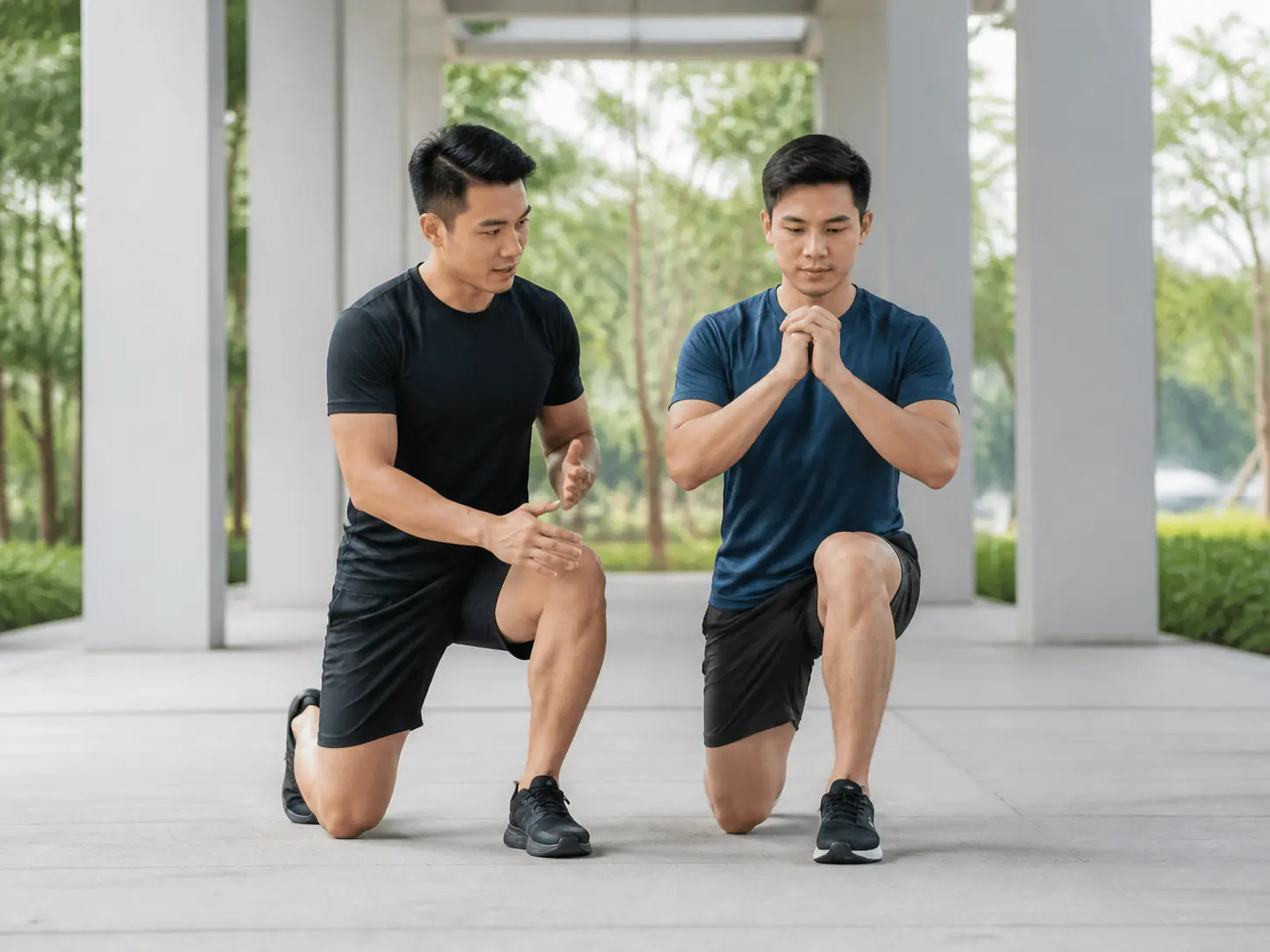
A trainer demonstrating controlled split-squat technique

The overhead carry is a real test of shoulder stability and core control. Holding a weight locked out above your head while walking forces your shoulders, core and posture to work together to keep the weight steady and safe.

A single dumbbell or kettlebell works, so it fits home or our Putra Heights centre. It is a more advanced carry, so we bring it in only once your overhead press and core strength can support the weight overhead.

What it trains and who it suits

It builds shoulder stability, core bracing and upright posture under load. It suits people with healthy shoulders who already press overhead well and want more stability and control.

Because the weight is overhead, it demands solid shoulders and a strong core, so it is a progression rather than a beginner move.

Step-by-step cues

  1. Press a weight overhead until your arm is straight
  2. Lock the elbow and set the shoulder down and stable
  3. Brace your core hard and stand tall
  4. Walk with steady, controlled steps, weight steady above
  5. Lower it safely at the end, then switch sides

Common mistakes and quick fixes

  • Weight drifting forward, keep it stacked over the shoulder
  • Arching the lower back, brace the core and tuck the ribs
  • Bent, unstable elbow, lock it out and keep the shoulder set
  • Rushing, walk slowly to keep the weight steady

Regressions, progressions and when to stop

Too hard? Do a goblet or farmer carry instead, or use a lighter weight. Too easy? Add load, walk further, or carry single-arm. At home a light dumbbell works; at our centre we coach the setup and progress load safely.

  • Stop if you feel sharp shoulder pain rather than stabilising effort
  • See a professional before overhead carries if you have shoulder issues

Frequently Asked Questions

Is the overhead carry safe?+

For healthy shoulders with a solid overhead press and braced core, yes. If you cannot press overhead comfortably or have shoulder issues, we build those first before adding overhead carries.

Why does the overhead carry feel so hard?+

Keeping a weight steady above your head demands constant shoulder stability, core bracing and posture control all at once. That full-body demand is exactly why it is so effective.

One arm or two?+

Two-arm carries are more stable to start. Single-arm overhead carries add a big anti-lean core challenge and are a progression once you are comfortable overhead.

What should I do if I cannot hold it overhead?+

Build your overhead press and core strength first, and start with goblet or farmer carries. Add the overhead version once your shoulders can support the weight comfortably.

Continue exploring

Programmes

Weight-Loss Training

Weight-loss training combines strength work, sensible conditioning and realistic food habits so you lose fat while keeping the muscle that keeps you toned. No crash diets, no punishing cardio, just a sustainable plan built around your body, your schedule and Malaysian food.

See what it includes →
Weight Loss

Weight Loss After 50

Weight loss after 50 is really about protecting muscle and bone while losing fat. We use gentle, controlled strength training, enough protein and daily walking to reshape your body without crash diets, improving how you move, your balance and your health, not just the number on the scale.

See the coaching approach →
Programmes

Core Training

Core training builds the deep trunk muscles that stabilise your spine, protect your back and transfer force between your upper and lower body. It is about a strong, functional midsection that supports everything you do, not just chasing visible abs with endless crunches.

See what it includes →
Weight Loss

Strength Plus Cardio for Fat Loss

The best fat-loss plans use both strength and cardio, not one or the other. Strength keeps muscle and shape; cardio and walking add extra calorie burn and heart health. We show you how to combine them without overtraining, so fat drops while your body stays strong.

See the coaching approach →
Goals

Do Your First Push-Up

Doing your first proper push-up means building enough chest, shoulder, arm and core strength to lower and press your whole body from the floor with good form. We coach the progression 1-to-1, from incline and knee versions up to your first full rep.

See the coaching approach →
Training Science

Training Intensity Explained

Intensity has two meanings: how heavy the weight is, and how close you push to failure. You do not need to grind every set to empty. Stopping one to three reps short, most of the time, drives strong results while keeping technique clean and recovery manageable.

Read the guide →

Want help applying this guide to your own training?

Private coaching adapts exercise choice, loading and progression to your level, equipment and goal.

Ask a question first Request an assessment time