Skip to content
Exercise Library

How to Do a Pallof Press

In short

The Pallof press has you press a band or cable straight out from your chest while it tries to twist you sideways. Resisting that pull trains the deep core to stop unwanted rotation, protecting your spine and building real, functional core strength.
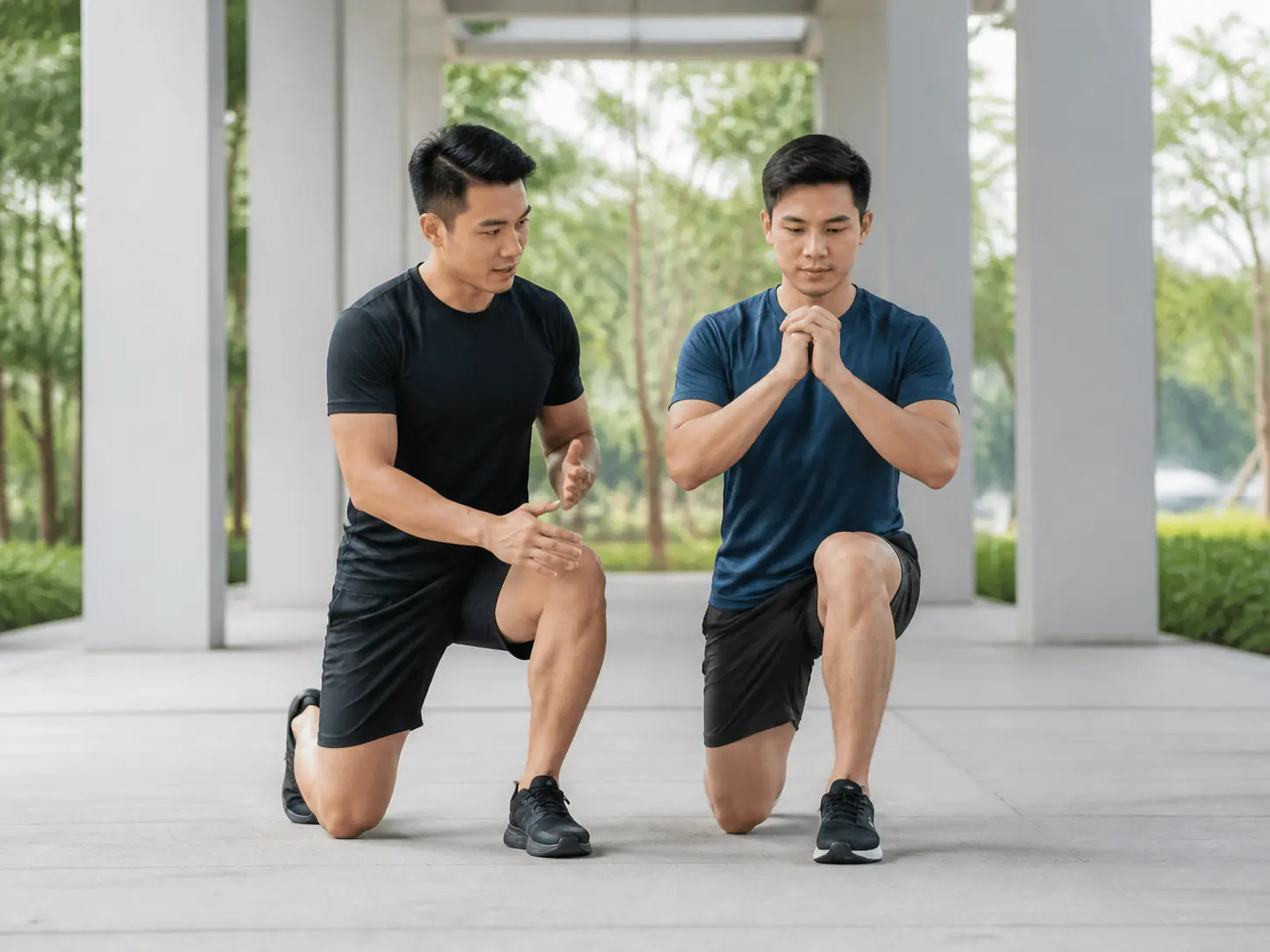
Written & reviewed by M. Thurairaj & team, Registered Physiotherapist & Certified Trainers

The Pallof press trains the core the way it actually works in life: by stopping movement, not creating it. A band pulls you sideways and your job is to resist it, which builds the anti-rotation strength that protects your spine during twists and lifts.

A resistance band and an anchor point are all you need, so it fits home or our Putra Heights centre. It is one of the most practical core exercises we teach, and beginners feel the right muscles working immediately.

What it trains and who it suits

It trains the deep core and obliques to resist rotation, keeping the torso stable. It suits everyone, from beginners to athletes wanting a spine that stays solid under twisting forces.

Because it teaches the core to brace against movement, it carries over to lifting, carrying and sport far better than crunches.

Step-by-step cues

  1. Anchor a band at chest height and stand side-on to it
  2. Hold the band at your chest with both hands
  3. Brace your core and set your feet firm
  4. Press your hands straight out in front of you
  5. Resist the twist, then bring the hands back in slowly

Common mistakes and quick fixes

  • Letting the torso twist, brace hard and stay square
  • Holding the breath, breathe steadily while bracing
  • Standing too close to the anchor, step out for more tension
  • Pressing with the arms only, keep the whole core tight

Regressions, progressions and when to stop

Too hard? Use a lighter band or stand closer to the anchor. Too easy? Use a stronger band, step further out, or hold the press longer. At home a band on a door anchor works; at our centre we use the cable for smooth resistance.

  • Stop if you feel sharp low-back pain rather than core tension
  • See a professional if your back rounds because you cannot resist the pull

Frequently Asked Questions

What does anti-rotation mean?+

It means resisting a force that tries to twist you, rather than actively twisting. Training this way builds a stable spine that protects you during real lifting and sport.

Where should I feel the Pallof press?+

Deep in your core and obliques, especially on the side facing the anchor, as they work to stop you twisting. You should not feel it straining your lower back.

Can I do this without a cable machine?+

Yes. A resistance band looped around a door anchor or sturdy post works just as well and is easy to set up at home.

How long should I hold each press?+

Press out and hold for two or three seconds while resisting the twist, then return. Quality bracing matters more than speed or high reps.

Related pages

Exercise Library

Ankle Mobility Drill

The ankle mobility drill, often a knee-to-wall movement, improves how far your knee can travel forward over your foot. Better ankle range helps you squat deeper, lunge comfortably and protect your knees. It needs no equipment and is a quick daily win for lower-body movement.

Exercise Library

Assisted Pull-Up

The assisted pull-up uses a resistance band or machine to reduce how much bodyweight you lift, so you can practise the full pull-up movement. It bridges the gap to your first unassisted rep by letting you train the exact pattern with steadily less help.

Exercise Library

Band Pull-Apart

The band pull-apart has you stretch a resistance band across your chest by squeezing your shoulder blades. It strengthens the upper back and rear shoulders, muscles that improve posture and shoulder health. It is simple, low-risk, and perfect between other exercises.

Exercise Library

Battle Ropes

Battle ropes have you whip two heavy ropes to create waves, driving your heart rate up while working your arms, shoulders and core. They deliver intense cardio with little joint impact, are easy to scale, and are a fun way to build upper-body stamina.

Exercise Library

Bear Crawl

The bear crawl has you move on your hands and feet with your knees just off the floor. It builds full-body strength, core stability and coordination in one move, needs no equipment, and doubles as a challenging warm-up or conditioning drill for any level.

Exercise Library

Bench Press

The bench press has you lie on a bench and press a barbell from your chest. It is the benchmark for upper-body pushing strength, loading the chest, shoulders and triceps heavily. With good setup and a spotter, it is a safe and highly effective strength lift.

Ready to start?

Train at our Putra Heights centre, your home, or your condo gym

WhatsApp Book an Assessment